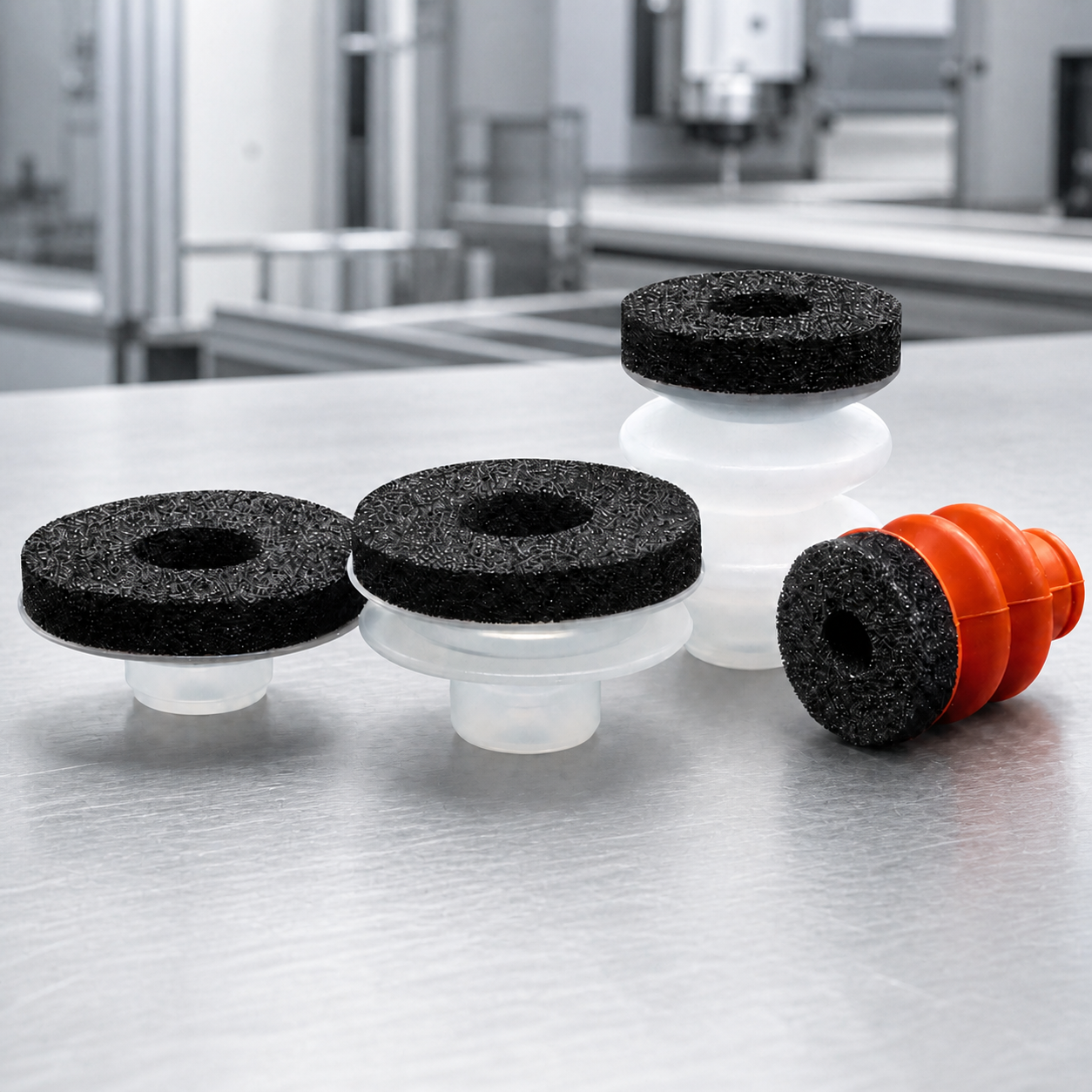
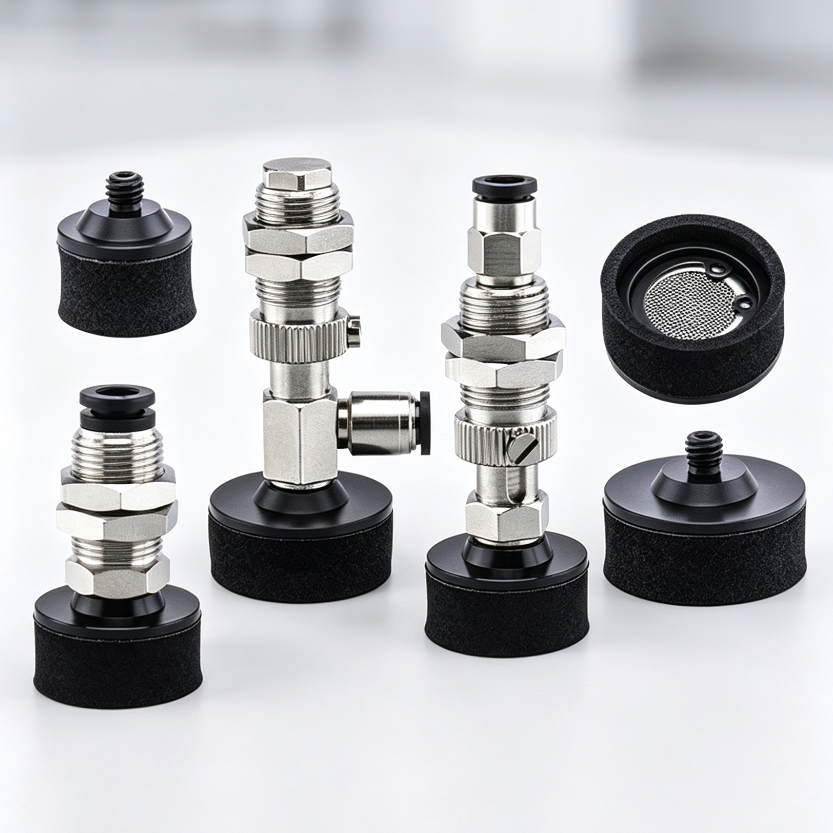
Foam vacuum grippers use a compressible sealing surface to bridge small gaps that can cause leakage with a conventional rubber lip. They are a practical starting point for flat or slightly uneven workpieces such as textured panels, cartons, coated or uncoated board, composite sheets and other parts whose surface cannot form a stable seal with a standard cup.
The correct product depends on more than outside diameter. Check the usable sealing area, surface texture, expected leakage, workpiece weight, acceleration, cup quantity, mounting height and available vacuum flow. Foam can improve conformity, but it cannot compensate for an undersized vacuum source or an unsuitable pickup location.
Product-family starting points
| Family | Best starting point | Check before ordering |
|---|
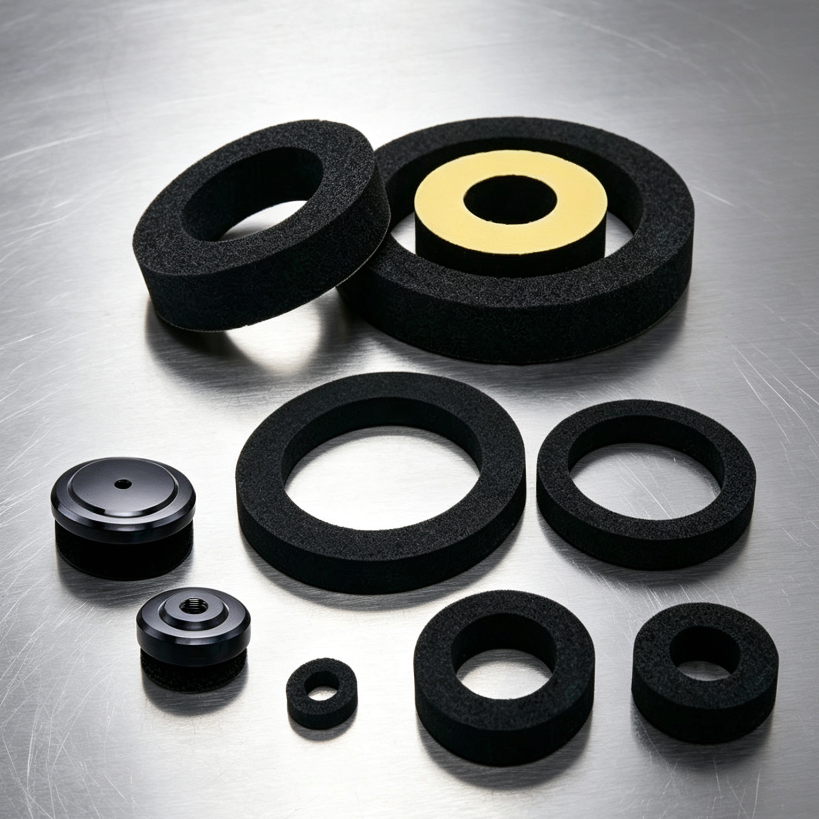
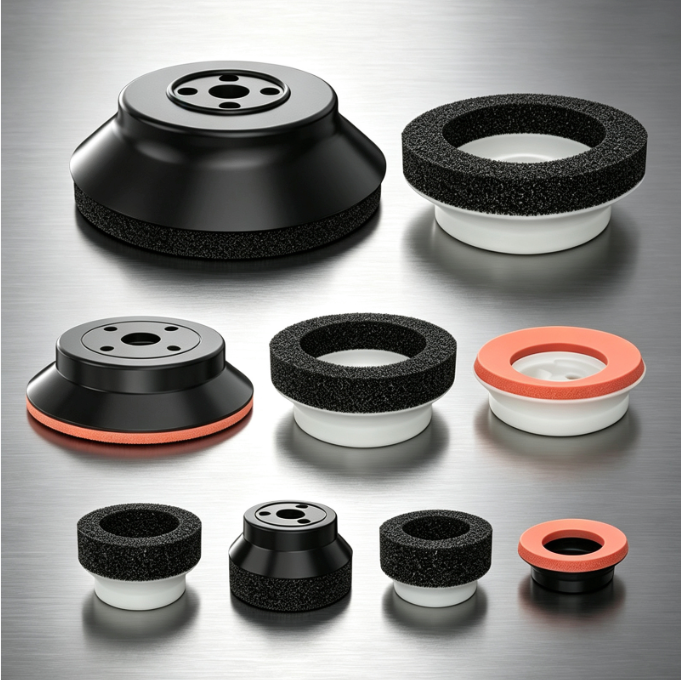
| Foam Rings & CLK assemblies | Replaceable foam contact rings and complete cup assemblies | Ring diameter, center hole, base geometry and mounting method |
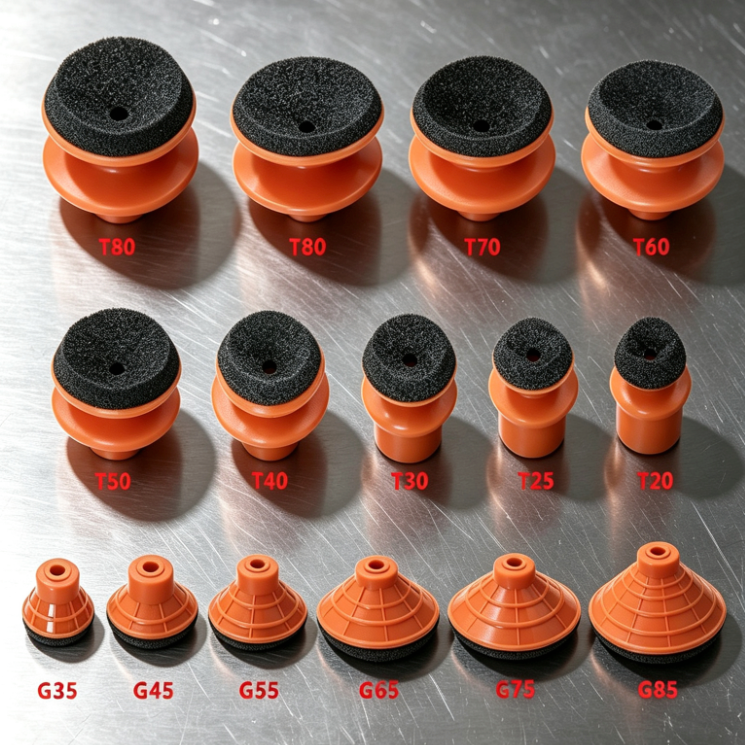
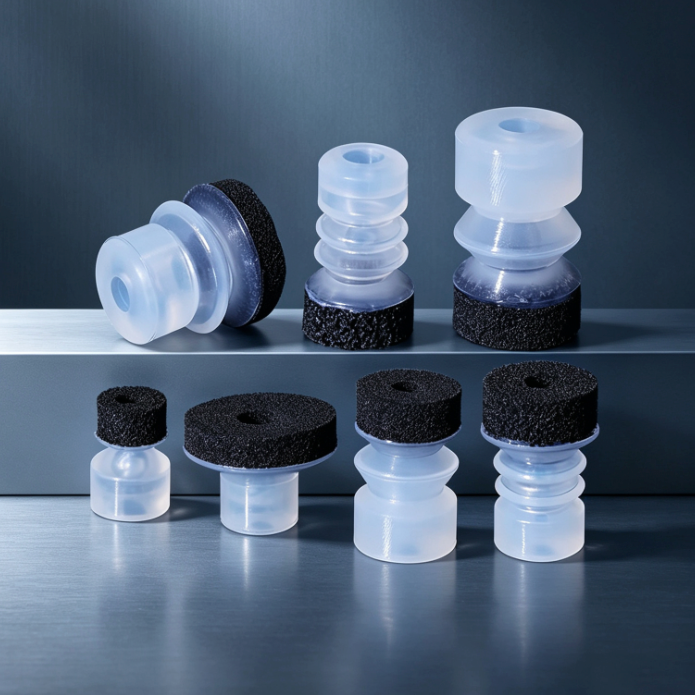
| G & T Series | Silicone cup bodies with black foam contact surfaces | Model drawing, cup geometry and installation dimensions |
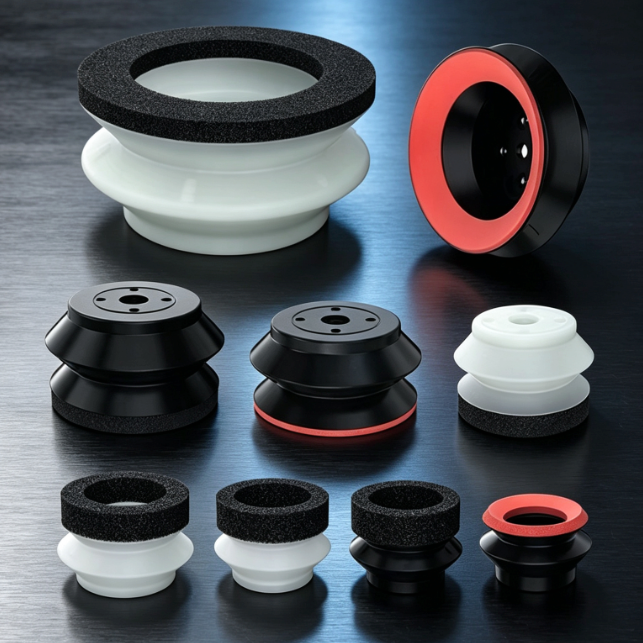
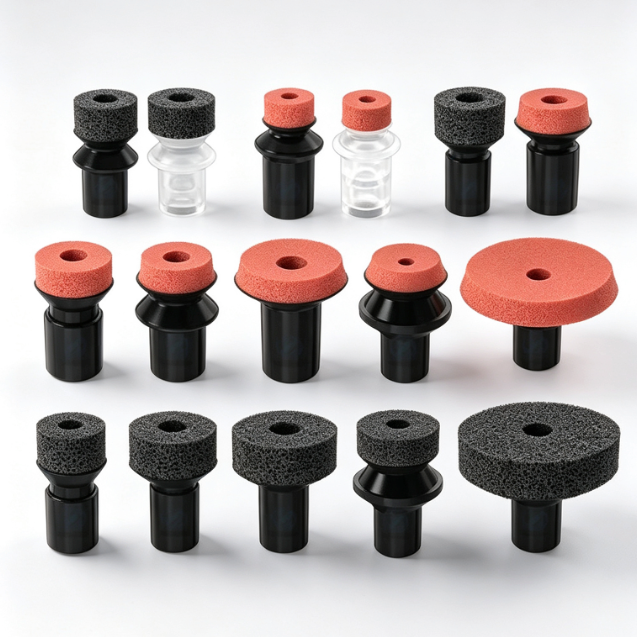
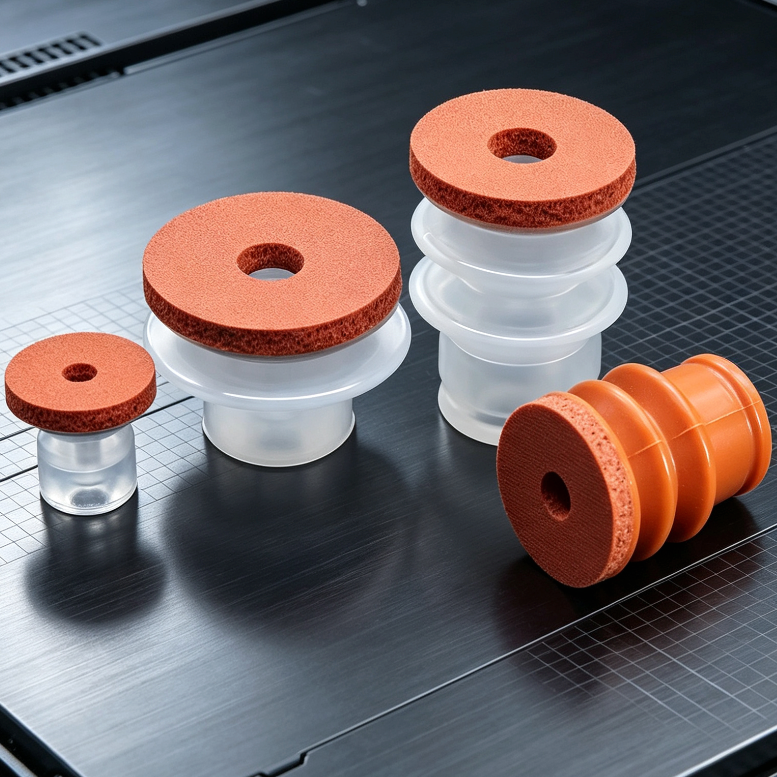
| SP / DP / MP black foam and red foam | Compact foam cups for robotic grippers | Layer count, mounting hole, outside diameter and available height |
| Mini ZP Series | Small black or red foam cup options | Exact model, fitting and dimensional drawing |
| ZP HBS / HBN and HN / HS | Larger black or red foam cup families | Cup profile, mount type and application fit |
| J-WEP / J-WET | Sponge vacuum cups with several mounting styles | Diameter, mount type and matching machine interface |
Selection checklist
- Describe the workpiece surface: smooth, textured, porous, dusty, coated or slightly uneven.
- Measure the available flat pickup area and keep the foam seal away from edges, holes and deep grooves.
- Record workpiece weight, cup quantity, acceleration and load direction.
- Confirm vacuum level, flow capacity, hose restriction and release time.
- Match the product drawing, mounting hole, fitting, installed height and cup profile.
- Test representative best-case and worst-case parts at the real production cycle.
Foam vacuum gripper FAQ
Are foam vacuum grippers suitable for every rough surface?
No. Foam can bridge small texture and height variation, but deep channels, open porosity, heavy dust or large curvature can still create excessive leakage. Test the actual workpiece with the intended vacuum source.
Should I choose red or black foam by color?
No. Use the exact model and material information supplied for the product. Color alone is not a reliable specification for hardness, temperature capability, wear life or chemical compatibility.
What information is needed for a model recommendation?
Send a workpiece photo or drawing, dimensions, weight, surface condition, pickup area, cycle rate, motion direction, vacuum level, cup quantity and required mounting interface. Include the current cup or gripper dimensions when the project is a replacement.
For a broader process, read the vacuum cup selection guide and the guide to vacuum cups for porous materials, cardboard and wood. For model help, send the workpiece and machine details to BOLTTE.
 25% OFF
 25% OFF
 25% OFF
 25% OFF
 25% OFF
 25% OFF
 25% OFF
 25% OFF
 25% OFF