A magnetic stir bar must match the vessel, mixture and stirrer, not simply look similar to the bar already in the laboratory. Shape, diameter, length and the complete assembly's operating limit all matter. A white PTFE surface does not establish a temperature rating for the magnet hidden inside.
This guide explains how to read BOLTTE's current PTFE stir bar listings and prepare a repeatable selection test. It covers the A/B/C/D range and related listings without treating supplier reference claims as independent certification. Safe handling and process suitability must follow the laboratory's approved procedures.
1. Record the vessel and mixing task
Identify the vessel material, internal dimensions, bottom profile and normal working volume. Record the liquid or mixture, concentration, viscosity where known and the desired mixing result. Include whether the process is heated and whether solids must remain suspended. These are application inputs, not ratings supplied by the stir bar's shape.
Check the stirrer manufacturer's permitted accessories and operating instructions. Two stirrers can support different bar sizes even when their top plates appear alike. As an example, IKA's RET basic technical data gives an instrument-specific stirring bar length range. It is not a universal range or an endorsement of any BOLTTE combination.
2. Distinguish the listed shape families
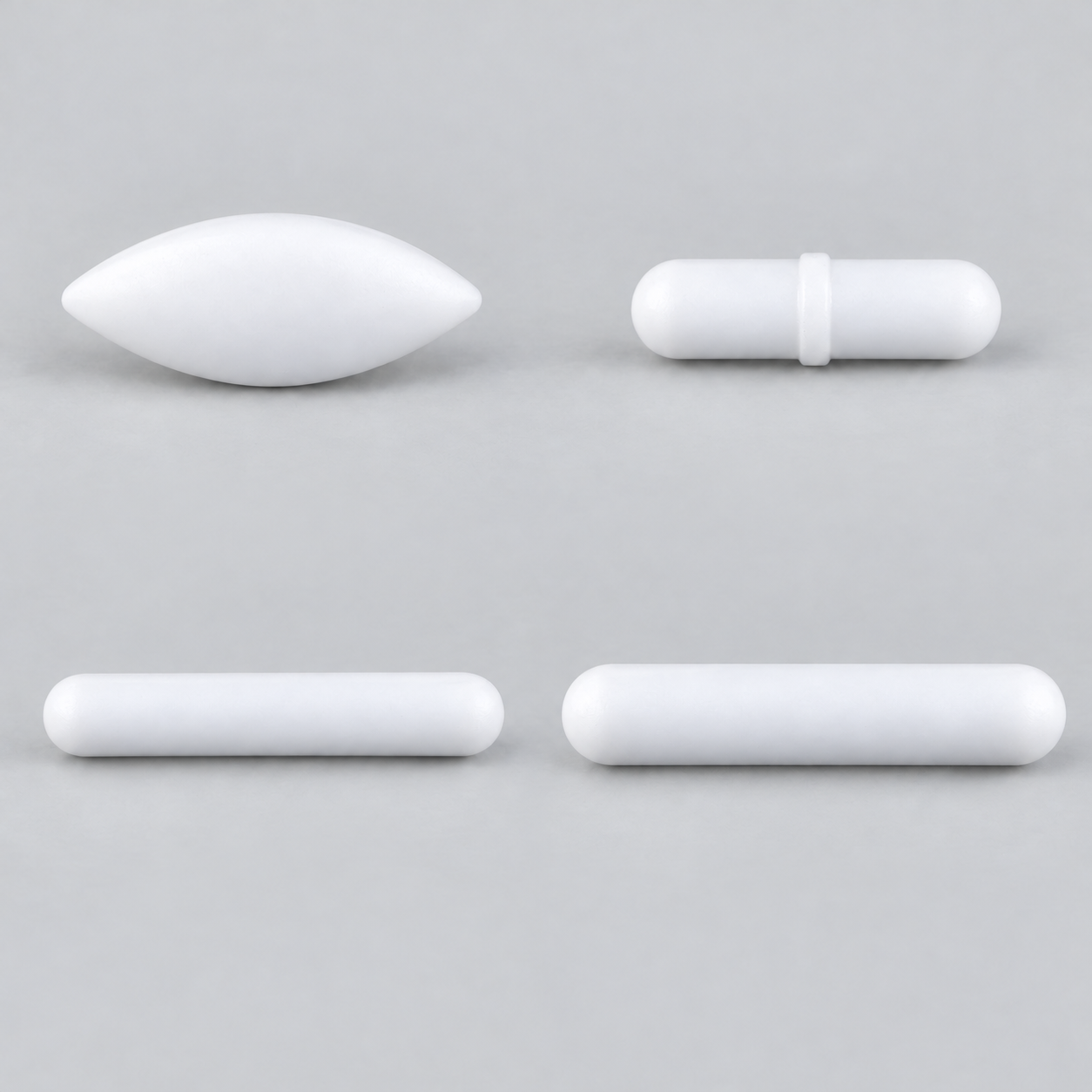
The BOLTTE A/B/C/D listing describes A as an olive or oval shape generally selected for round-bottom vessels, B as a cylindrical bar with a pivot ring generally selected for flat-bottom vessels, C as a straight cylinder, and D as a full cylindrical bar.
Use those supplier descriptions as starting points, not a guaranteed result for every vessel. Inspect the exact model photograph and nominal dimensions. Vessel curvature, clearances and the specific stirrer can change the outcome. The product page offers multiple dimensioned configurations; vessels, stirrers and unrelated shapes pictured in source examples are not automatically included.
3. Read diameter, length and series together
Order the full shape and nominal diameter × length, not a shortened prefix alone. In the audited catalogue, A10 × 25 mm in the A/B/C/D range is not the same size as A10 in the separate supplier-designated high-temperature series, which is listed as 6 × 10 mm. Repeated letters or numbers across listings do not establish equivalence.
The supplier's general selection guideline suggests bar length around one-third to one-half of the vessel outside diameter. Treat that as an initial reference only: the internal bottom clearance and stirrer compatibility still need checking. The listing also notes manual-measurement variation of 1–3 mm. Obtain confirmation if precise fit is important rather than assuming nominal dimensions are inspection tolerances.
4. Check the complete stir bar's temperature limit
The PTFE shell and permanent magnet are different parts of the assembly. The A/B/C/D product description warns against prolonged use at 200°C or above because the internal magnet may lose magnetism. This warning is not a positive guarantee that every lower temperature is suitable for every duration or chemical exposure.
The supplier-designated high-temperature series must also be reviewed as a complete assembly. Do not adopt a process temperature solely from that series name or a generic PTFE property. Ask for the actual operating limit, exposure conditions and applicable evidence. Confirm chemical compatibility for the exact mixture, concentration and cleaning method.
5. Validate magnetic coupling and mixing behaviour
Position the vessel and bar according to the stirrer instructions and begin with a controlled low setting. Increase only as permitted by the instrument and process procedure, watching for stable rotation, adequate mixing and loss of coupling. A higher commanded speed does not necessarily improve the mixing result if the bar is no longer following the drive.
Record the vessel, working volume, mixture, temperature, bar model and stable operating settings. Repeat the check over the expected process variation. If the bar moves erratically or mixing is inadequate, review the whole combination before selecting another shape. Supplier-stated gauss figures on model images are reference claims, not independently verified BOLTTE measurements or guaranteed mixing capacity.
6. Check pack contents, cleanliness and condition
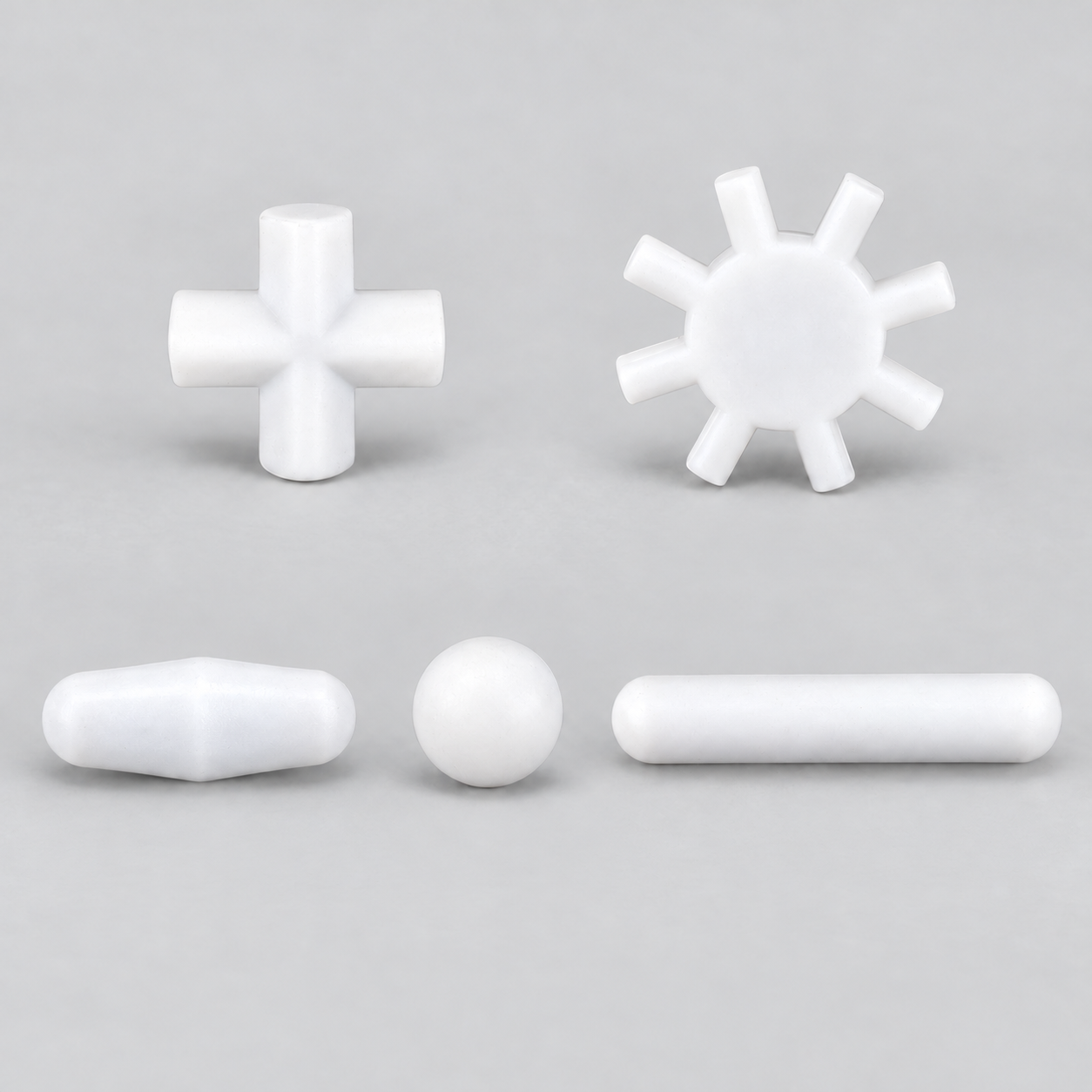
The cross, H-series, eight-tooth, spherical and cylindrical listing is sold as a separately described two-piece range. Other listings have their own pack descriptions. Read the selected model and pack quantity instead of assuming that one item in the cart means one individual bar.
Inspect the PTFE surface before use and follow the laboratory's cleaning and contamination-control procedure. Do not use a visibly damaged coating in a critical process. Review cleaning agents and any thermal treatment against the actual assembly limits. A material description is not a sterilization validation or a statement that the item meets a pharmaceutical or food-contact requirement.
7. Build a repeatable selection and reorder record
For an enquiry, provide the stirrer model, vessel profile and dimensions, working volume, mixture, temperature and required result. Include the complete selected shape, diameter, length and series, plus the pack quantity. Explain whether a supplier claim needs supporting documentation for your process.
Email BOLTTE your vessel and mixing requirements when a model is unclear. Keep the successfully validated combination in the laboratory record so reorders use the exact series and dimensions. The final decision should be based on the real instrument and process, not the appearance of a catalogue image.
Common ordering question
Should the same bar be ordered for every vessel size?
Not without validating the combinations. Keep a separate record for each vessel and process, including its bottom profile, working volume and successful bar dimensions. A result obtained in one beaker does not prove an equivalent result in a flask or another vessel with a different base. If several bars are stocked together, retain clear labels for their exact series and size. This makes a repeat experiment or reorder traceable without depending on an informal description such as the small white bar.