A multi-cup tool may lose vacuum through a cup that misses the workpiece. Branch valves can address specific circuit conditions, but a logic valve, check valve and safety-valve-labelled product should not be treated as the same device. Select by documented behavior and the actual circuit.
1. Start with the required behavior
Describe what should happen when one cup is uncovered, when supply vacuum is interrupted and when the controller commands release. These are separate operating conditions. A valve that addresses an uncovered branch may not retain a suspended part after a supply failure.
State the maximum acceptable response time and how the machine confirms a valid grip. Do not substitute a valve for an independent risk assessment or approved monitoring system.
2. Do not choose by product name alone
Obtain the circuit symbol, flow direction and operating explanation for the exact model. Ask whether an initial seal is required, how the valve resets and whether a bypass flow exists. Names such as logic, check or safety do not themselves establish these details.
An advertised valve designation is not evidence of a certified safety function. Keep personnel out of the drop zone and support the workpiece during commissioning.
3. Verify every interface
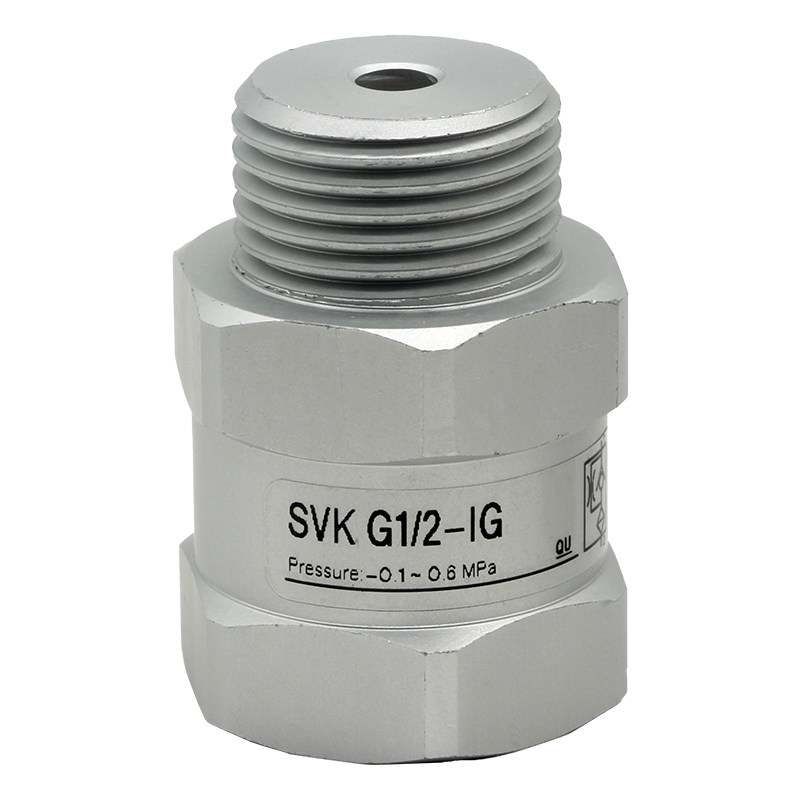
The SVK/SVKG listing distinguishes top external- and internal-thread configurations and different full suffixes. Check both interfaces, not only the top port. Match metric or G-thread specifications to the mating component and confirm the required sealing method.
Check across-flats dimensions and tool access. Tightening through a delicate valve body or cup instead of the intended wrench surface can damage the assembly.
4. Review branch flow and reset conditions
A branch valve adds another component between source and cup. Request model-specific flow and switching information where needed. Confirm release behavior with the machine's blow-off or vent arrangement rather than assuming reverse flow is unrestricted.
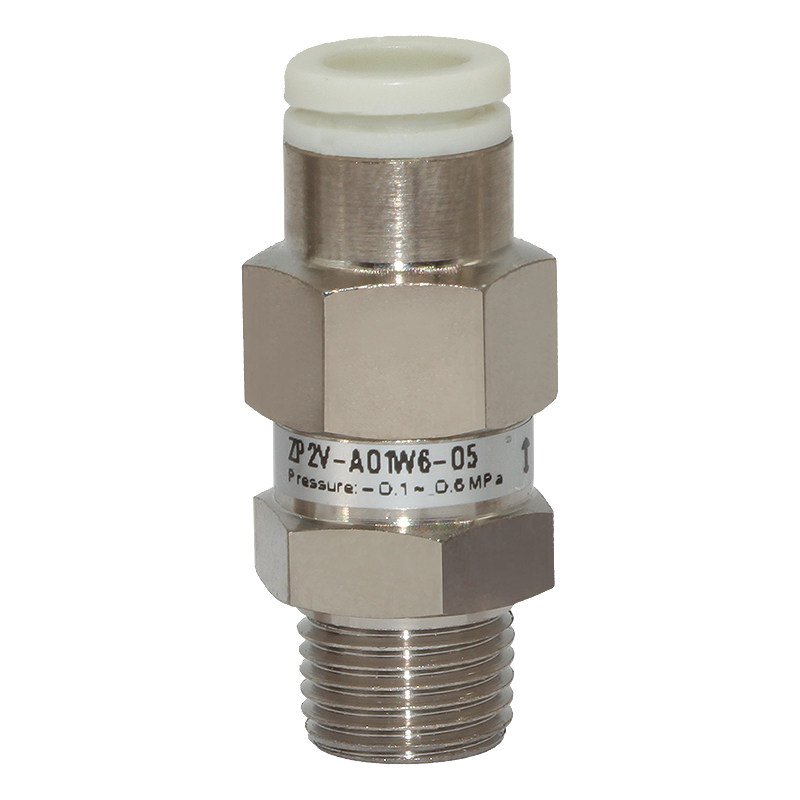
Avoid mixing suffixes or port configurations when comparing drawings. The ZP2V listing separates A/B-port configurations; the selected diagram is the relevant reference.
5. Test the actual operating cases
With the load safely supported, test all cups sealed, one intended branch uncovered, normal release and controlled restart. Record vacuum near the cups and the controller's decision to permit motion. Only run failure simulations through an approved commissioning procedure.
If a cup reseats slowly, check the reset sequence and leakage path before increasing vacuum. Do not bypass a monitoring interlock to make the test pass.
6. Keep a circuit-level replacement record
Document each valve's full model, installation orientation and associated cup group on the tooling drawing. Photograph markings before removing an old component. Service stock should reproduce both function and connections.
Send the circuit sketch, cup count, expected uncovered branches and release method with a quotation request. Where behavior is not documented, treat it as unresolved rather than promising that a similar-looking replacement will prevent a dropped load.
7. Related products and next steps
SVK/SVKG vacuum valves · ZP2V valve configurations.
Send the complete model code, drawings or photographs, required quantity and application conditions to boltte@boltte.com. Confirm missing specifications in writing before ordering. Catalogue images illustrate the linked product family; they are not proof of compatibility, tested capacity or certification for your installation.