A vacuum generator must match the workpiece leakage, evacuation time and available utilities, not simply the highest vacuum number. This guide explains how to prepare a useful comparison for compact pneumatic generators without assuming that every generator can serve the same cup circuit.
1. Define the complete handling cycle
Record workpiece mass, orientation, acceleration, surface porosity and the number of cups contacting each part. Include the time allowed between first contact and the machine's permission to lift. A sealed test plate is useful for comparison, but it does not reproduce leakage through cardboard, rough surfaces or an incompletely seated cup.
Separate initial evacuation from steady holding. The first phase removes air from hoses and cup cavities; the second must maintain the required vacuum despite leakage. Treat both as acceptance conditions.
2. Read vacuum level and suction flow separately
Vacuum level describes pressure difference, while suction flow describes air-removal capability under stated conditions. A high-vacuum selection is not automatically the fastest choice for a leaky workpiece. Compare curves or supplier data at the same supply pressure and operating vacuum, rather than comparing isolated maximum values.
Ask for the measurement conditions when a flow figure is supplied. Do not confuse compressed-air consumption at the supply port with suction flow at the vacuum port.
3. Match the selected generator configuration
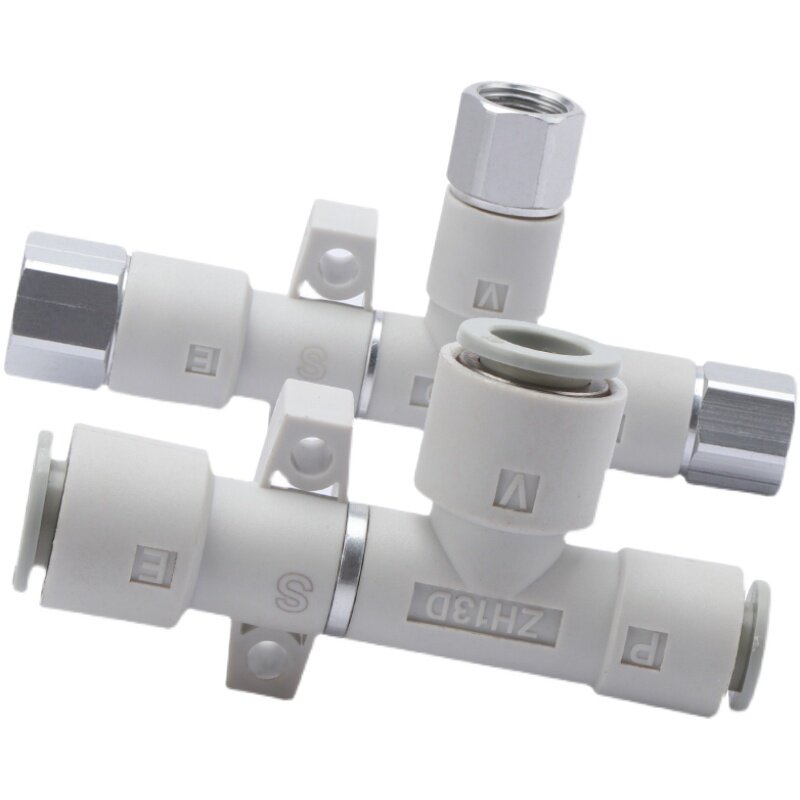
The linked ZH05–ZH13 range distinguishes S high-vacuum and L high-flow configurations. Connection suffixes also differ. Order the complete code and check its drawing; selecting the family name alone leaves the ports and intended configuration unresolved.
Pneumatic ejectors require compressed air. Electrical pumps and blowers are alternative generator types, but choosing between them requires a system-level utility and duty-cycle assessment, not a direct dimensional substitution.
4. Include hoses, valves and filters
Draw the circuit from source to workpiece. Mark hose inside diameters, lengths, branch points, filter locations and valve restrictions. A generator tested at its own port can look satisfactory while a distant cup reaches the required vacuum too slowly.
Provide clearance for exhaust and service access. Check the exhaust arrangement against the selected generator instructions; a silencer or shared exhaust must not be assumed to leave performance unchanged.
5. Run a repeatable acceptance test
Use the actual workpiece and document supply pressure during operation, vacuum at the cup, time to the agreed lifting threshold and release time. Repeat the test with the anticipated leakage condition, such as one unused cup, only within an approved guarded setup.
Keep payloads supported during commissioning. Do not use a successful static pickup as evidence that the assembly is approved for overhead lifting or personnel-protection duties.
6. Prepare the supplier comparison
Submit a circuit sketch, cycle time, utility limits, measured leakage behavior and the required vacuum at the cup. Request model-specific suction-flow data and air consumption. List any continuous operation, noise or space constraints separately.
If two candidates are tested, retain the same hoses, workpiece and measurement locations. Otherwise an apparent generator improvement may actually be a change in the rest of the circuit.
7. Related products and next steps
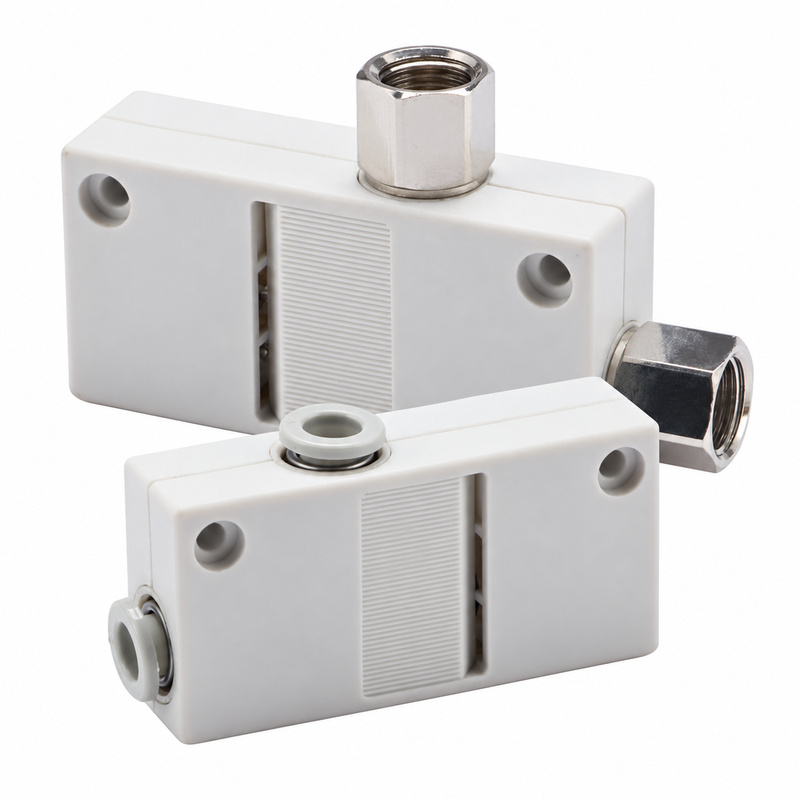
ZH tube generators · ZH box-type generators.
Send the complete model code, drawings or photographs, required quantity and application conditions to boltte@boltte.com. Confirm missing specifications in writing before ordering. Catalogue images illustrate the linked product family; they are not proof of compatibility, tested capacity or certification for your installation.
8. Further technical reading
These manufacturer references explain general engineering principles. Their product ratings, test results and installation values do not apply automatically to BOLTTE selections.