Vacuum filters protect the downstream circuit from particles drawn in at the workpiece. Selection also affects restriction and maintenance access. Identify the complete housing and element combination before ordering, especially when a catalogue contains complete filters alongside replacement-element packs.
1. Identify what is being supplied
A complete filter and a replacement element are different purchases. The linked ZFC listing includes both and identifies replacement elements for claw-type housings. Match the exact housing model and stated compatibility; similar-looking elements are not automatically interchangeable.
Record pack quantity separately from machine quantity. An element pack does not include a new housing unless that is explicitly stated in the selected option.
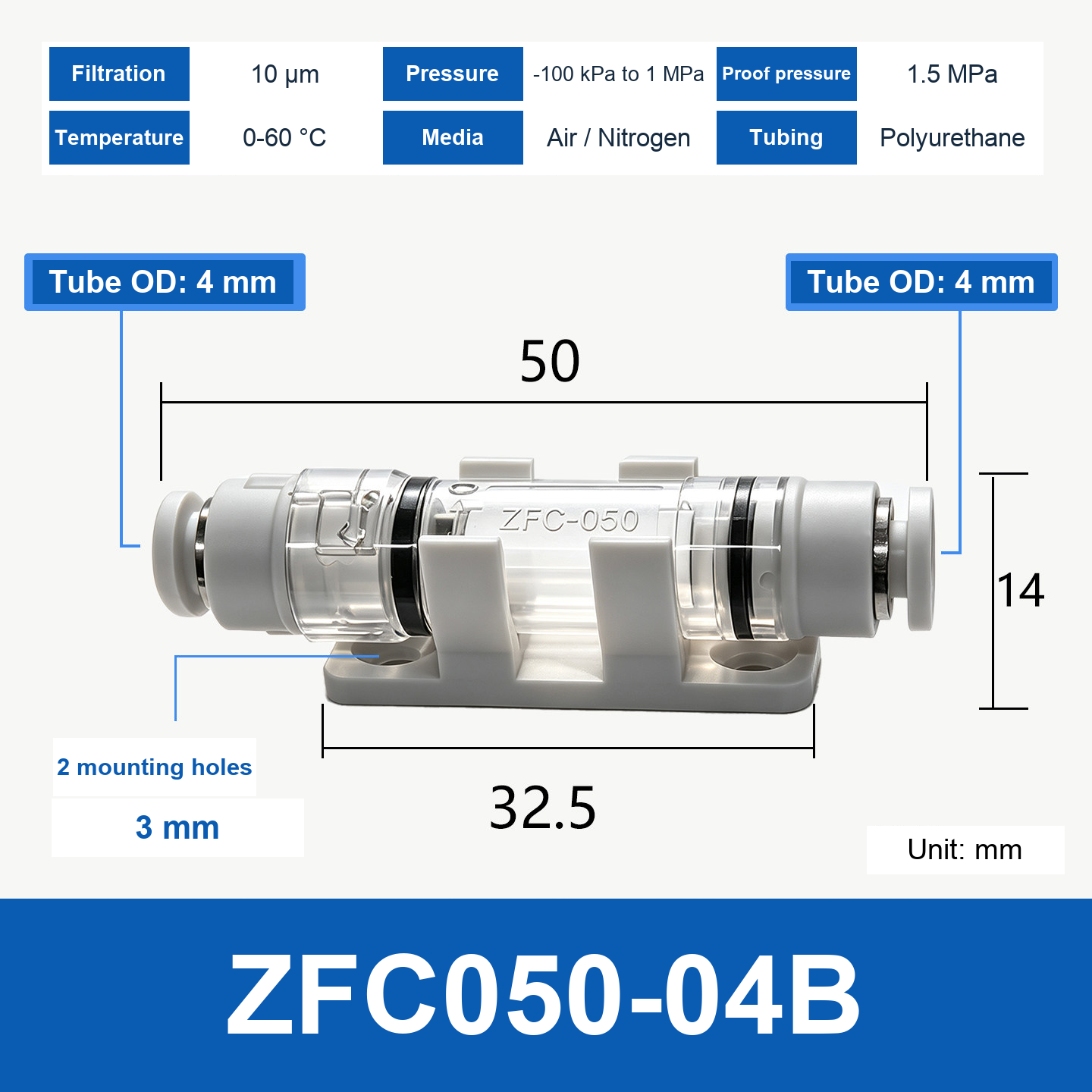
2. Match the connection and direction
Check the tube or thread interface, installation orientation and any marked flow direction against the selected drawing. Leave space to open the housing safely and remove the element. Do not position the filter where service requires bending a rigid line or disturbing a calibrated fixture.
Verify operating vacuum, temperature, flow and the actual contaminant. Dust filtration is not proof that the component separates liquids or is suitable for aggressive vapor.
3. Establish a clean baseline
After approved installation, record evacuation time and cup-side vacuum with a clean element under normal production conditions. Note the workpiece material, cycle rate and measurement locations. These values provide a better maintenance reference than appearance alone.
A clear housing can reveal collected debris, but a visually clean element may still be restricted. Use the equipment's approved monitoring method if pressure-drop measurement is available.
4. Set a condition-based inspection routine
Inspect more frequently when cutting dust, cardboard fibers or other debris are present. Watch for slower pickup, damaged tubing, cracked housings and seal contamination. An interval established on a clean metal part should not be reused unquestioned for porous packaging.
If contamination suddenly rises, investigate its source. Replacing the element repeatedly without correcting debris entry may conceal an ongoing process problem.
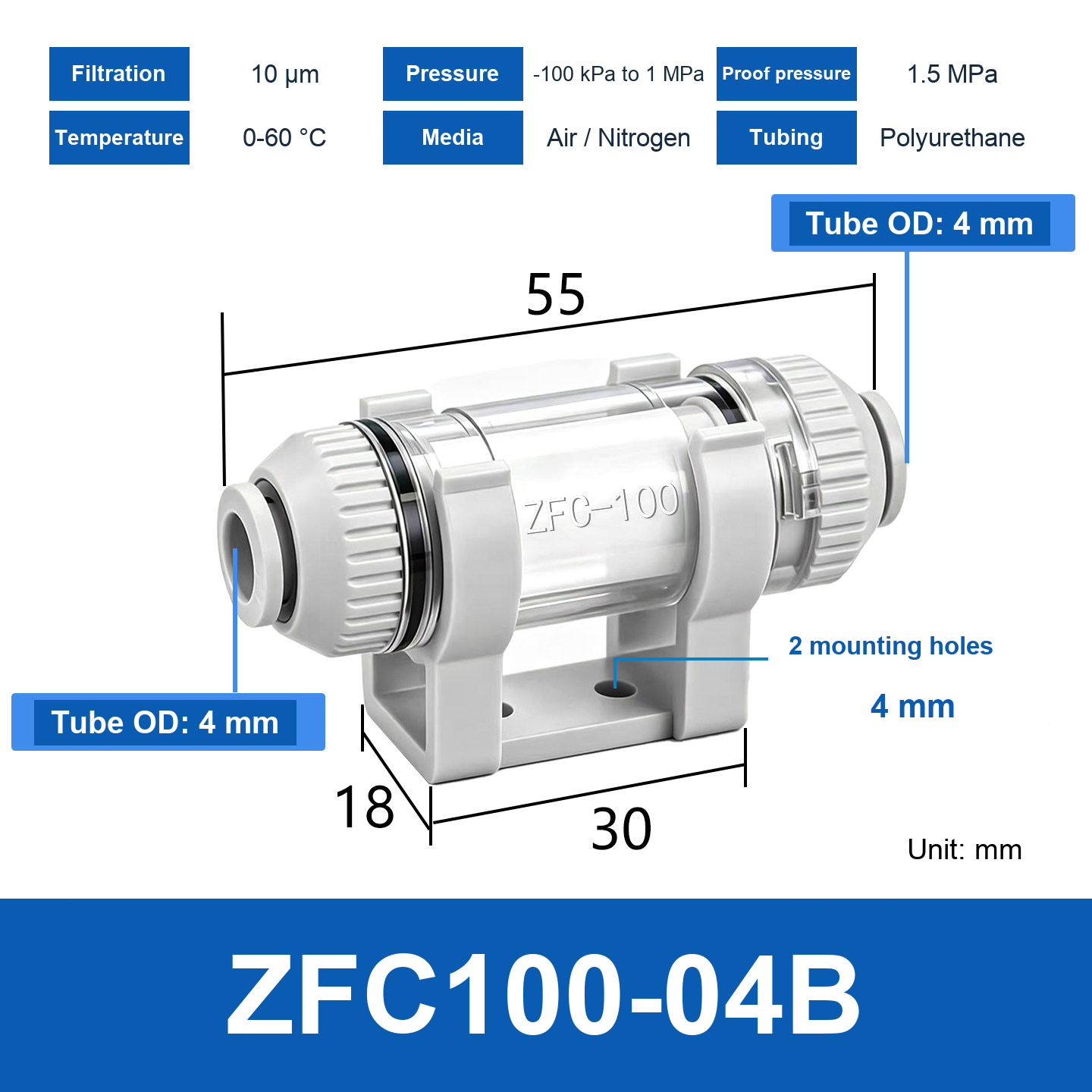
5. Replace safely and verify the seal
Stop the machine, support held parts and isolate the relevant energy sources under the site's procedure before opening a housing. Use the correct element and inspect the housing seal. Do not wash, blow out or solvent-clean an element unless its instructions expressly permit that method.
After reassembly, inspect for leaks and repeat the baseline cycle test before returning to automatic operation. Keep replacement waste out of the vacuum line.
6. Create a service record
Log machine ID, housing model, element code, installation date and the observed reason for replacement. Keep a photograph of the housing label and the correct element packaging with the maintenance file.
When requesting help, provide the selected model, contaminant description, approximate cycle rate and before-and-after response measurements. Avoid using a pore-size or flow rating from another manufacturer's similarly named filter.
7. Related products and next steps
ZFC filters and replacement elements · Vacuum generators.
Send the complete model code, drawings or photographs, required quantity and application conditions to boltte@boltte.com. Confirm missing specifications in writing before ordering. Catalogue images illustrate the linked product family; they are not proof of compatibility, tested capacity or certification for your installation.