Choosing a stir bar requires the vessel's usable bottom geometry and the bar's full dimensions, not just a short model name. Pack quantity is a separate purchasing detail. This guide explains how to record clearance and compare cylindrical, pivot-ring and shaped bars without assuming every overview image represents a set.
1. Measure the usable vessel space
Record bottom shape, internal clearance and any probe, baffle or feature that can contact the bar. Keep vessel outside diameter separate from the space available for rotation.
A nominal beaker capacity does not establish bottom clearance. Use the actual vessel or its dimensioned drawing rather than scaling a catalogue photograph.
2. Read diameter and length separately
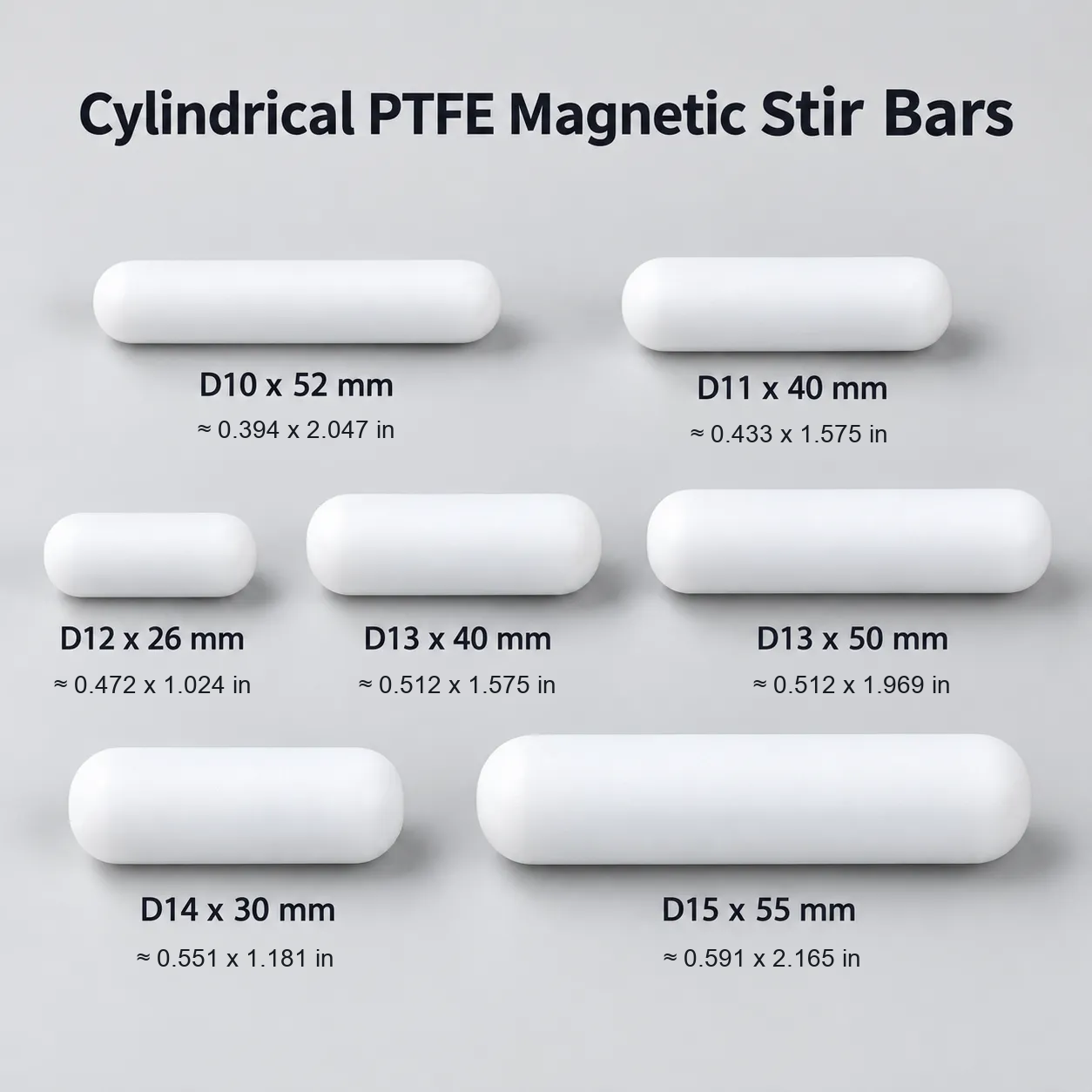
For cylindrical selections, verify whether the size is diameter by overall length. For a cross or another shape, identify which dimension describes the span and which describes an arm.
Short model codes can be misleading. The linked cylindrical catalogue provides exact nominal dimensions and rounded inch conversions; retain the metric source dimensions when specifying a model.
3. Identify the contact geometry
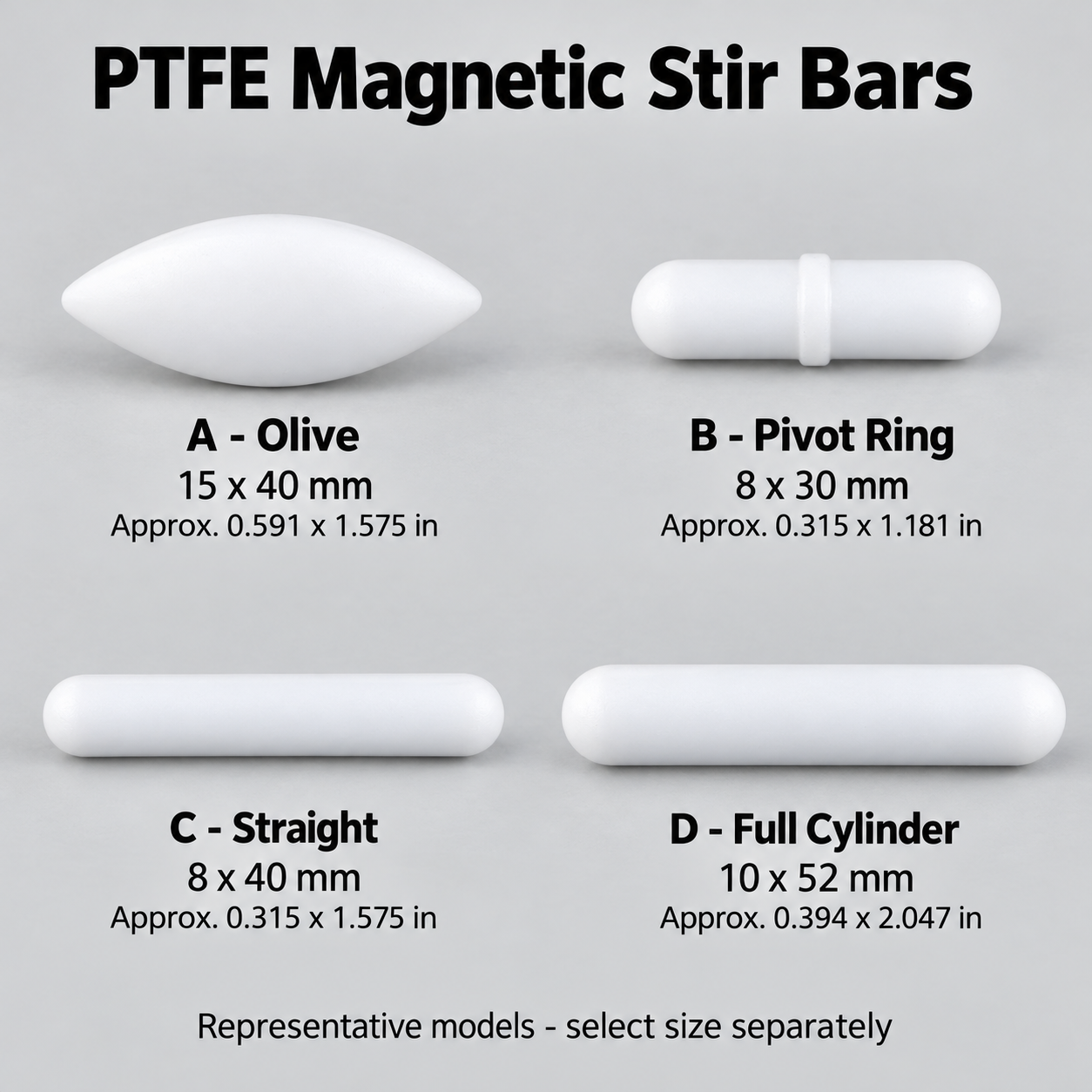
A pivot ring, smooth cylinder and olive profile interact differently with the vessel bottom. The standard catalogue describes these shape families, but selection still needs an actual mixing assessment.
Do not assume that a shape recommendation provides a validated speed, mixing time or viscosity limit. Check stable operation using the instrument and process procedures.
4. Compare models under the same conditions
Keep vessel, volume, medium and temperature consistent during an approved comparison. Observe clearance, stable coupling and the required mixing endpoint, not simply whether the bar spins.
If a bar strikes internal features or moves irregularly, stop and investigate the geometry before increasing drive speed. Record which model was tested and why it was accepted or rejected.
5. Check units and supplied quantity
Do not confuse a bar designation with millimeters of diameter. Confirm each model's actual dimensions and whether the selection supplies one or two pieces.
The cylindrical listing has model-dependent pack quantities, while the additional-shape listing states two pieces per standard selection. Overview photographs show available options, not necessarily assorted pack contents.
6. Write the purchase specification
State series, shape, nominal dimensions, pack quantity, number of packs and intended vessel. Include medium, temperature and any cleaning or documentation requirement that affects selection.
Save the selected drawing with the laboratory stock record. This prevents a future reorder from matching only a short code that means something different in another stir-bar family.
7. Related products and next steps
Cylindrical model table · A/B/C/D selection guide.
Send the complete model code, drawings or photographs, required quantity and application conditions to boltte@boltte.com. Confirm missing specifications in writing before ordering. Catalogue images illustrate the linked product family; they are not proof of compatibility, tested capacity or certification for your installation.