A custom component is made to an agreed specification. It cannot be selected like a standard catalogue item simply by comparing photographs or assuming one price applies to every shape. A useful enquiry defines what must be made, which revision controls and how the supplied part will be accepted.
This guide covers the Custom Manufacturing category: CNC parts, gears, couplings, robot joint components, PTFE parts, graphite bronze bushings, coated rollers and molded elastomer enquiries. Different processes require different details, but all benefit from a clear drawing package and written confirmation before production.
1. Identify the part and controlling revision
Give each component a part number, descriptive name and revision. State the drawing units and explain whether the request is for a prototype, replacement or repeat production. If several parts are required, provide separate quantities and files rather than expecting a photograph of an assembly to define everything.
Where available, send a dimensioned PDF drawing with a STEP model and relevant DWG or DXF files. Confirm that the files describe the same revision. If the drawing and model disagree, resolve the discrepancy before asking for production approval. Mark superseded files clearly and identify the final approved document in the order record.
2. Define interfaces and critical requirements
Explain how the component connects to the surrounding equipment. Identify critical bores, mating shafts, threads, seal profiles, mounting faces and locating features, with the dimensions and tolerances required for those functions. Provide datum references and geometric controls where they are needed rather than adding an unexplained blanket precision statement.
A 3D model communicates geometry, but it may not contain every thread, tolerance or surface requirement. Protolabs Network's technical drawing guide describes this distinction. It is a general drafting reference; its manufacturing capabilities, finishes or lead times must not be represented as BOLTTE commitments.
3. Specify material and finish separately
State the required material and grade, any heat treatment and the surface finish or coating. Identify the surfaces where a particular roughness or appearance is important. If you are unsure of the material, explain the application and ask for review instead of selecting solely from the colour of an example image.
For custom polymer, bushing or elastomer parts, provide the relevant exposure, temperature and operating conditions. Explain whether dimensions apply before or after coating or treatment. Ask for material documents when your acceptance process requires them. Do not assume that a material family name automatically establishes chemical compatibility, regulatory approval or a guaranteed service life.
4. Add details specific to the component family
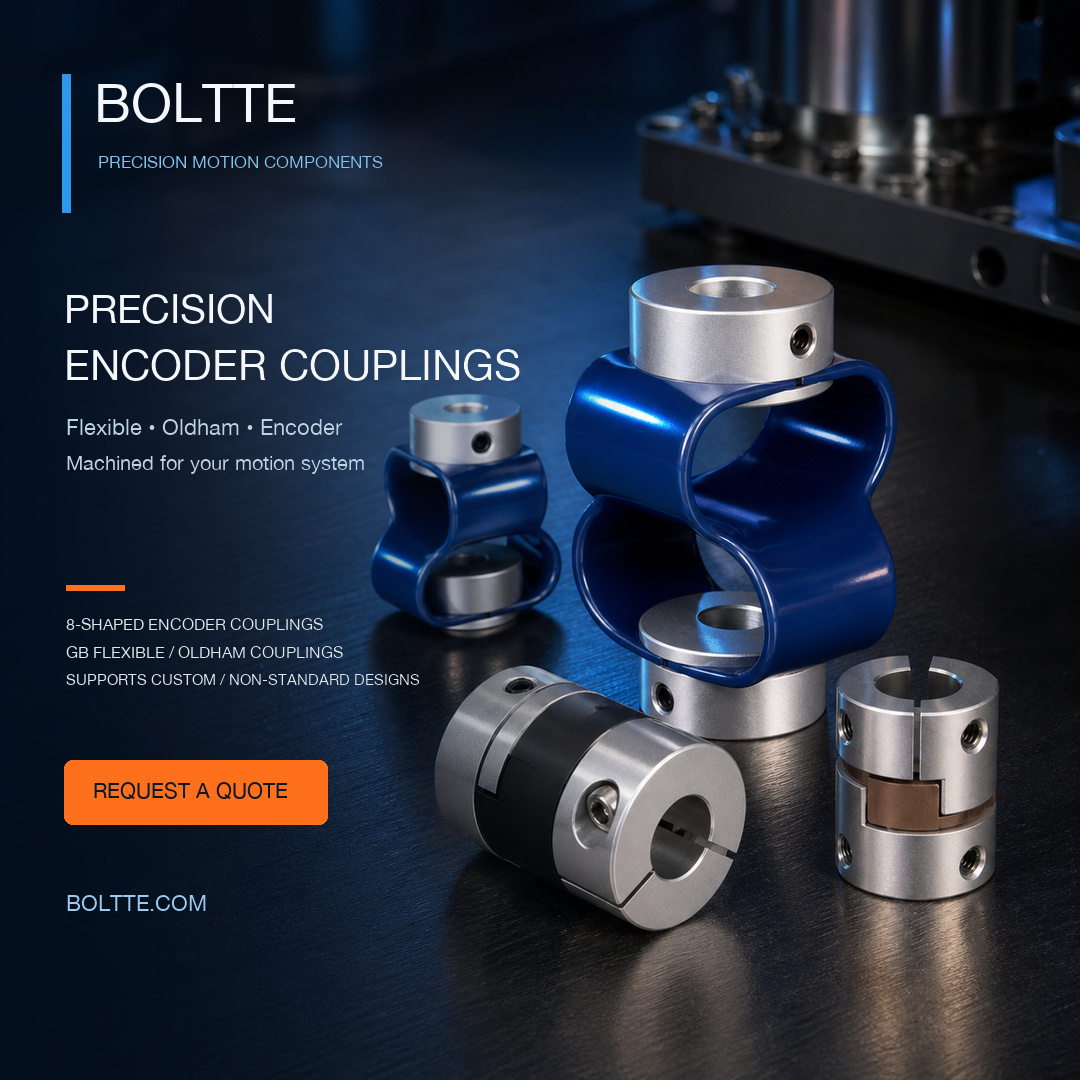
For gears, provide the complete geometry and mating requirements, including tooth data where applicable. For custom couplings, include both shaft interfaces and the drive's torque, speed and movement requirements. For robot joints, define the mating assembly, mounting arrangement and loads that need review.
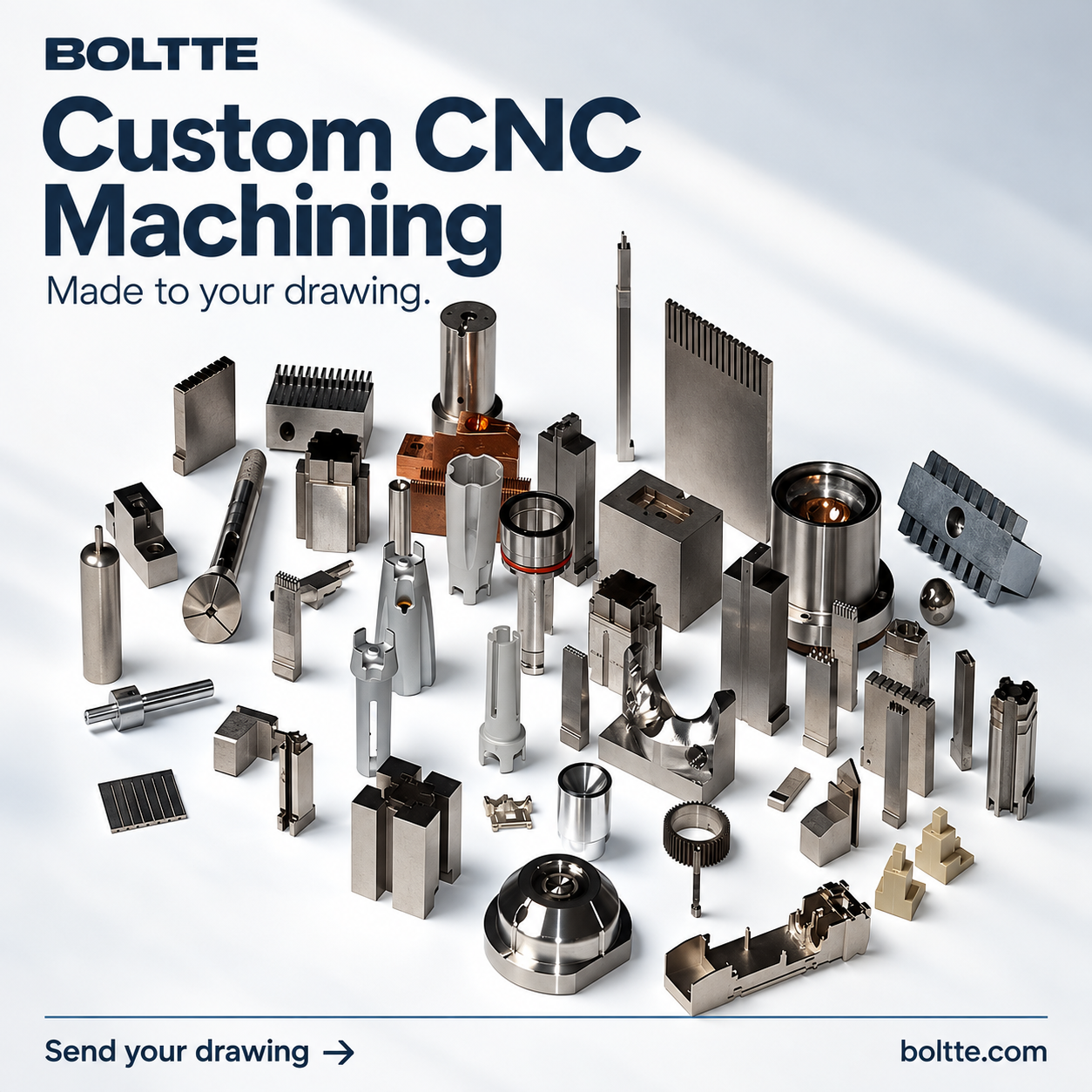
For coated rollers, identify the core, shaft interfaces, outside profile and coating requirements. For PTFE machined parts, send the drawing and intended service conditions rather than assuming the example parts shown form a standard set. These are enquiry fields, not universal capabilities or performance ratings. BOLTTE confirms feasibility for the actual part after reviewing the complete request.
5. State quantities, inspection and delivery requirements
Specify the quantity for each part number, prototype needs and any expected repeat demand. State the requested delivery destination and date so the quotation can distinguish manufacturing, packing and transport requirements. Avoid treating a desired date as an accepted delivery commitment before it appears in the written quotation.
Describe the required inspection documents and acceptance method, especially for critical interfaces. Identify whether dimensional reports, material documents or an agreed first article are requested. Ask which checks can be supplied and what they cost. Requirements raised after production may not match the original quotation or agreed manufacturing scope.
6. Review the quotation before approving production
The BOLTTE custom CNC enquiry page has no universal unit price, minimum quantity or lead time for every component. Price and terms depend on the confirmed geometry, material, manufacturing requirements and quantity. Obtain a project-specific written quotation rather than paying based on an illustrative component image.
Review the drawing revision, quantities, material, finish, inspection scope, delivery arrangements and any exceptions together. Clarify unresolved questions before approval. If the design changes, ask whether the quotation and production plan need revision. A previous quote for a visually similar part is not automatically valid for a new geometry or order.
7. Send a complete enquiry and retain the approval record
A practical email includes the part list, controlling drawings and models, material, quantity, critical requirements, finish, inspection needs and destination. Explain which requirements are mandatory and which are open for discussion. If only a sample or photographs are available, ask what additional measurements are needed; a photograph alone cannot approve production dimensions.
Email your drawing package to boltte@boltte.com or use the WhatsApp enquiry button on the relevant custom page. Keep the approved drawing and written specification with the order for future reference. Custom items follow the agreed return conditions; report an incorrect, defective or damaged delivery with the order number and supporting evidence so it can be reviewed.
Common ordering question
What should change when a drawing is revised after quotation?
Identify the new revision and describe the changed features, even if the difference appears minor. Ask whether the material, process, inspection, price or delivery arrangement must be reviewed again. Do not assume a quotation for an earlier revision authorizes the new one. Keep the revised quotation or written acceptance with the approved files, and make sure the purchase order references the same documents. This prevents engineering, purchasing and production from working from different versions of the intended part.