A keyless locking assembly belongs to a shaft-to-hub connection, not a shaft-positioning collar. Correct selection requires the mating shaft, hub bore and installation space together. Use the exact assembly drawing and obtain its installation requirements before relying on the connection.
1. Identify the connection function
Describe what the hub drives or retains, the expected torque, axial load and speed, and whether loads reverse. Supply a cross-section showing the shaft, hub and adjacent components.
A model whose bore fits the shaft can still be unsuitable for the hub or duty. Dimensions alone do not establish transferable torque or allowable loading.
2. Read all three Z1 dimensions
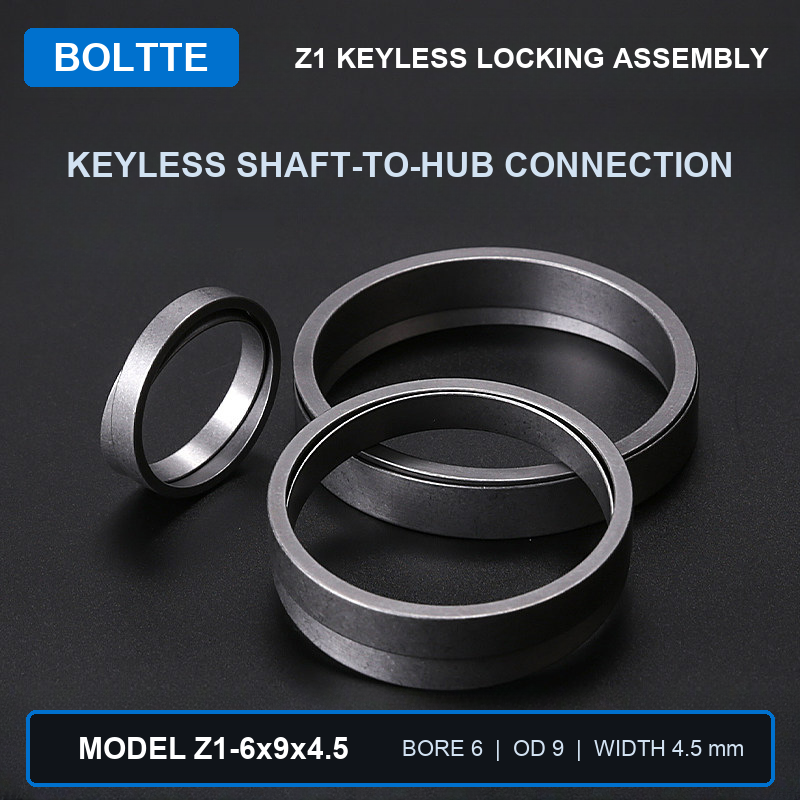
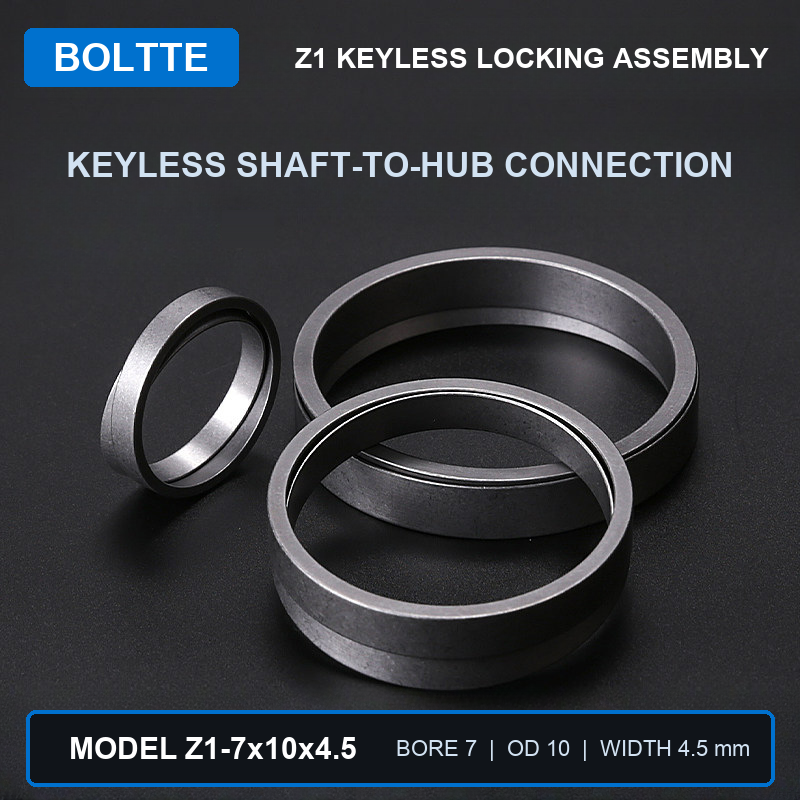
The linked Z1 codes identify bore, outside diameter and width. These describe three separate checks: shaft interface, hub interface and axial envelope. Confirm each against the selected drawing rather than choosing by shaft diameter alone.
Do not assume that a similarly named series uses the same geometry, centering behavior or tightening method. Keep the complete code in the purchase specification.
3. Confirm tolerances and hub design
Request the required shaft and hub tolerances, surface conditions and relevant hub-wall guidance for the selected assembly. Provide the hub material and drawing so the supplier can review the actual installation.
Unspecified tolerances should remain unresolved. Applying a convenient general machining tolerance or borrowing another series' fit can change the connection behavior.
4. Obtain the exact assembly procedure
Ask which surfaces require cleaning or lubrication, which fasteners are tightened, the tightening sequence and the model-specific torque. Also request the intended release procedure and any reuse restrictions.
Do not assume dry and lubricated values are interchangeable. A generic bolt-torque chart does not substitute for an assembly procedure that depends on surface friction and geometry.
5. Inspect before returning to service
Isolate the drive and follow the approved installation procedure. Check seating, axial location, fastener completion and clearance to neighboring parts. Keep the rotating assembly guarded for the commissioning test.
If slipping or movement is suspected, stop and investigate the connection. Repeatedly tightening an undocumented assembly may damage parts without correcting a fit or loading problem.
6. Keep evidence with the machine
Save the supplier-confirmed assembly drawing, shaft and hub dimensions, material, duty and installation instructions. Record who accepted the installation and any inspection observations required by the machine procedure.
When ordering a replacement, provide this file and photographs of the markings. A split collar or locknut can serve another retention function, but should not be proposed as a direct substitute without an engineering review.
7. Related products and next steps
Z1 locking assemblies · Split shaft collars.
Send the complete model code, drawings or photographs, required quantity and application conditions to boltte@boltte.com. Confirm missing specifications in writing before ordering. Catalogue images illustrate the linked product family; they are not proof of compatibility, tested capacity or certification for your installation.