A split collar and a precision locknut can both appear near a bearing or shaft end, but their mating interfaces and retention methods differ. Choose the component specified for the machine's shaft and duty. Do not equate a matching outside envelope with interchangeability.
1. Identify the shaft interface
A split collar clamps around a shaft bore. A locknut requires its specified mating thread and seating arrangement. Establish whether the shaft is plain, threaded or designed with another retention feature before comparing catalogue sizes.
Show the adjacent bearing, spacer or hub in a sketch. The component's intended contact face and available axial space matter as much as its nominal size.
2. Read the collar dimensions together
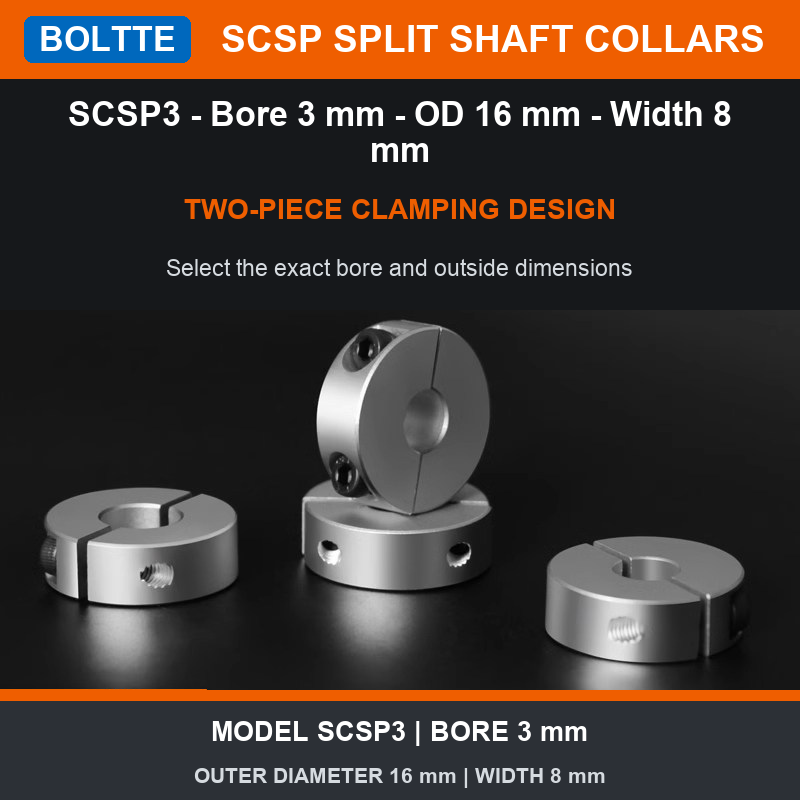
The linked SCSP range is selected by bore, outside diameter and width. For example, different bores can share the same outside diameter and width; an outside measurement alone cannot identify the correct collar.
Confirm shaft tolerance and surface condition. The catalogue's dimensional range does not provide an allowable axial load for every installation.
3. Check the locknut thread completely
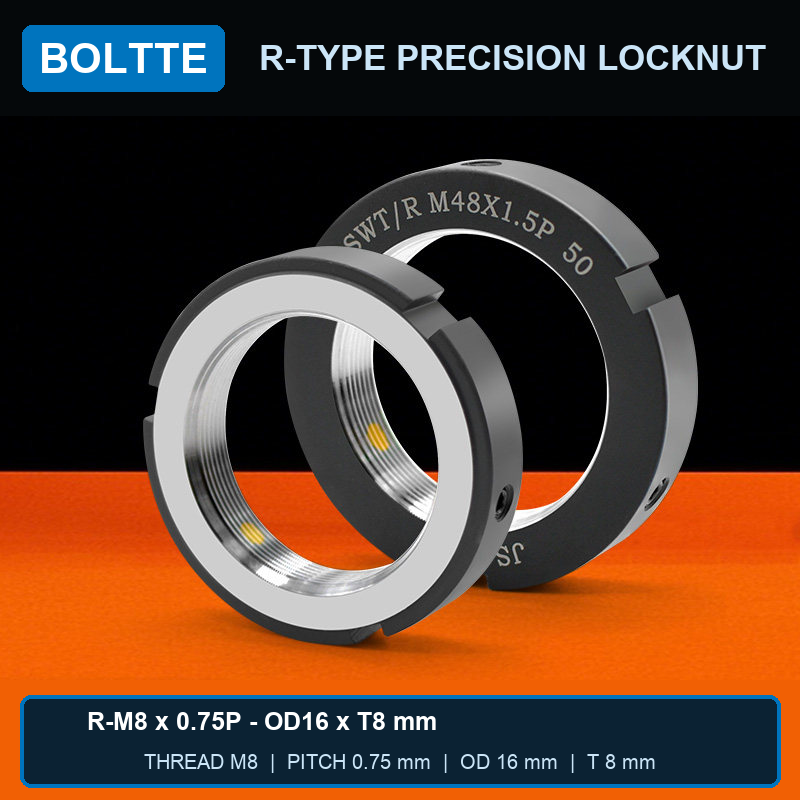
For a locknut, record thread diameter, pitch, handedness if applicable, and the required seating face. A diameter-only designation is incomplete where multiple pitches exist.
Do not force a near-matching nut onto an existing shaft. Obtain the selected model's fastening method and the machine's bearing-adjustment requirements; retention and bearing preload should not be guessed from appearance.
4. Plan installation access
A two-piece collar can be assembled around an accessible shaft, but still needs adequate fastener access and clearance through rotation. Check surrounding parts before assuming that it solves a confined installation.
Use the specified tightening requirements. A collar is not a shaft-to-shaft coupling, and a retention change should not alter the approved drive arrangement without review.
5. Validate the actual retention duty
State axial loading, vibration, motion direction, speed and any consequences of movement. Ask for application-specific confirmation where load data is missing. Do not assign a load rating from another collar of similar size or material.
After installation, follow the machine's guarded commissioning procedure and check for unwanted movement using its approved inspection method.
6. Maintain a clear replacement record
Photograph the installed component and its markings, then record bore or thread details, overall dimensions and the associated shaft drawing. Keep collar and locknut stock separately labeled to avoid size-only substitutions.
For a quotation, describe whether the part locates, spaces, retains or sets another component. That distinction helps identify missing requirements before an attractive but functionally different part is ordered.
7. Related products and next steps
SCSP split shaft collars · R-type precision locknuts.
Send the complete model code, drawings or photographs, required quantity and application conditions to boltte@boltte.com. Confirm missing specifications in writing before ordering. Catalogue images illustrate the linked product family; they are not proof of compatibility, tested capacity or certification for your installation.