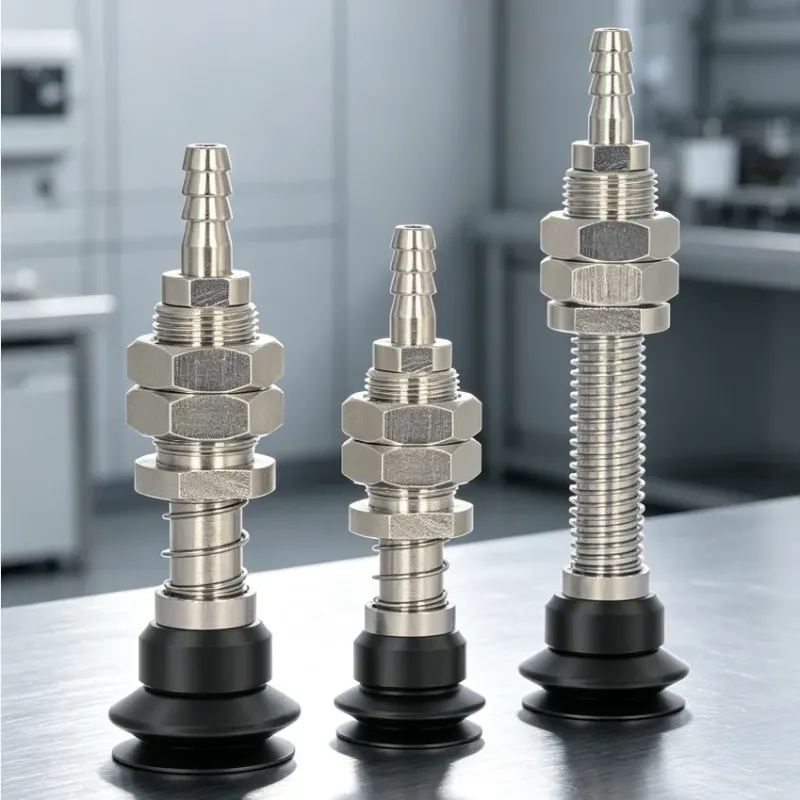
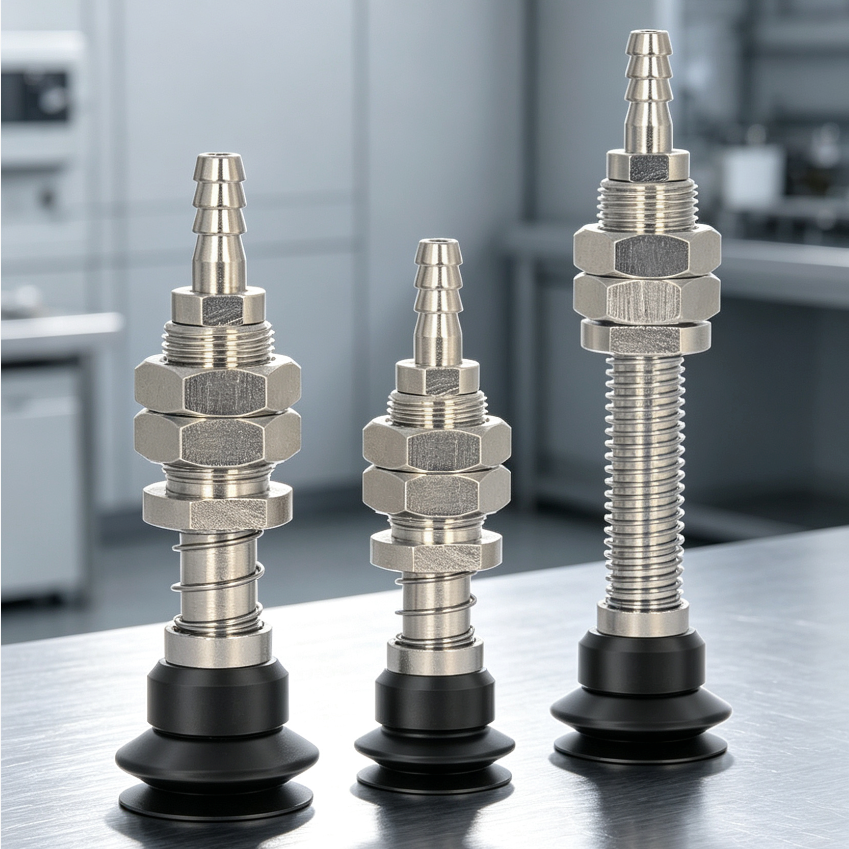
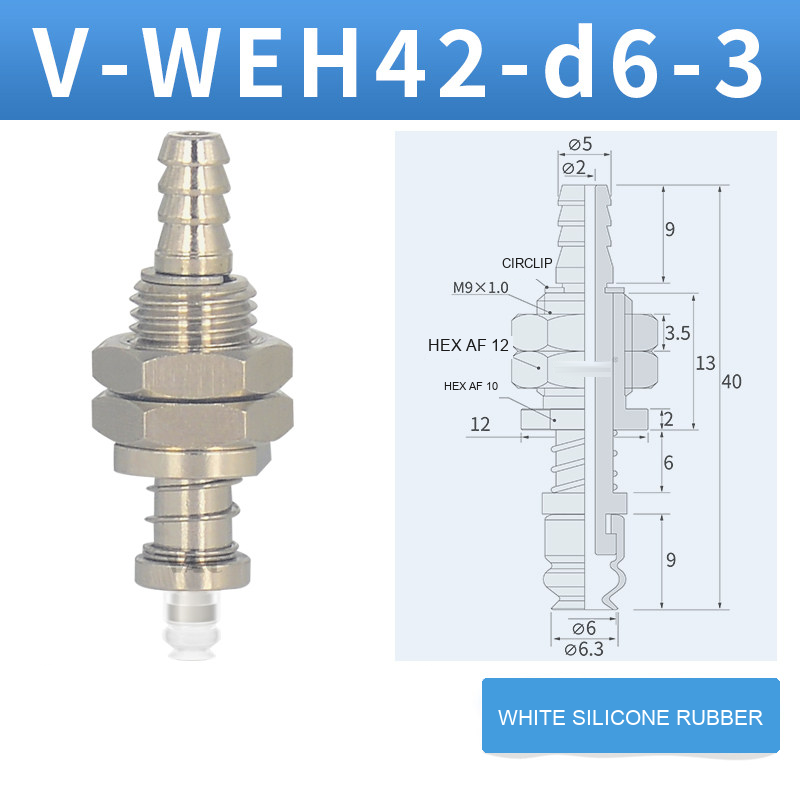
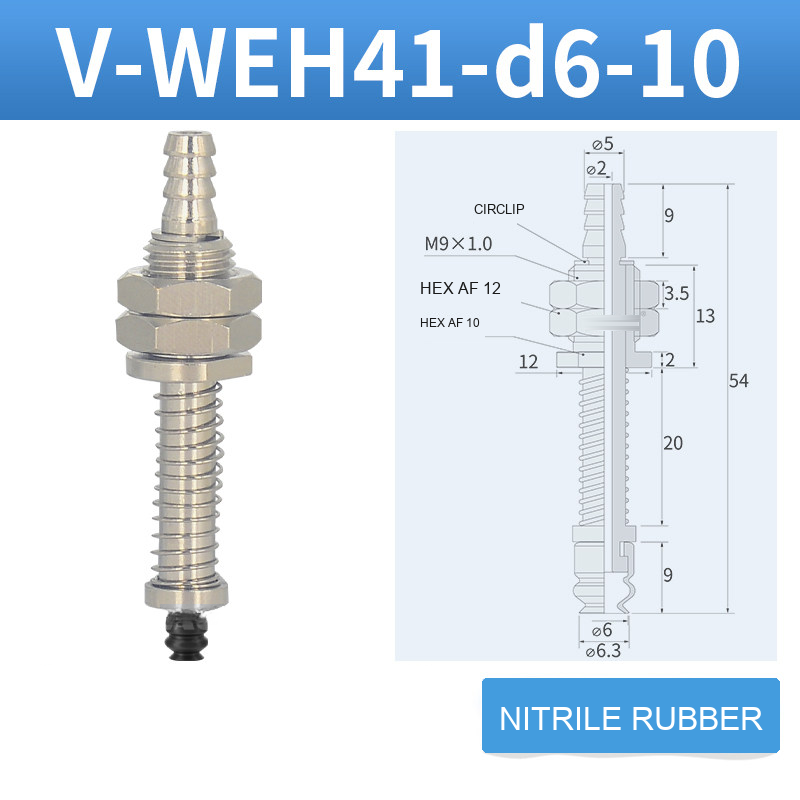
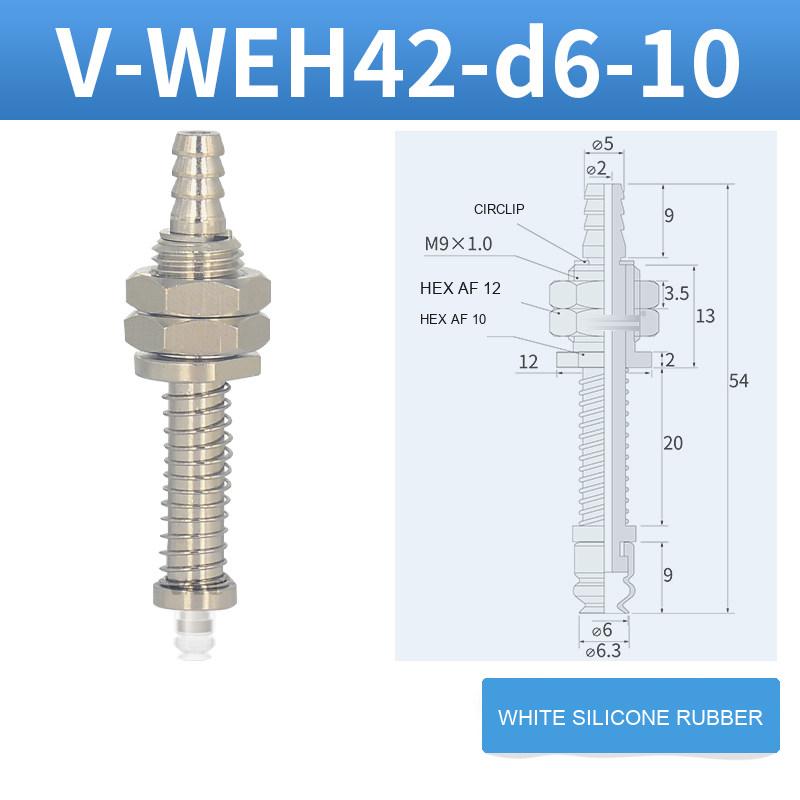
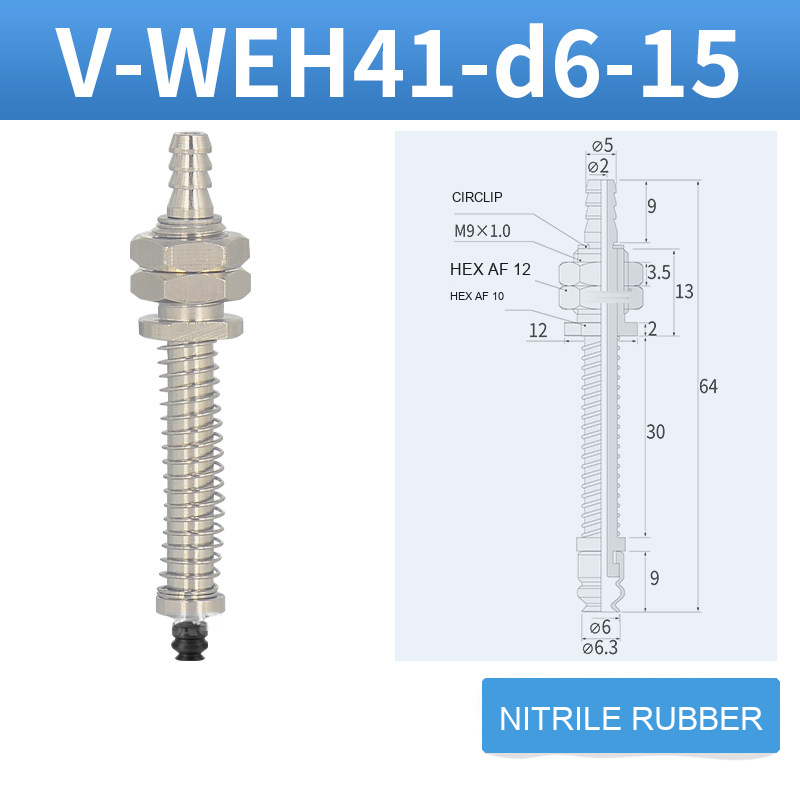
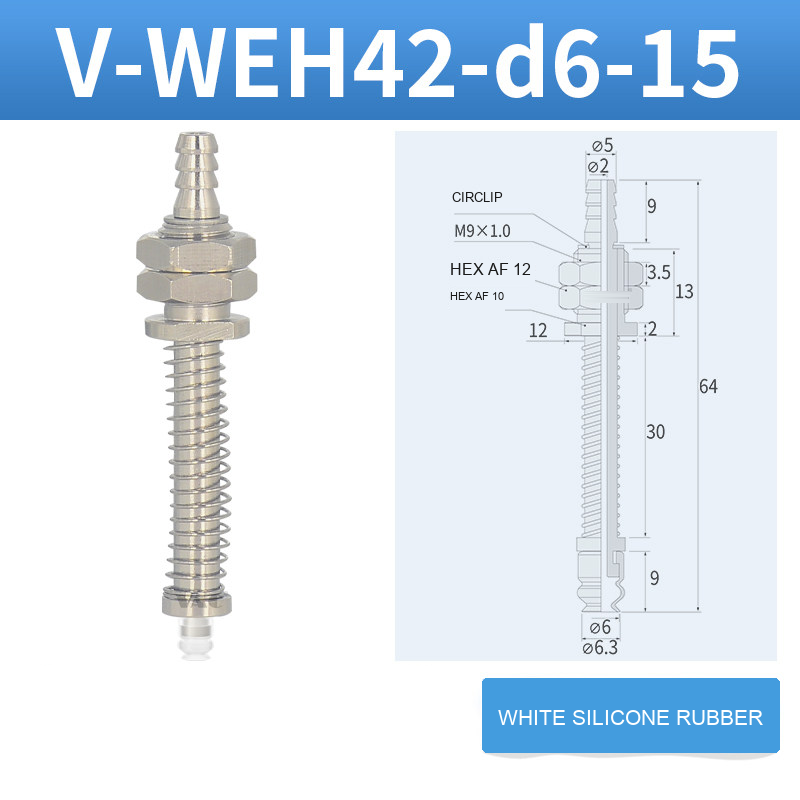
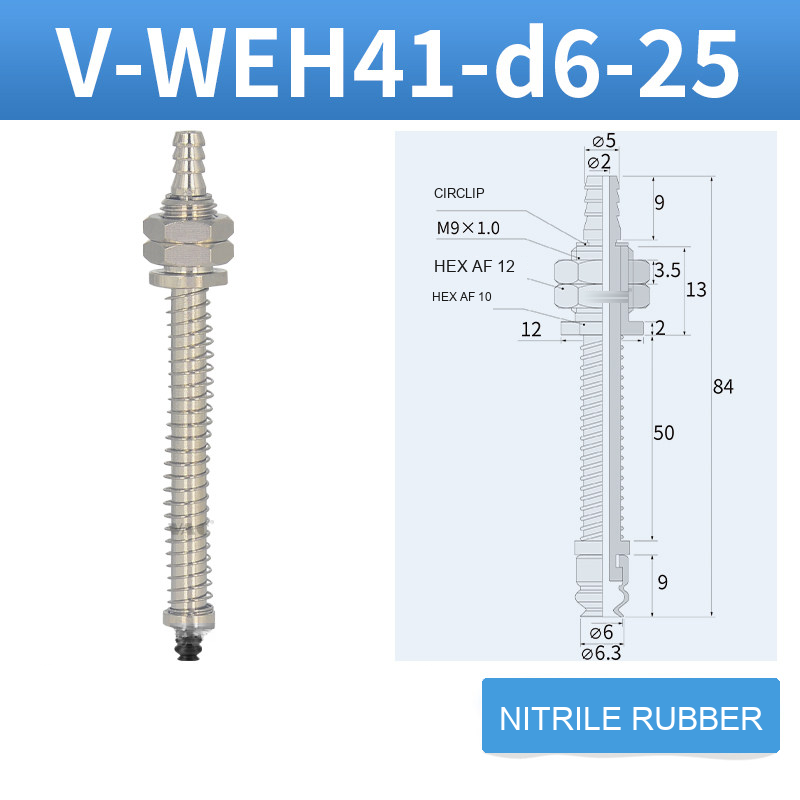
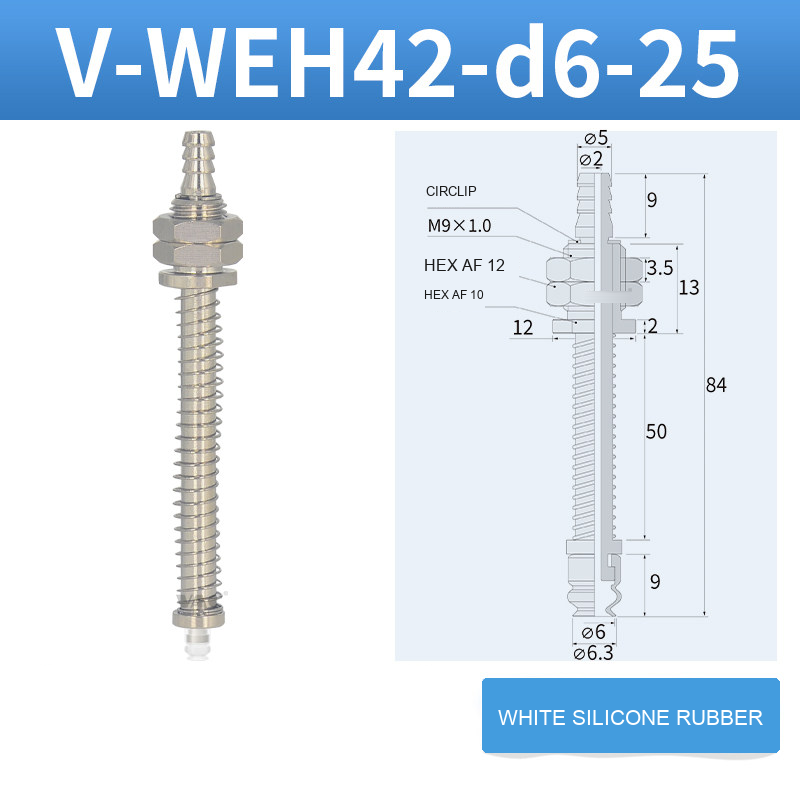
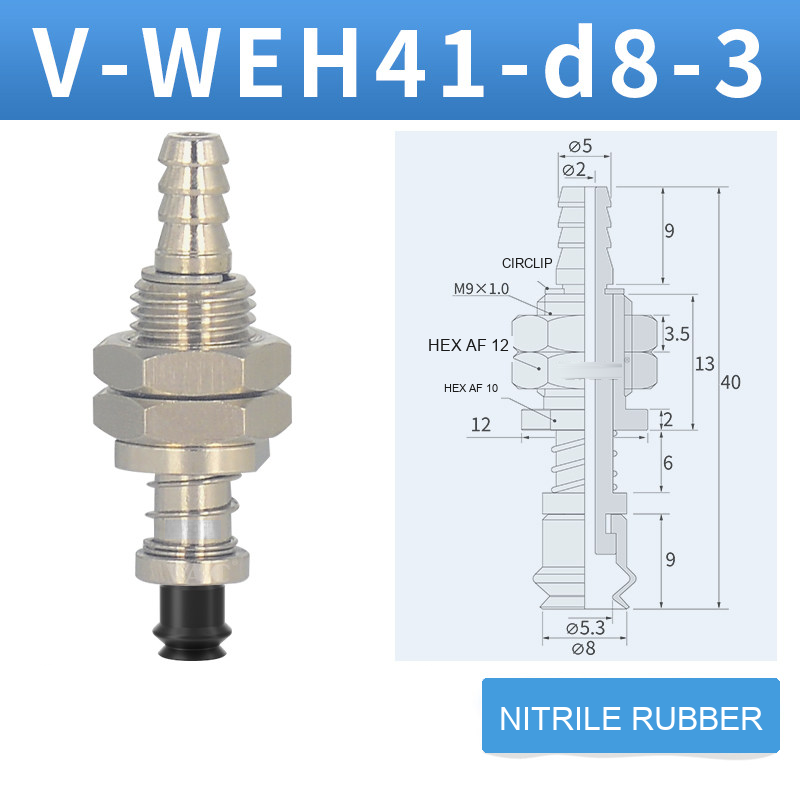
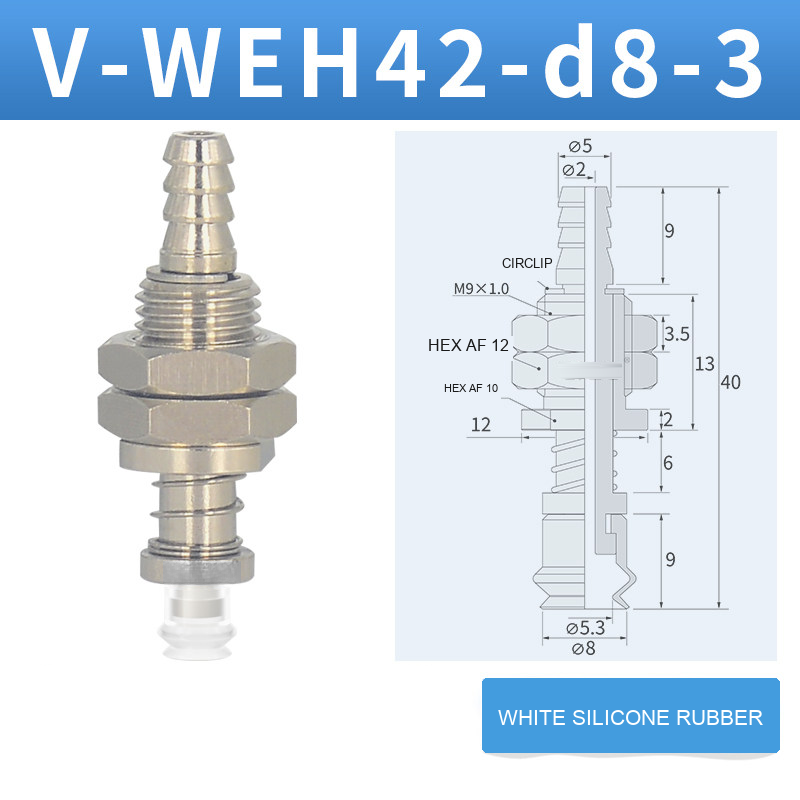
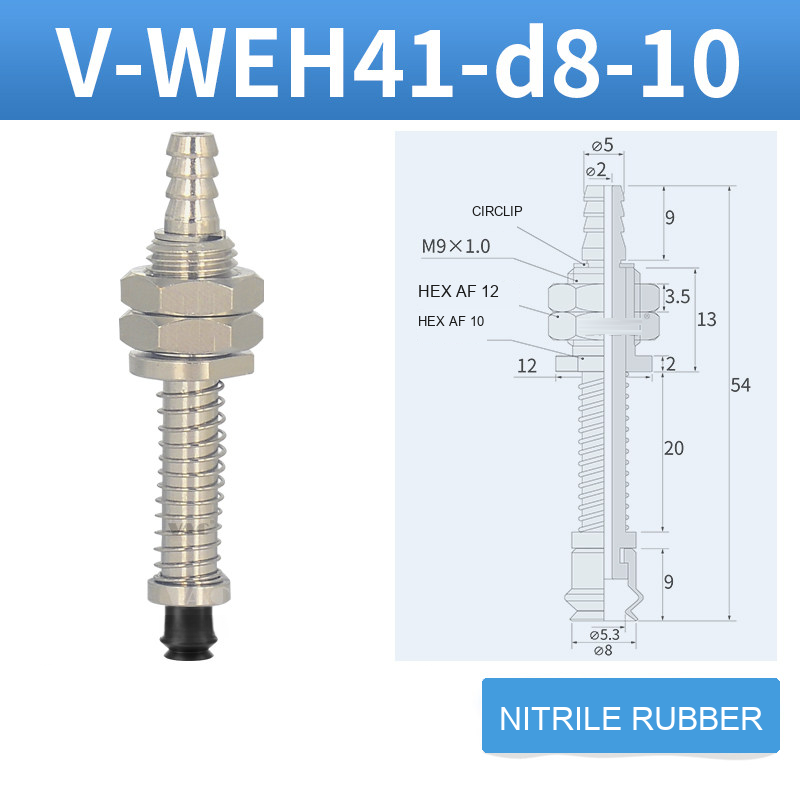
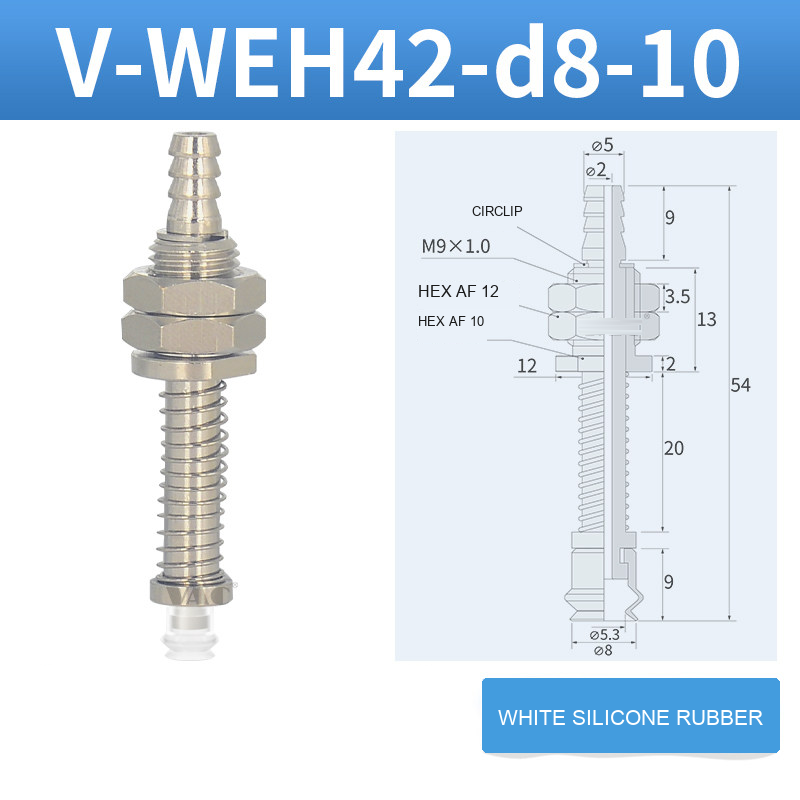
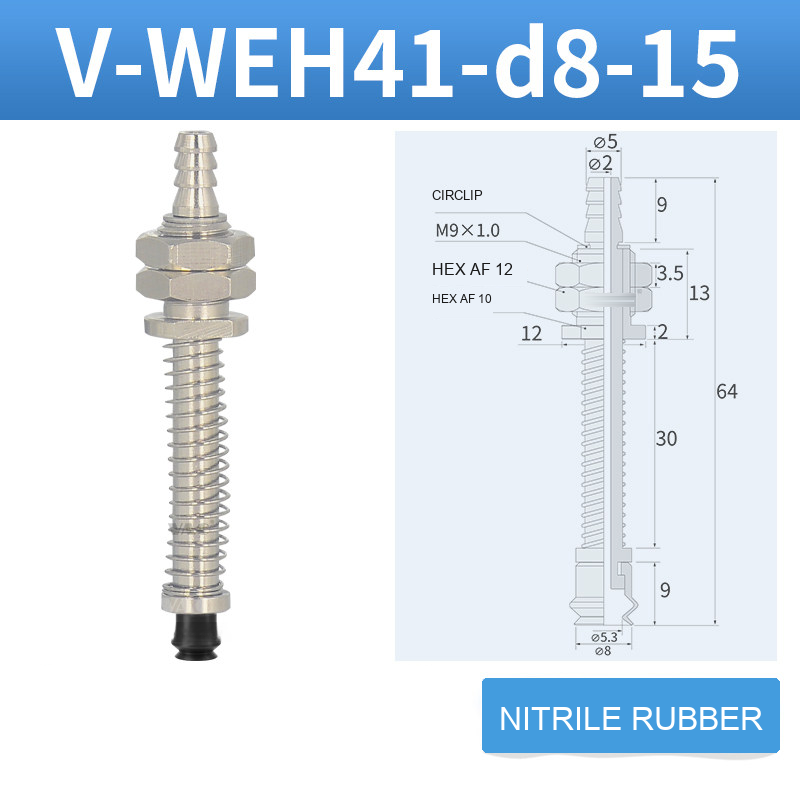
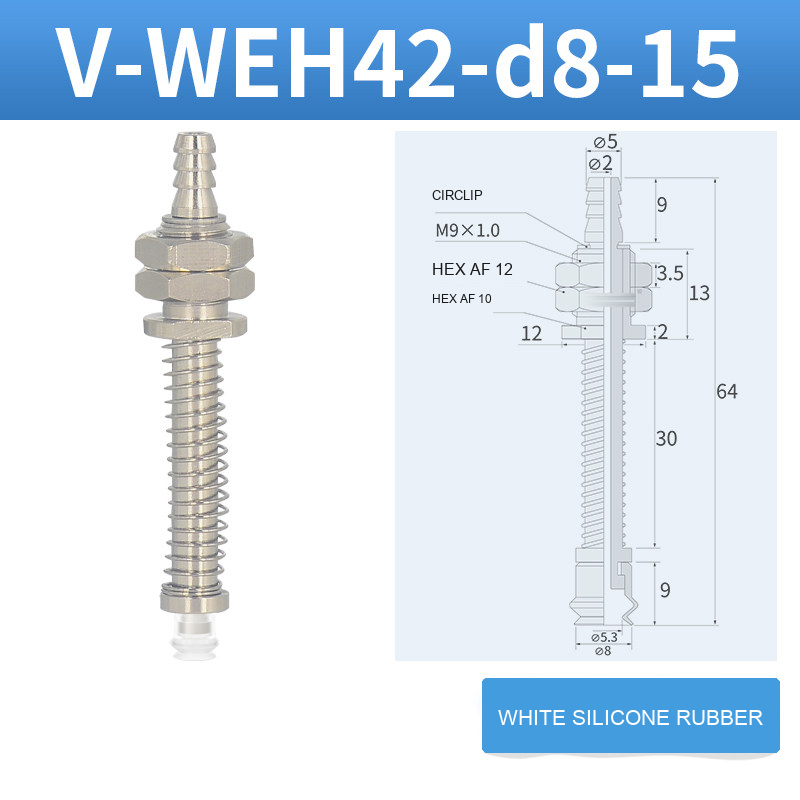
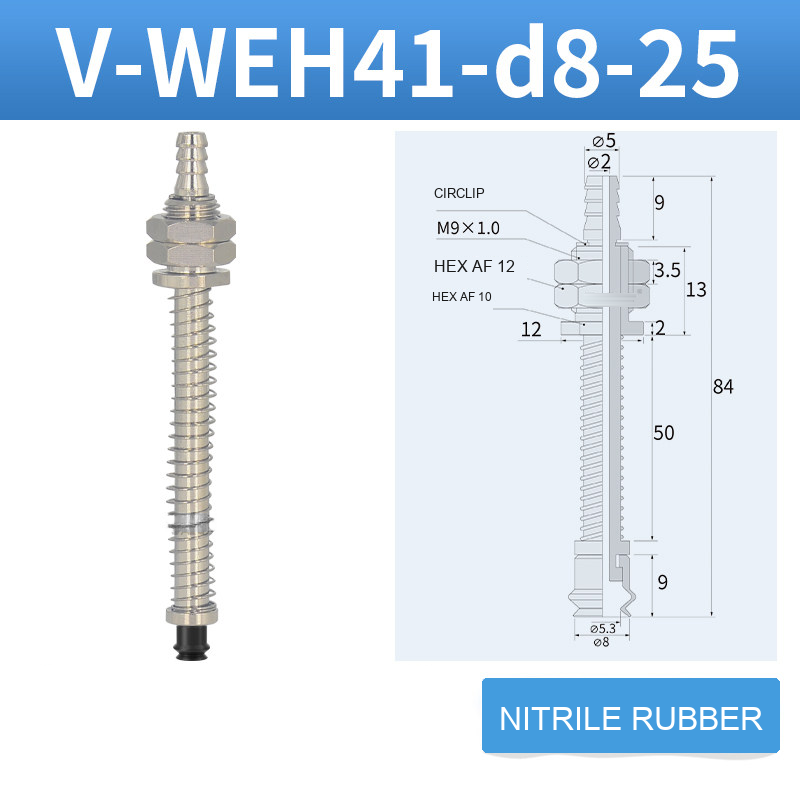
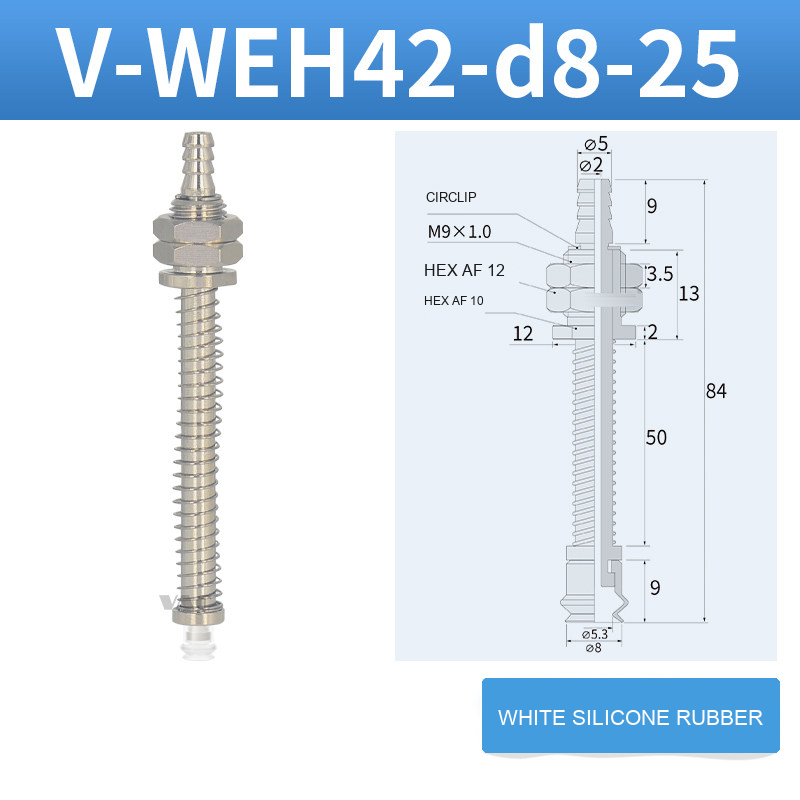
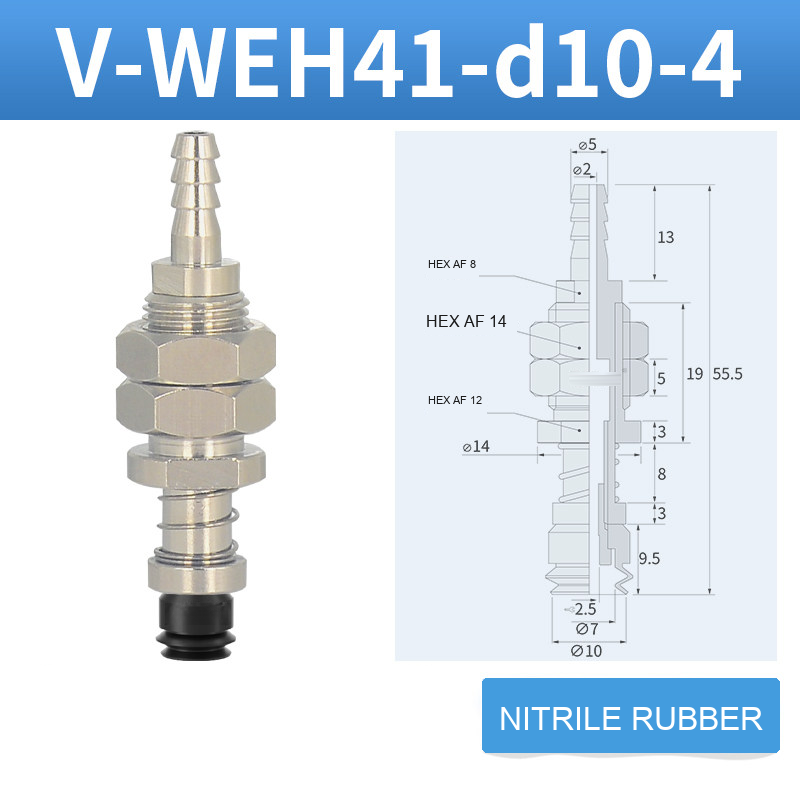
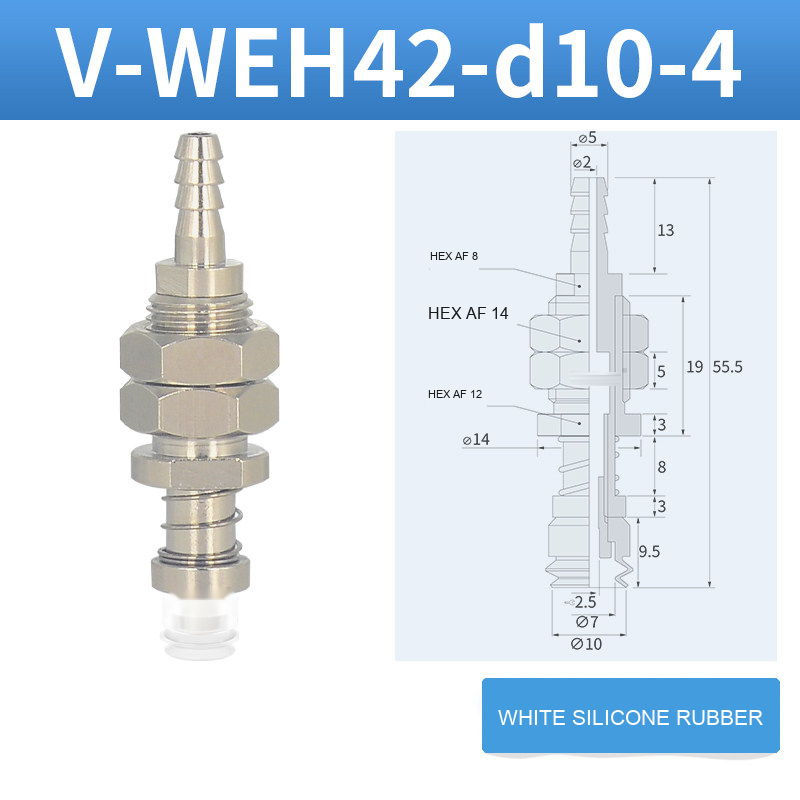
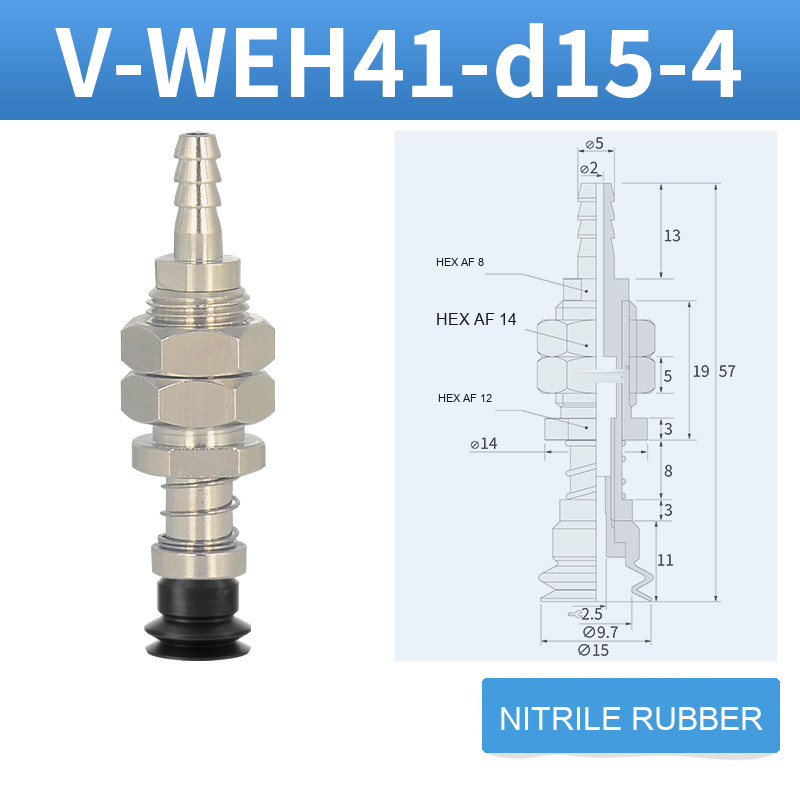
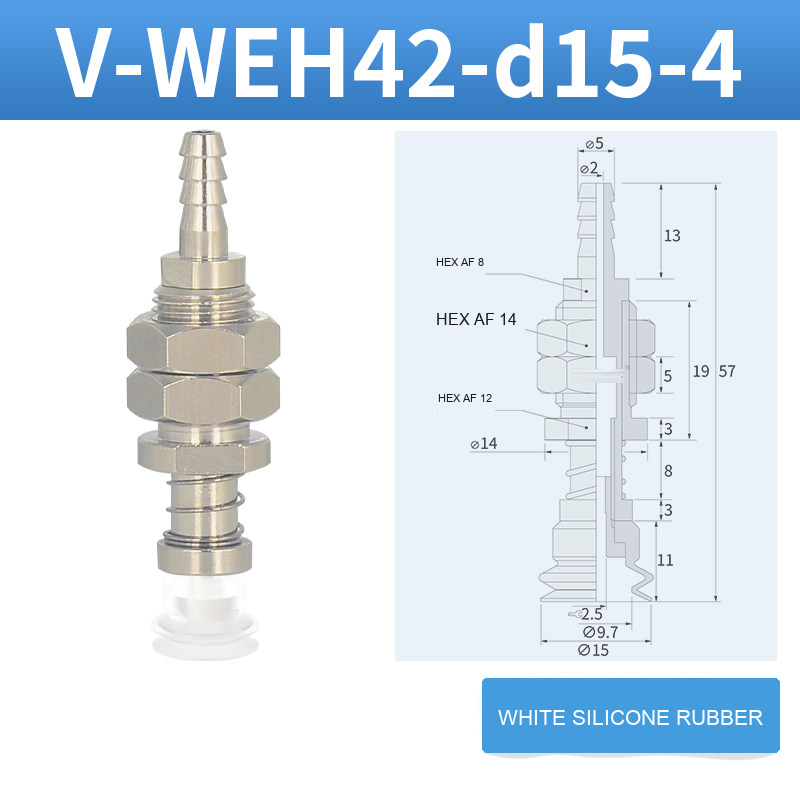
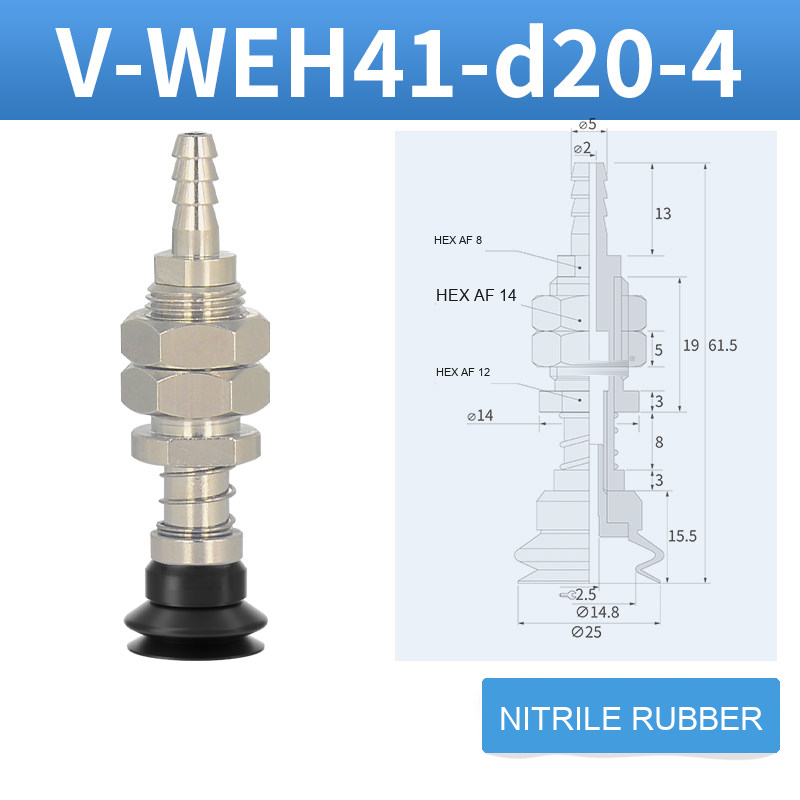
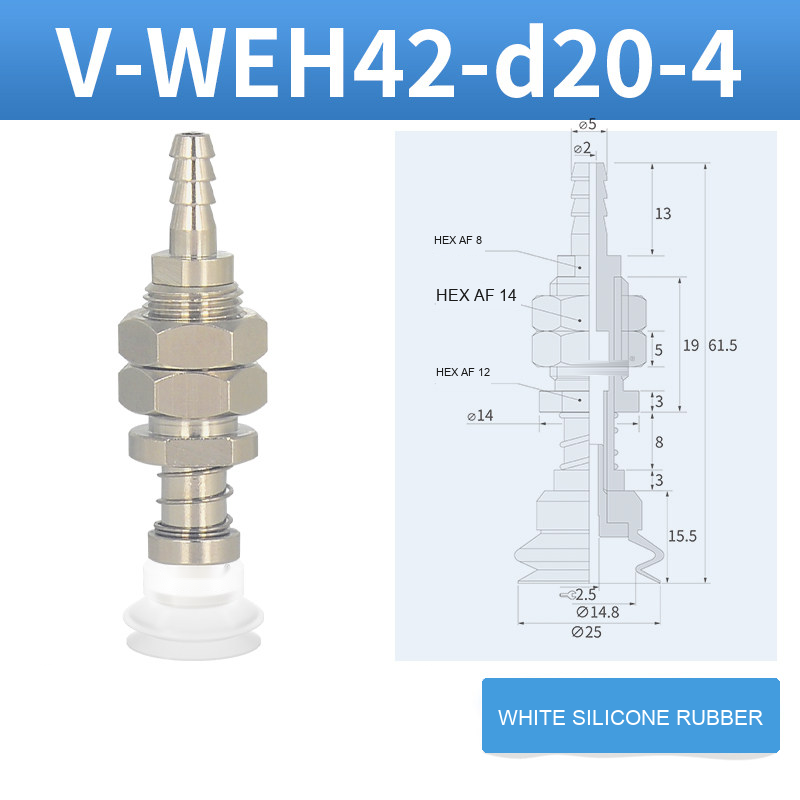
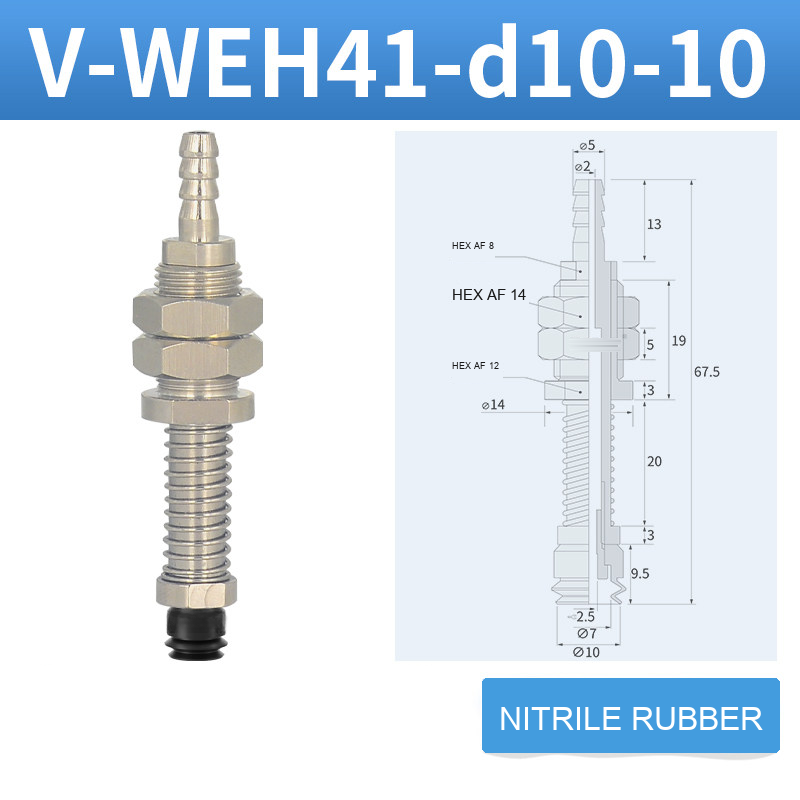
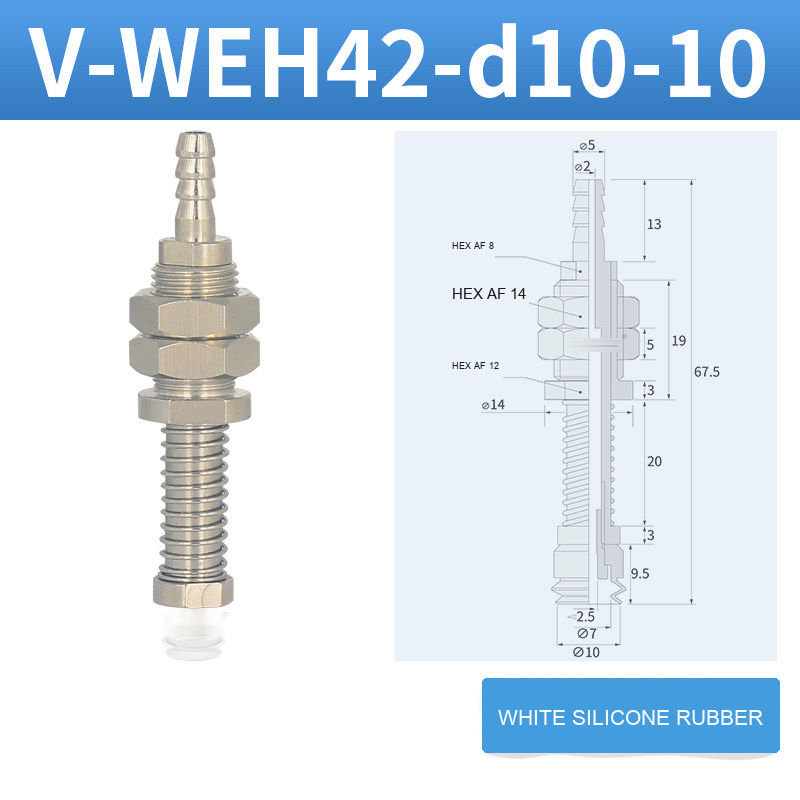
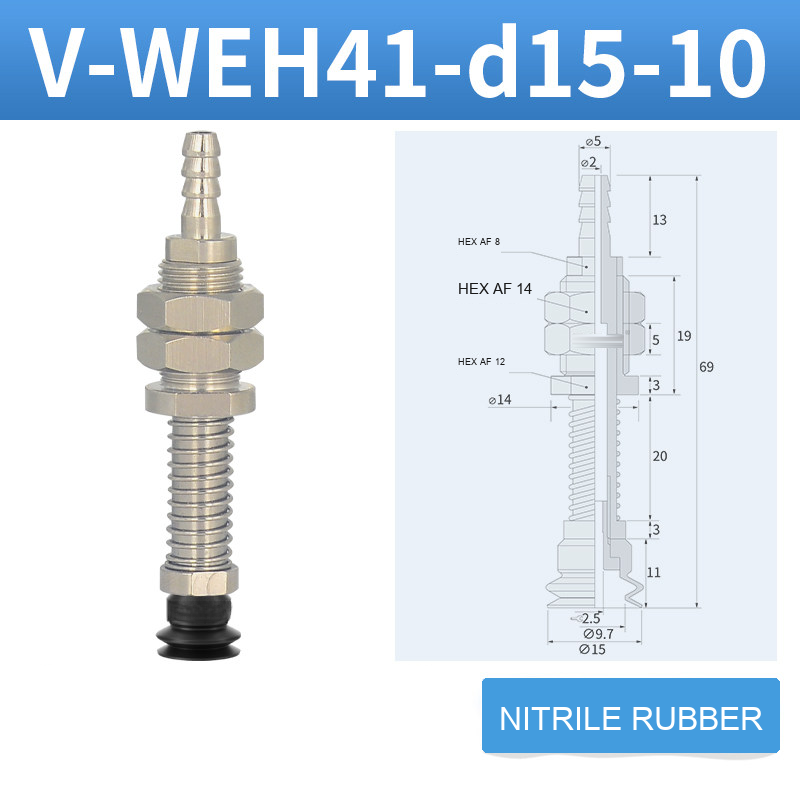
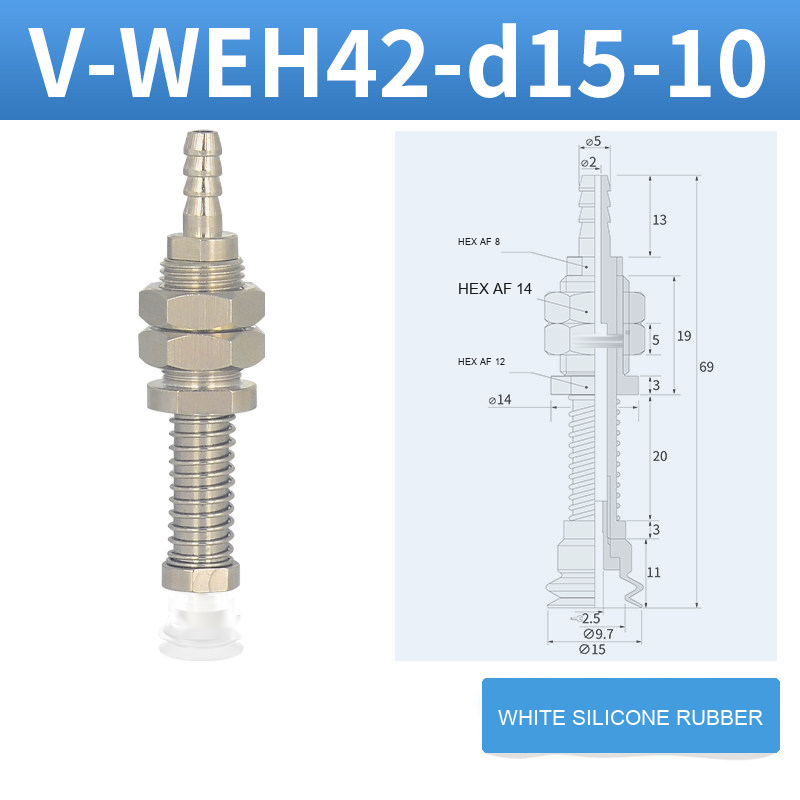
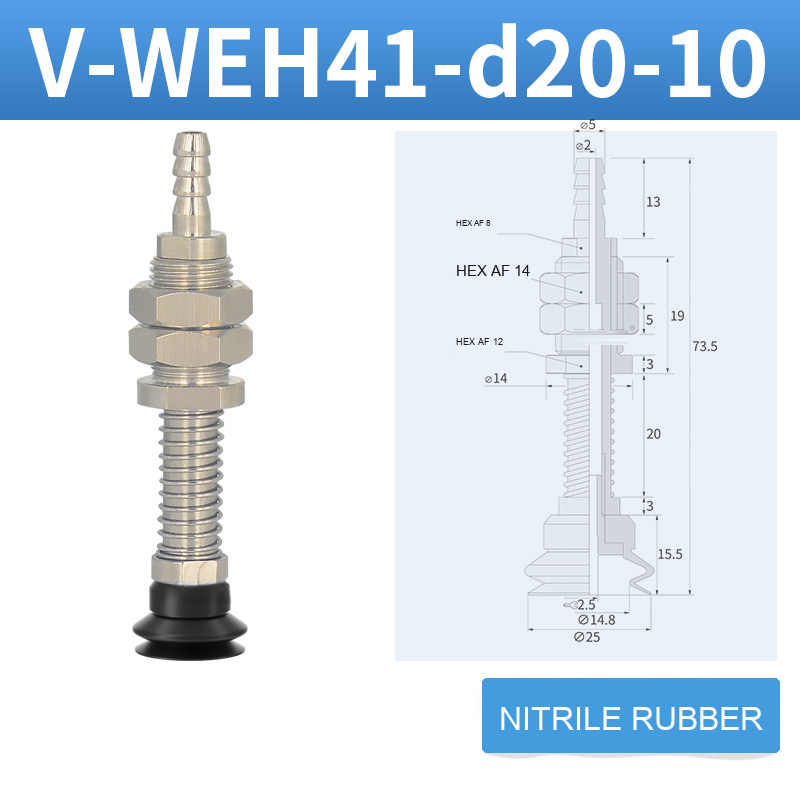
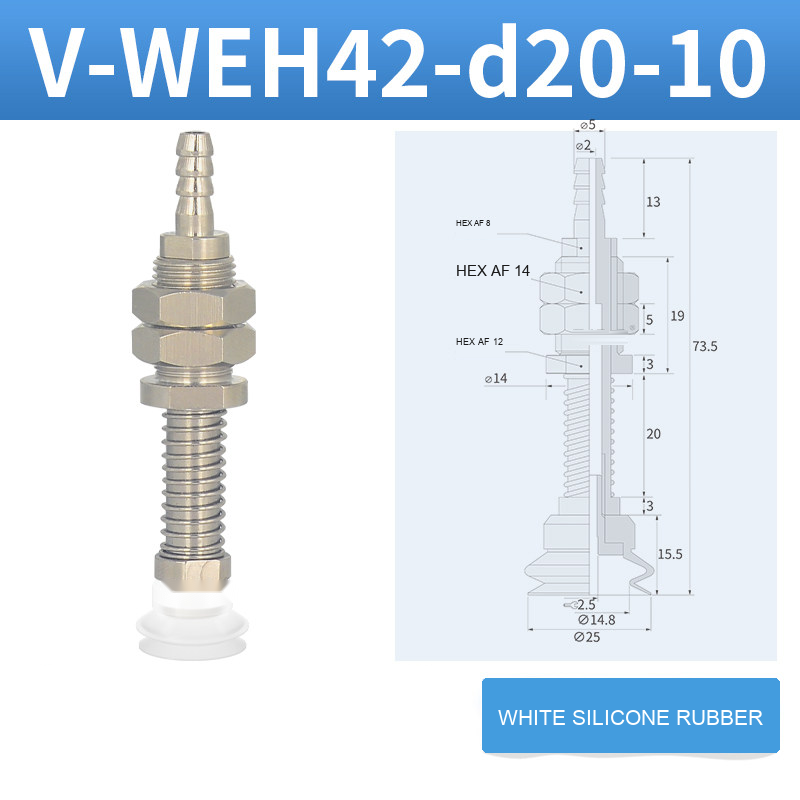
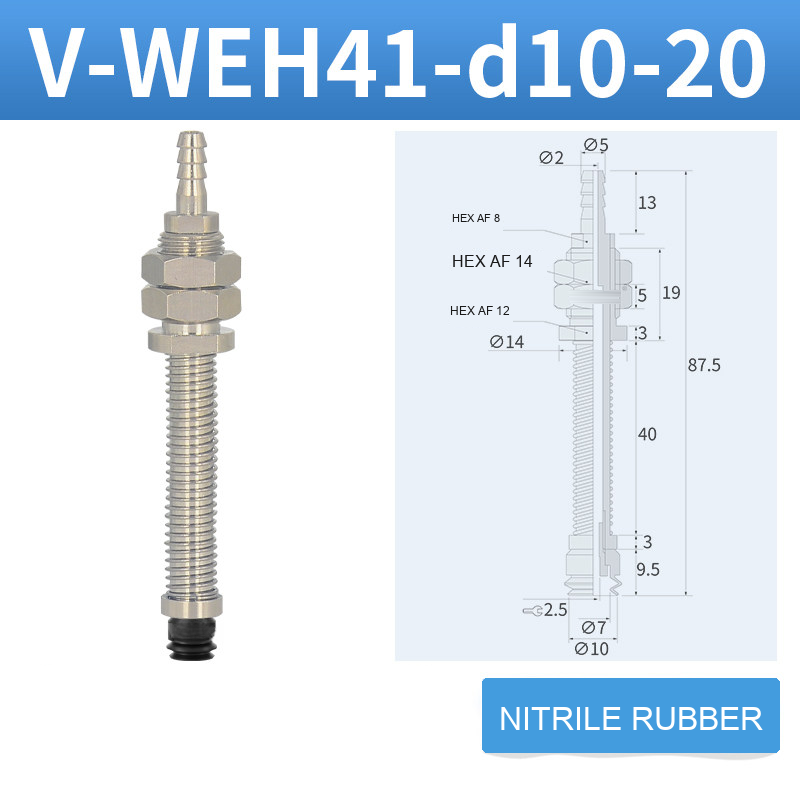
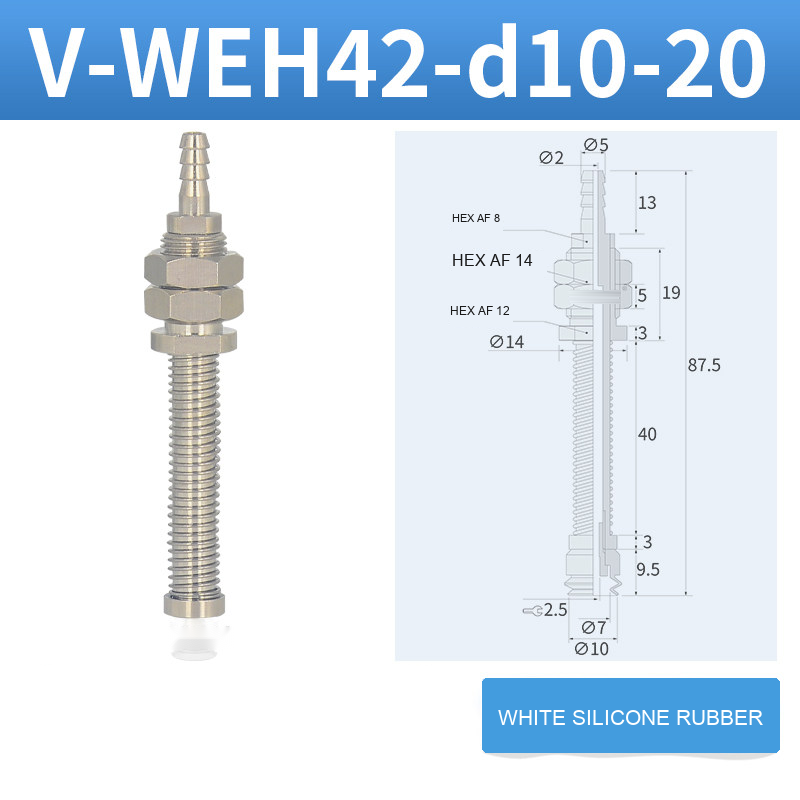
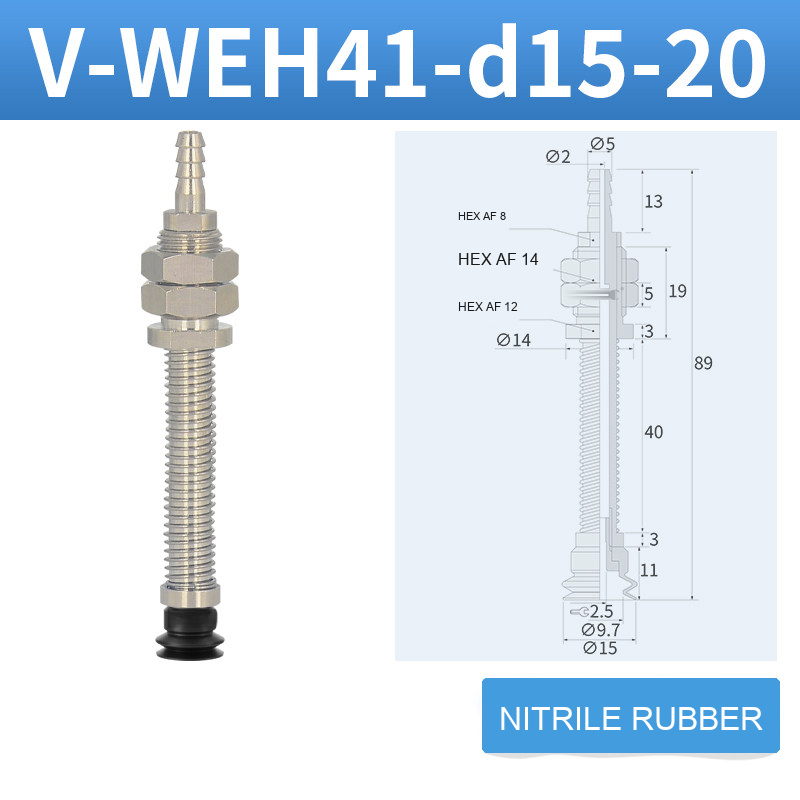
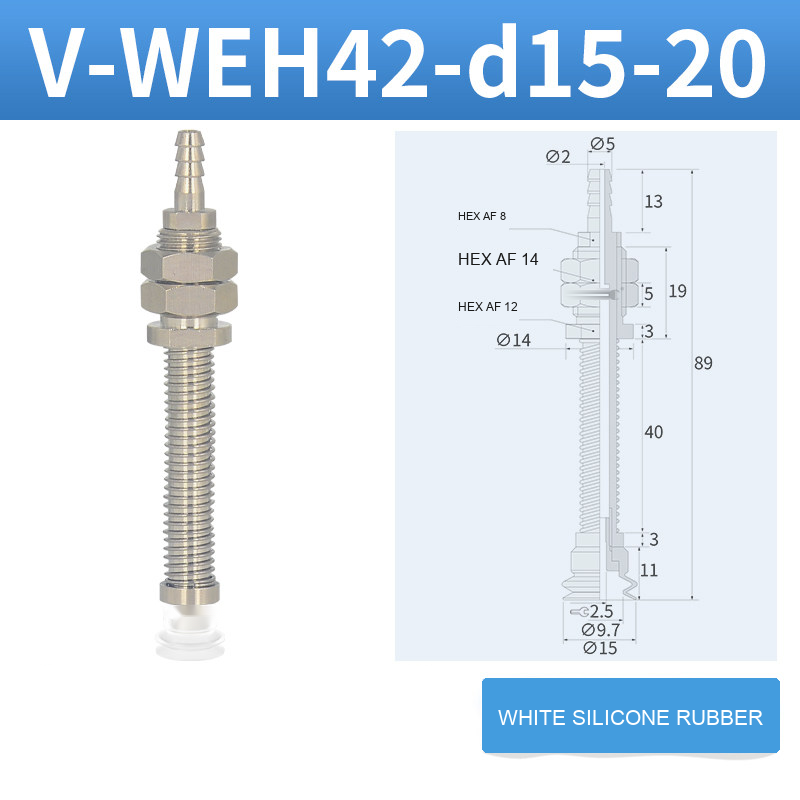
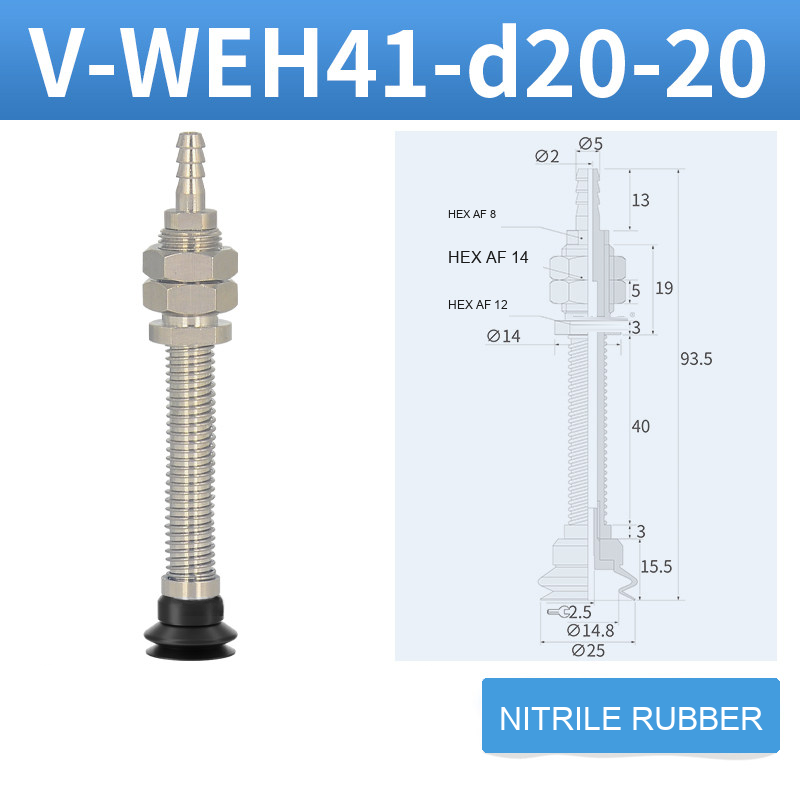
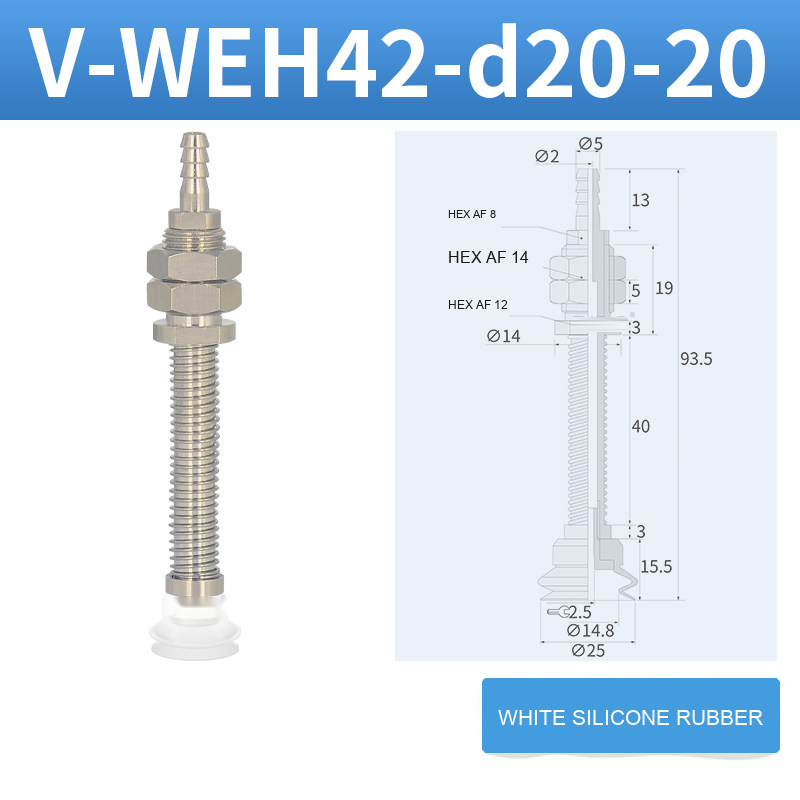
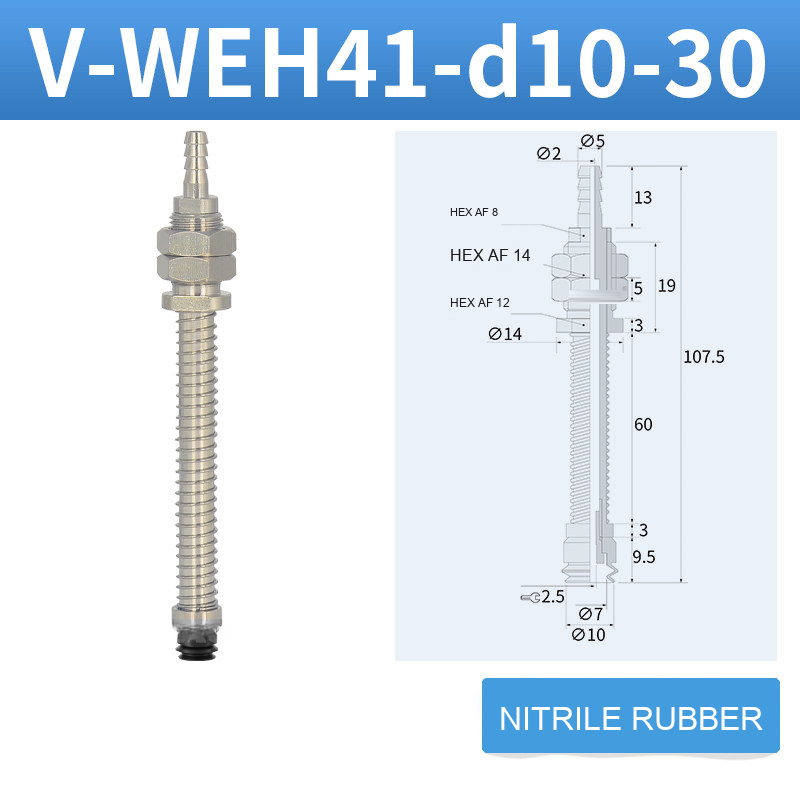
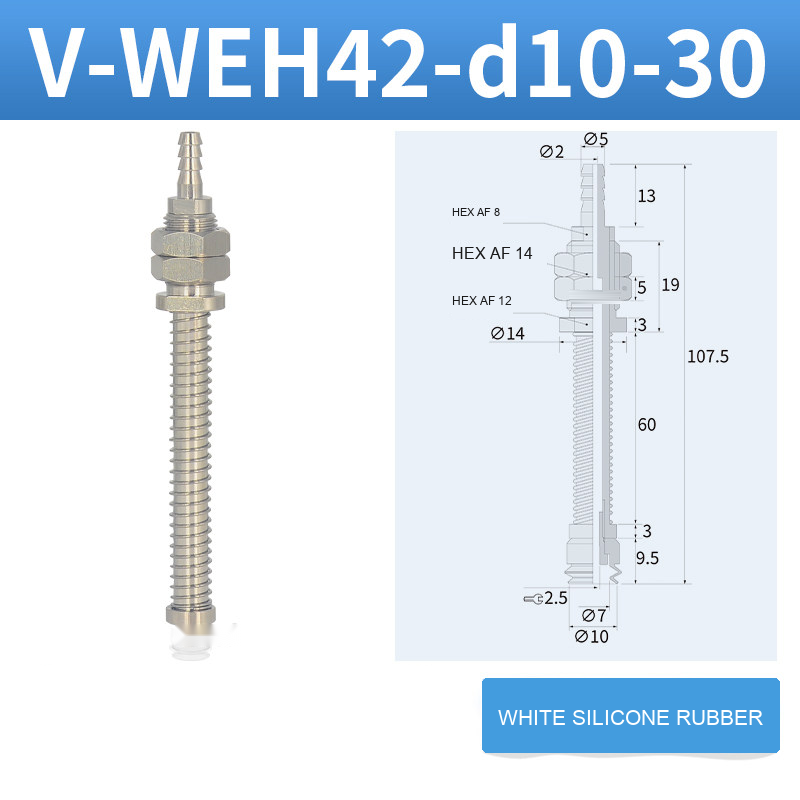
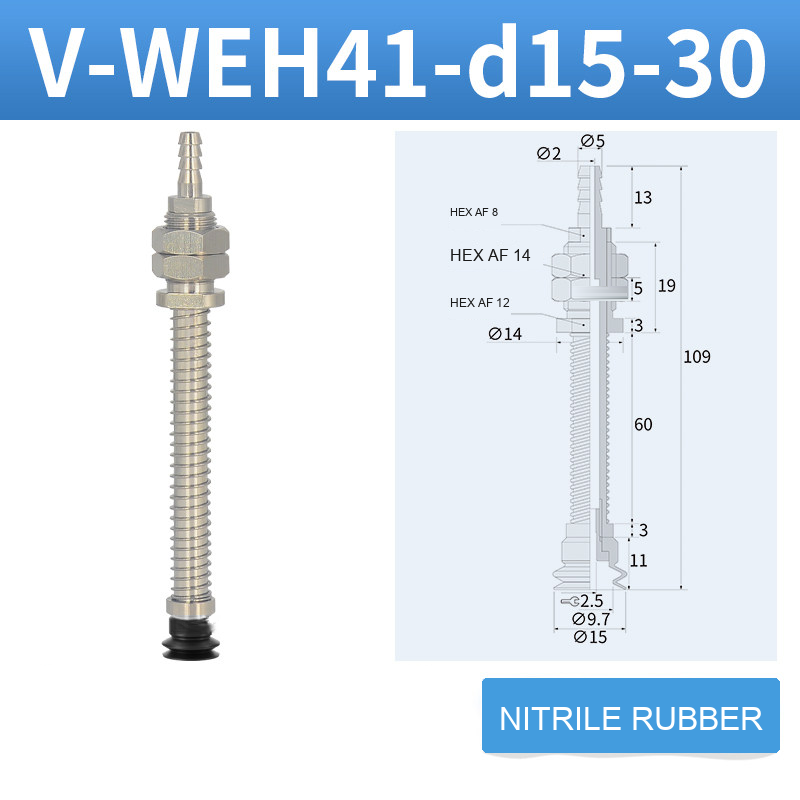
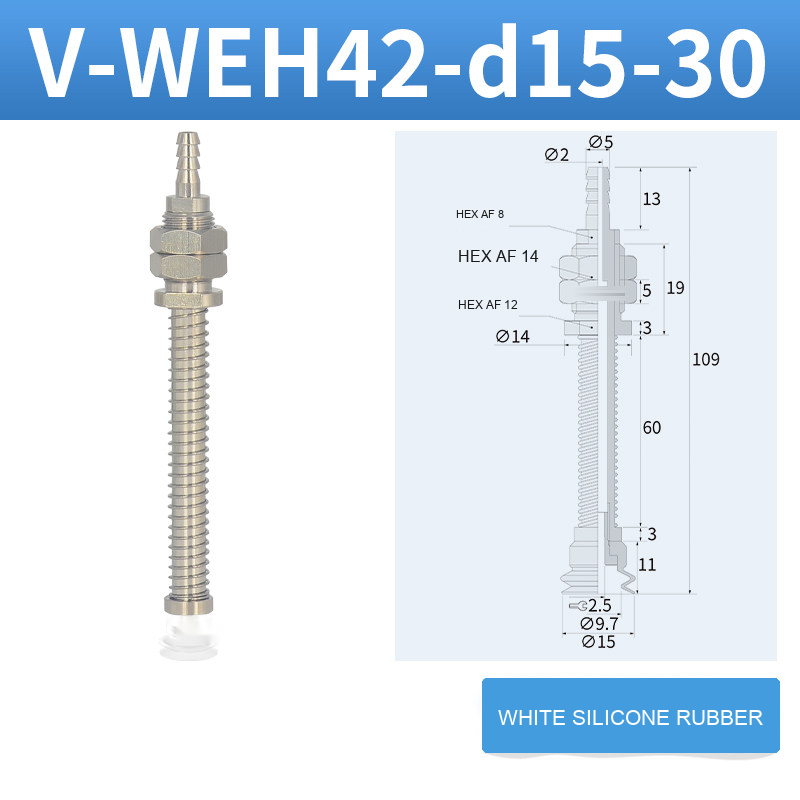
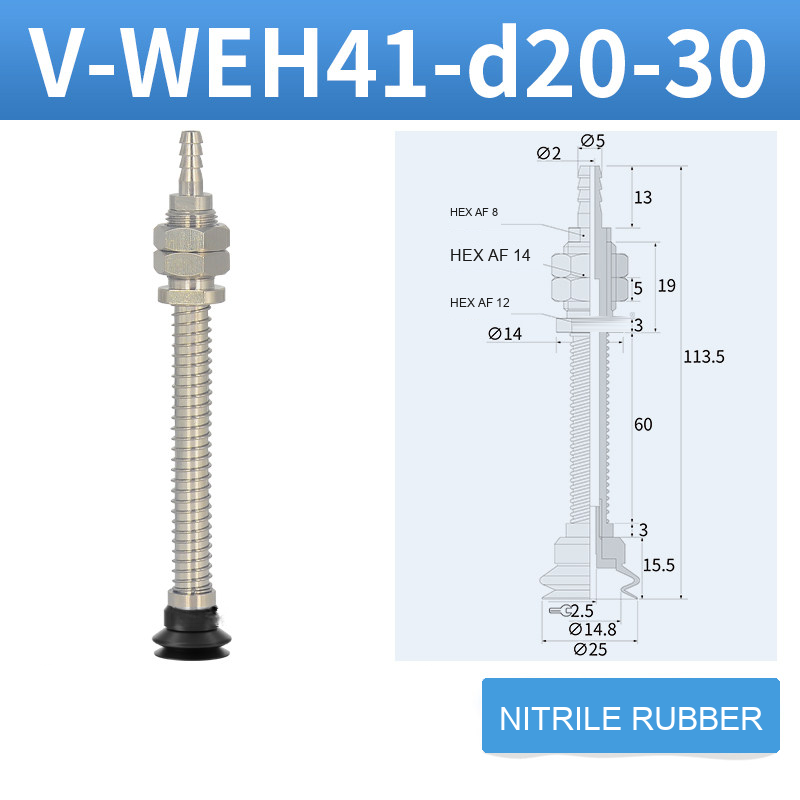
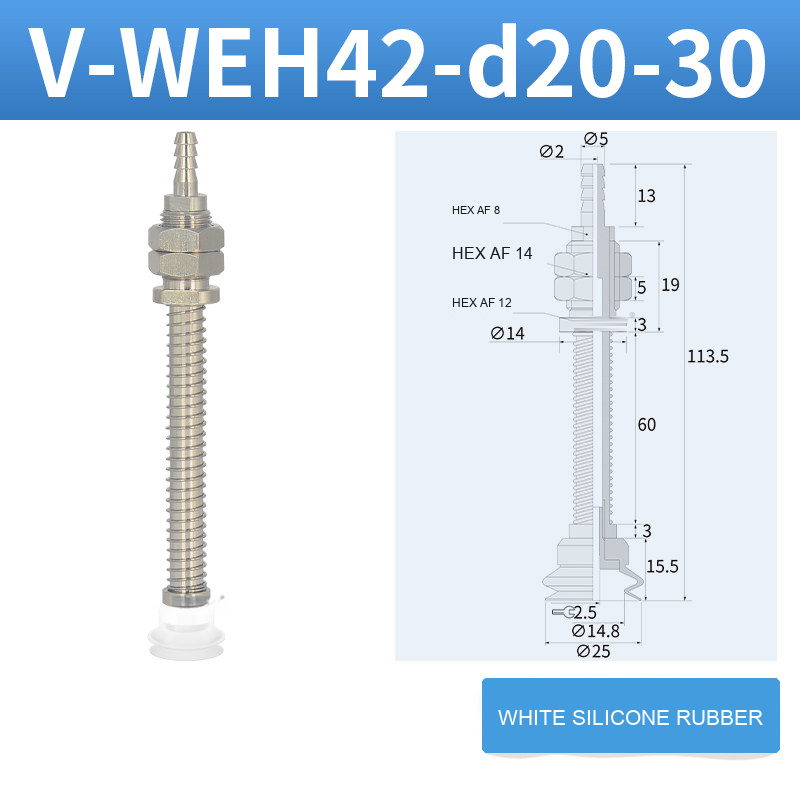
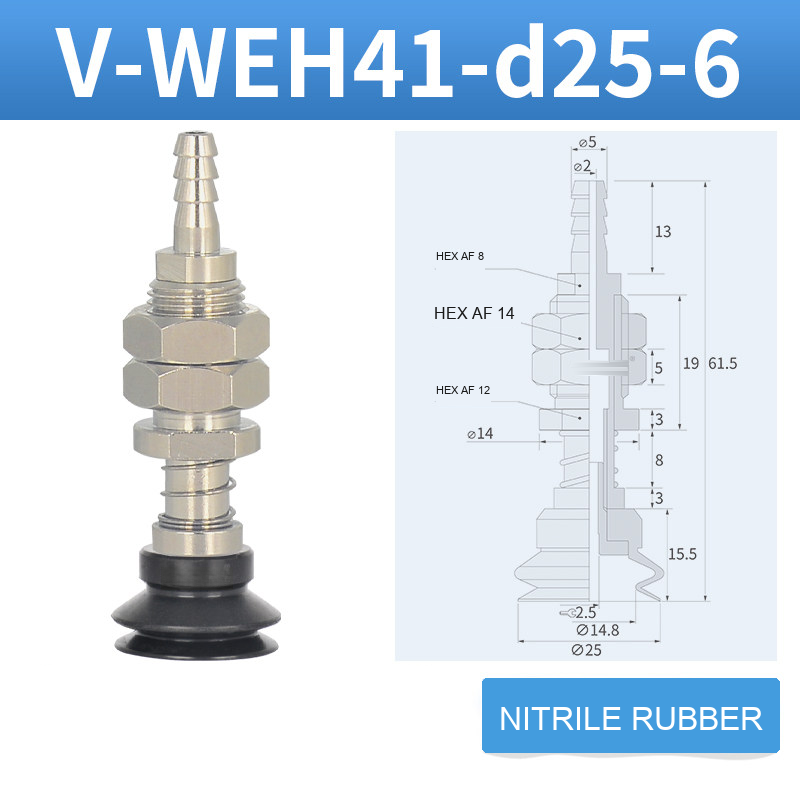
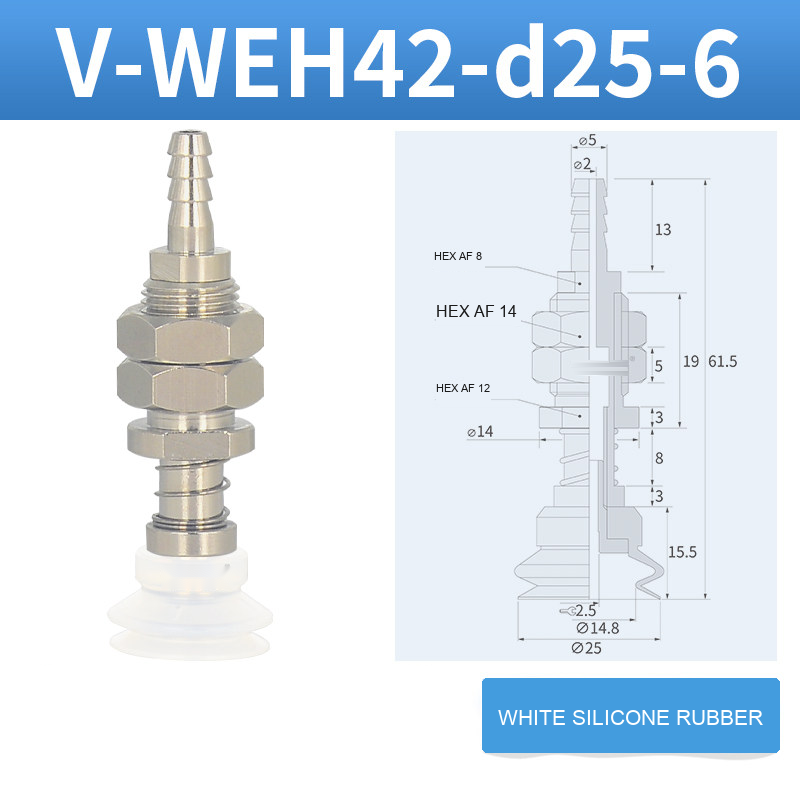
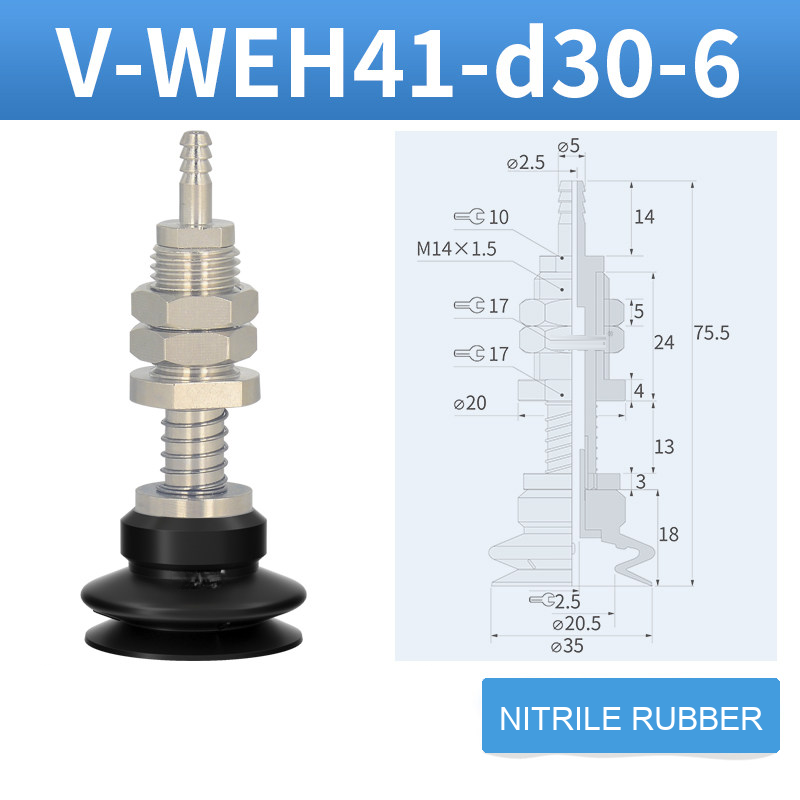
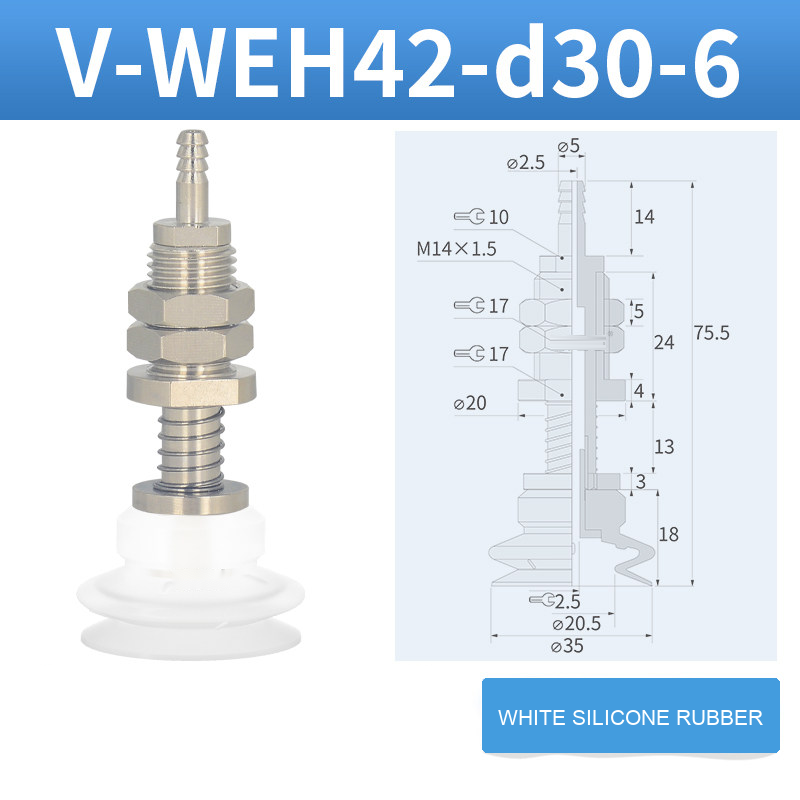
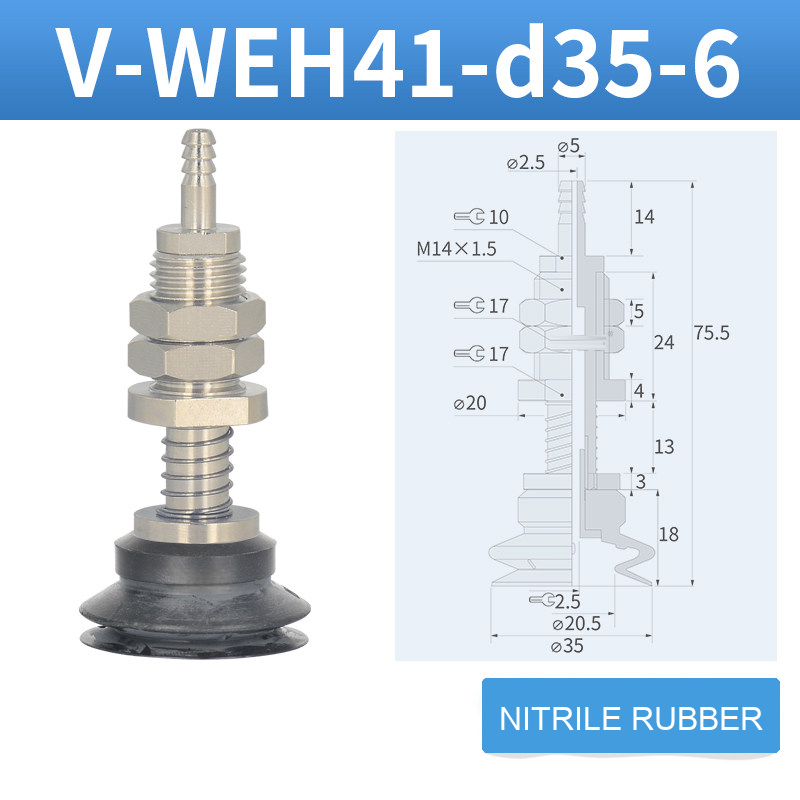
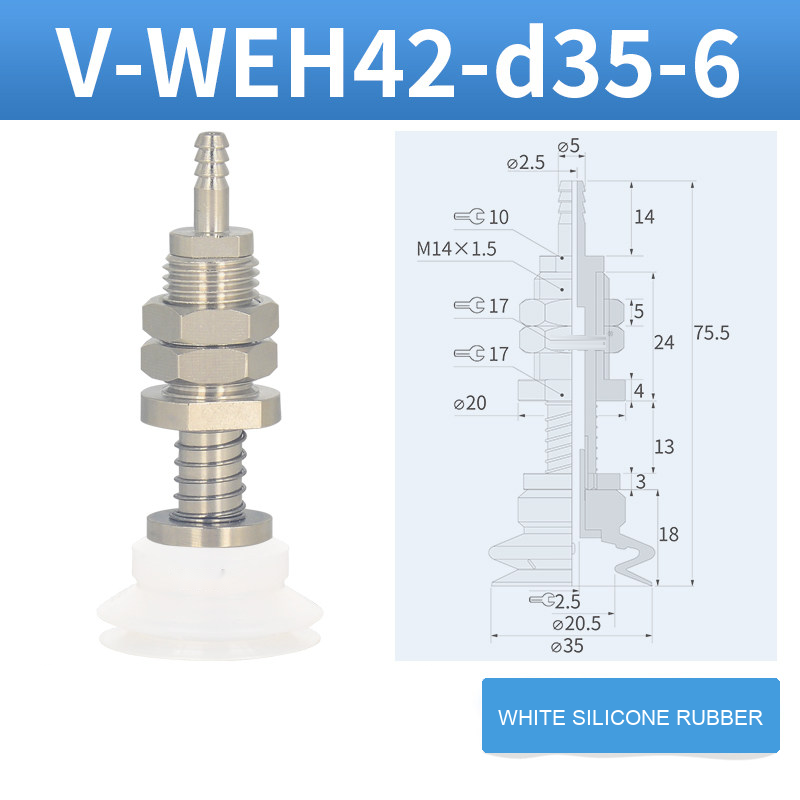
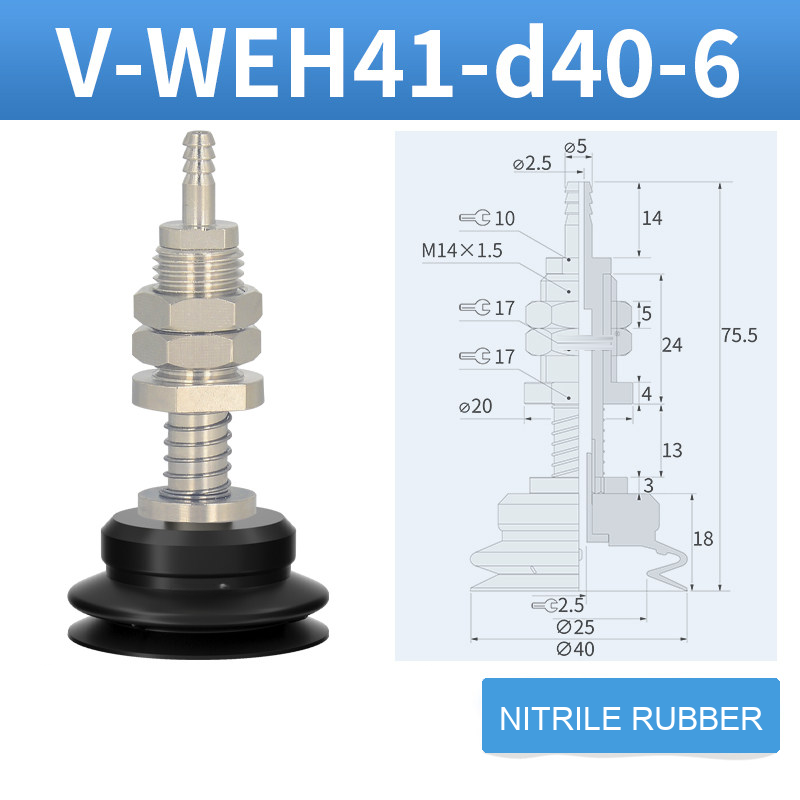
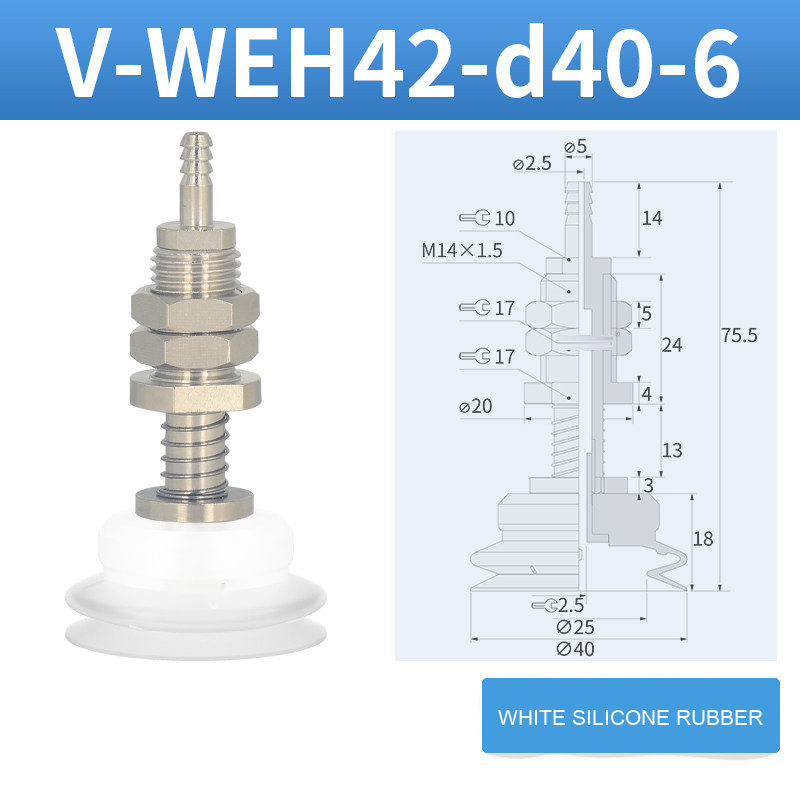
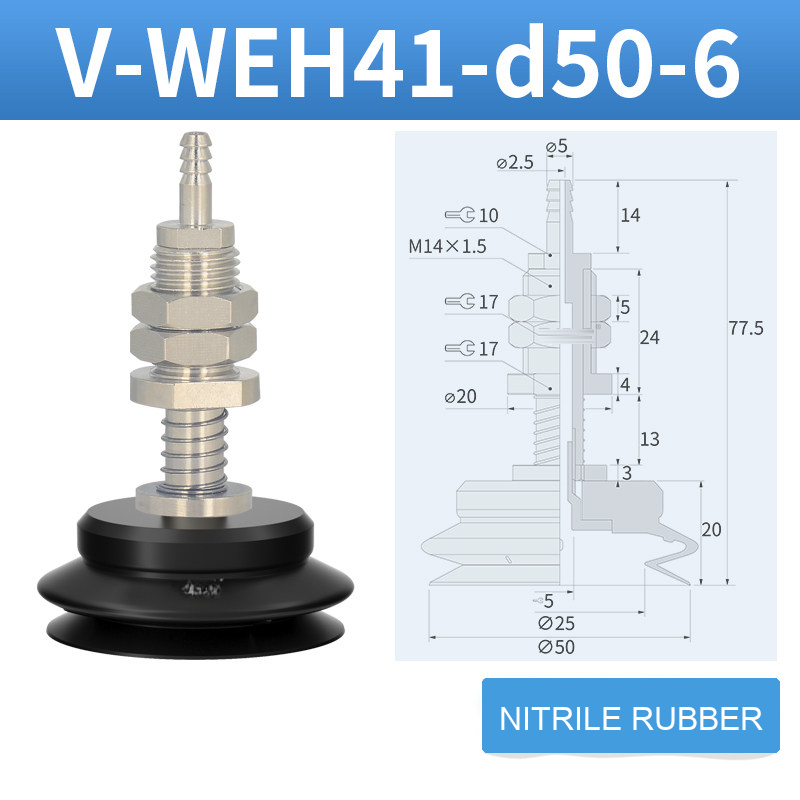
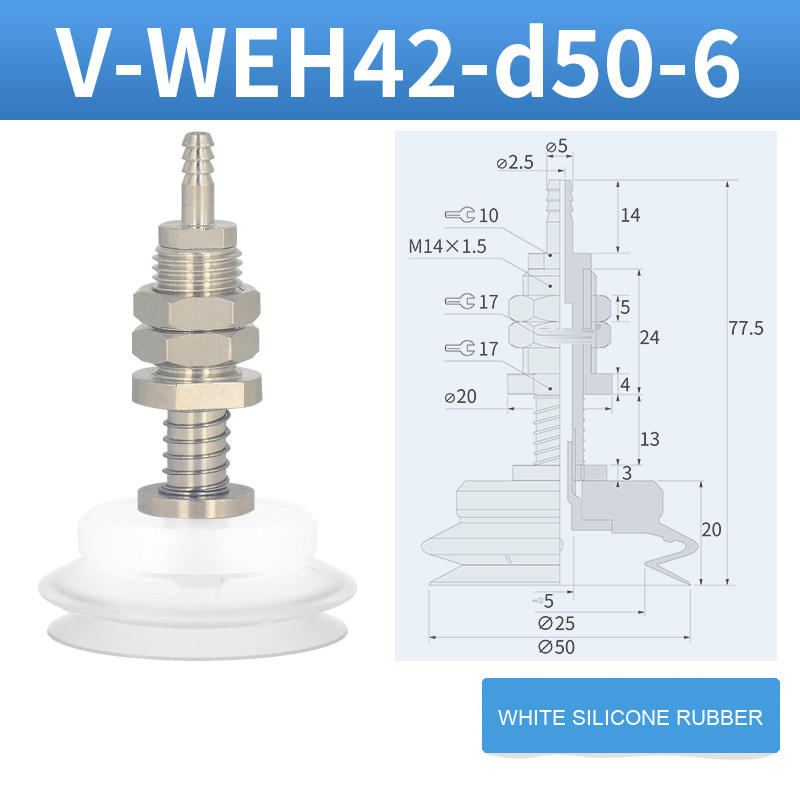
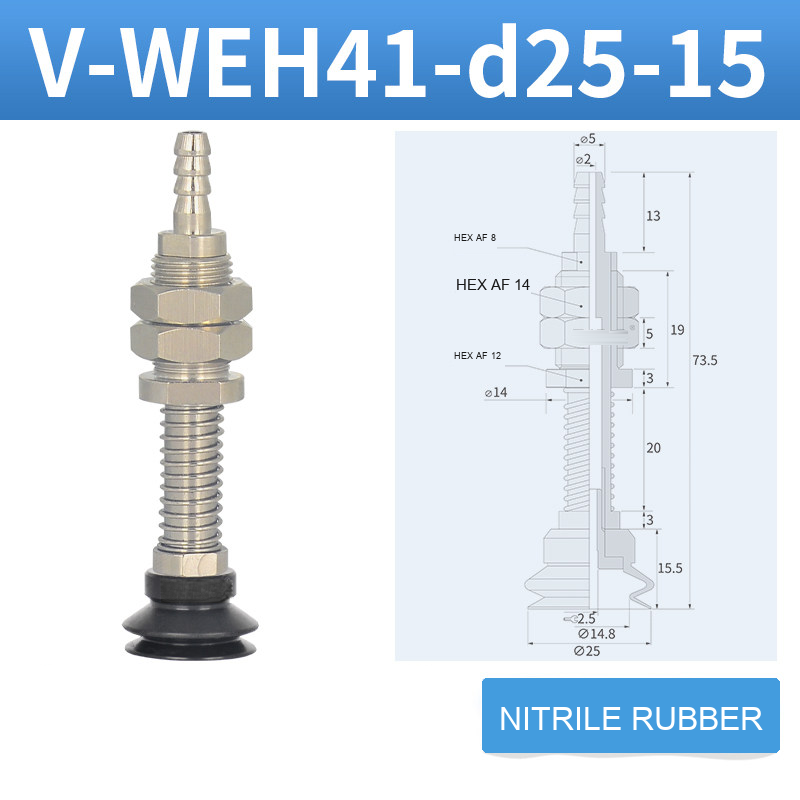
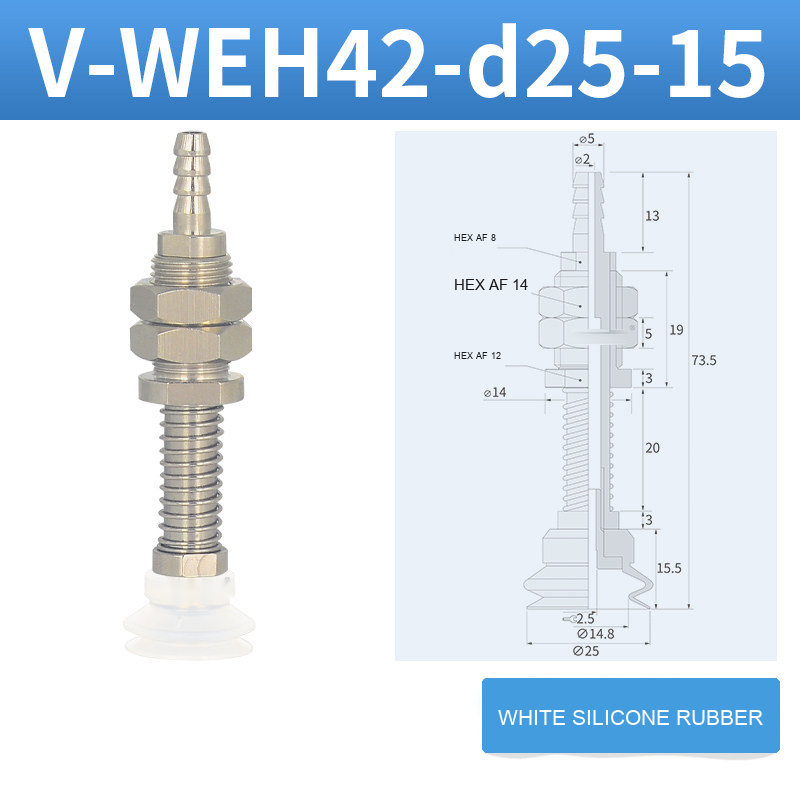
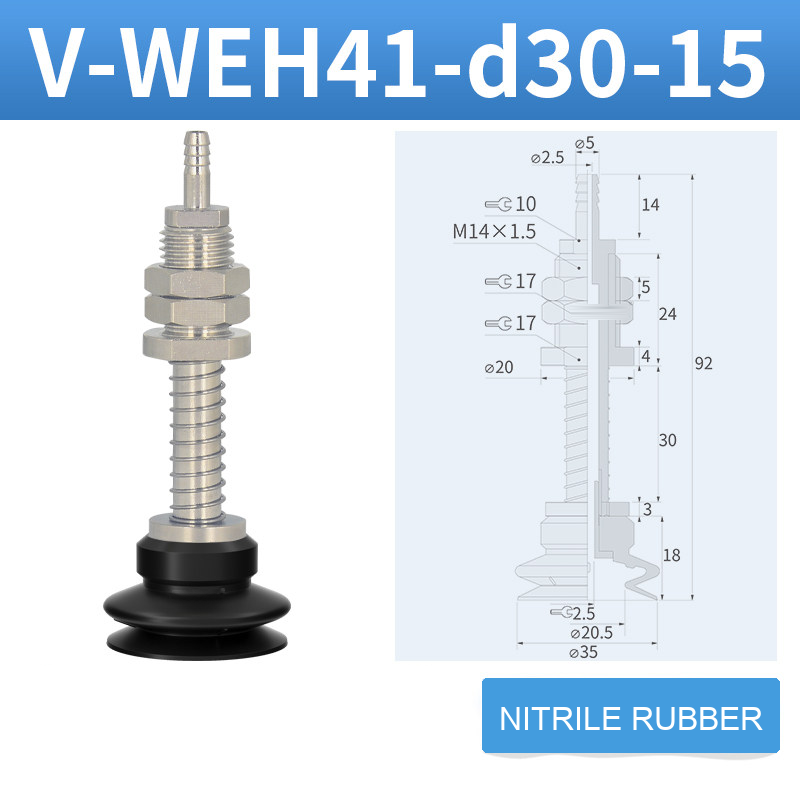
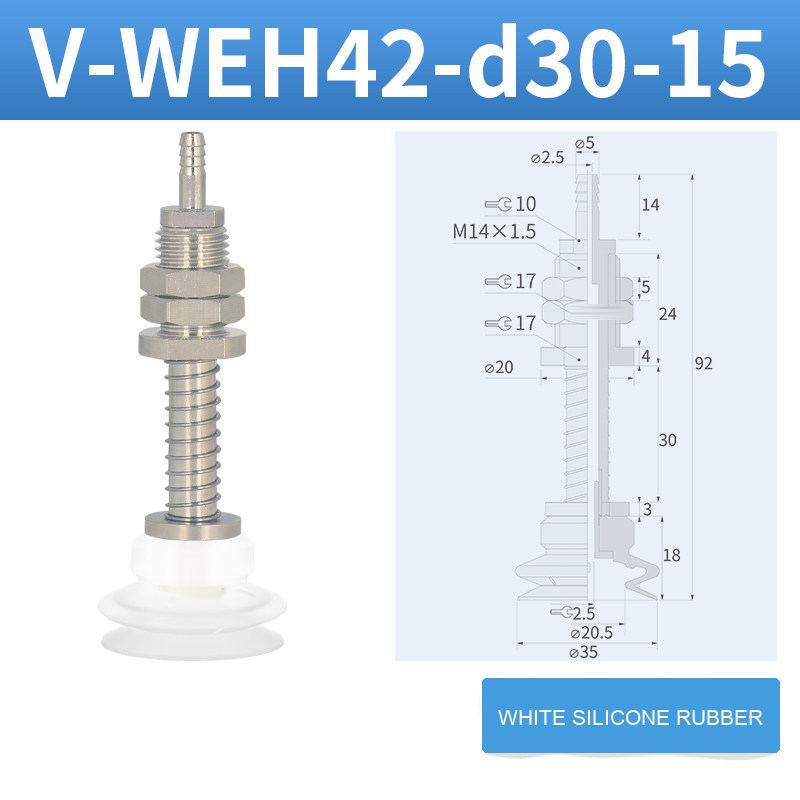
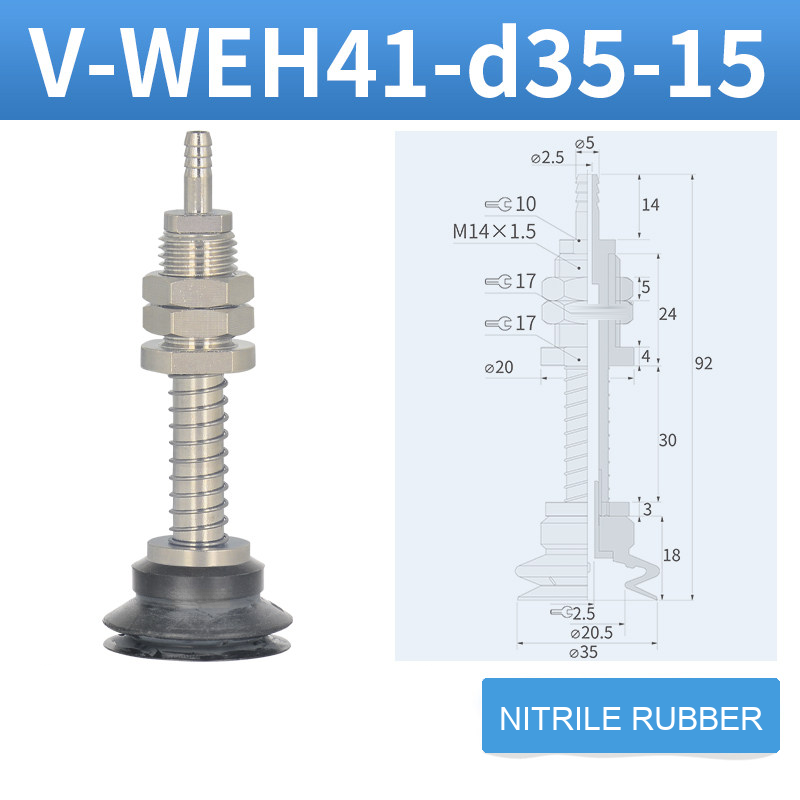
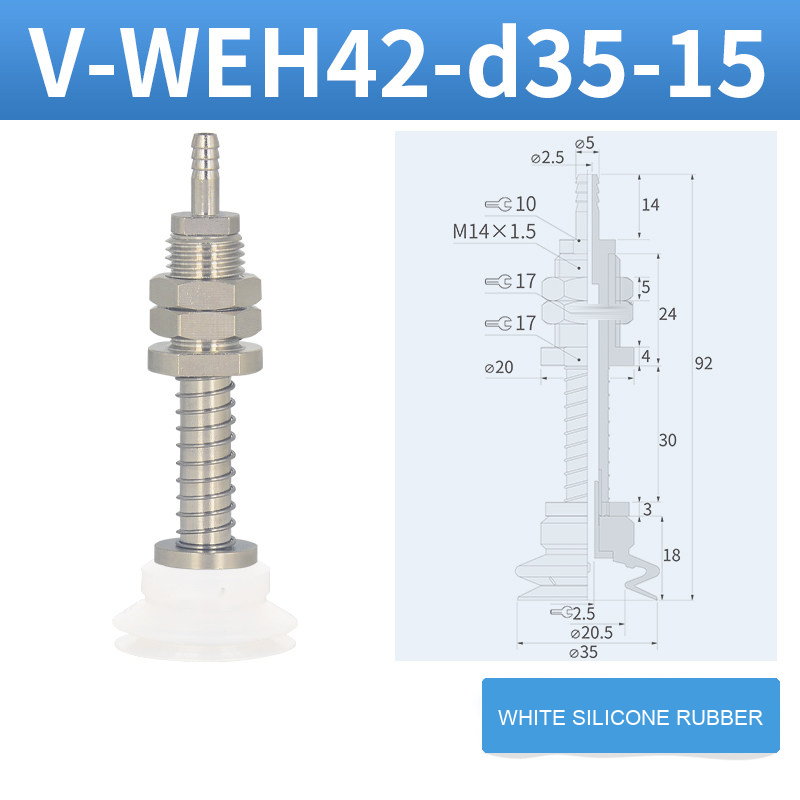
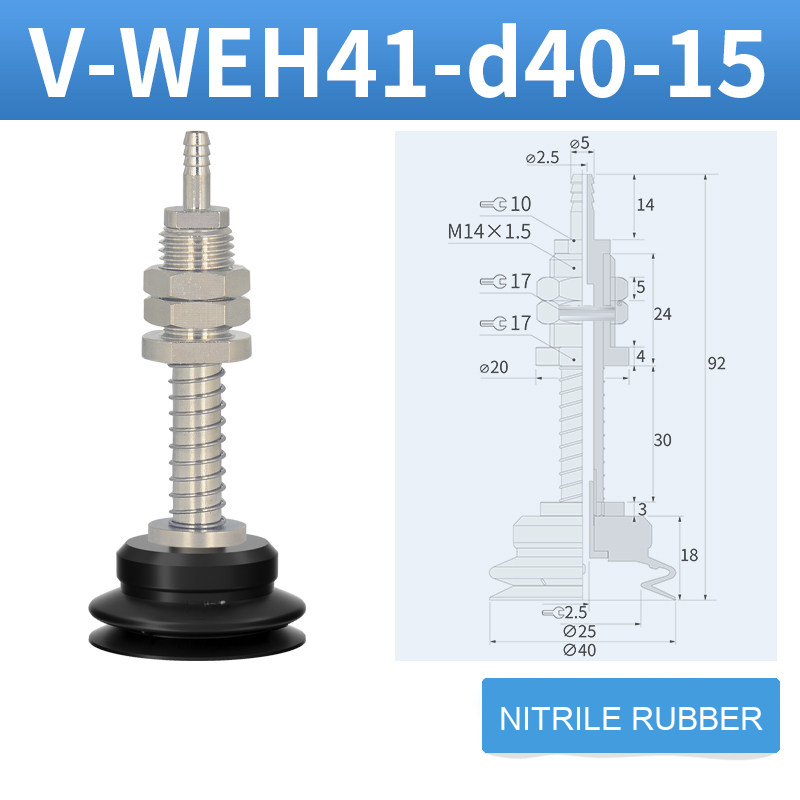
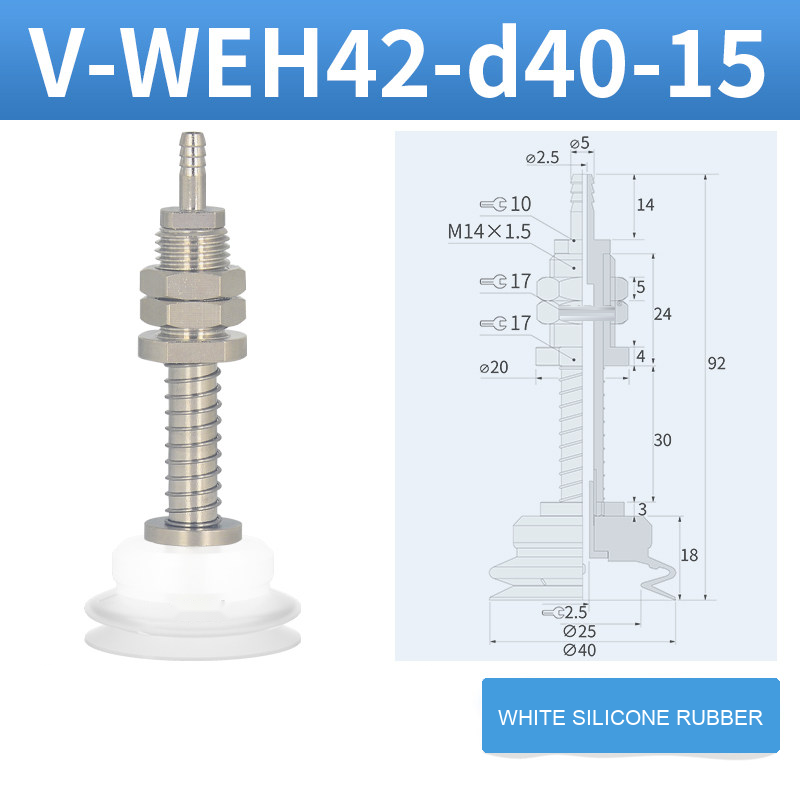
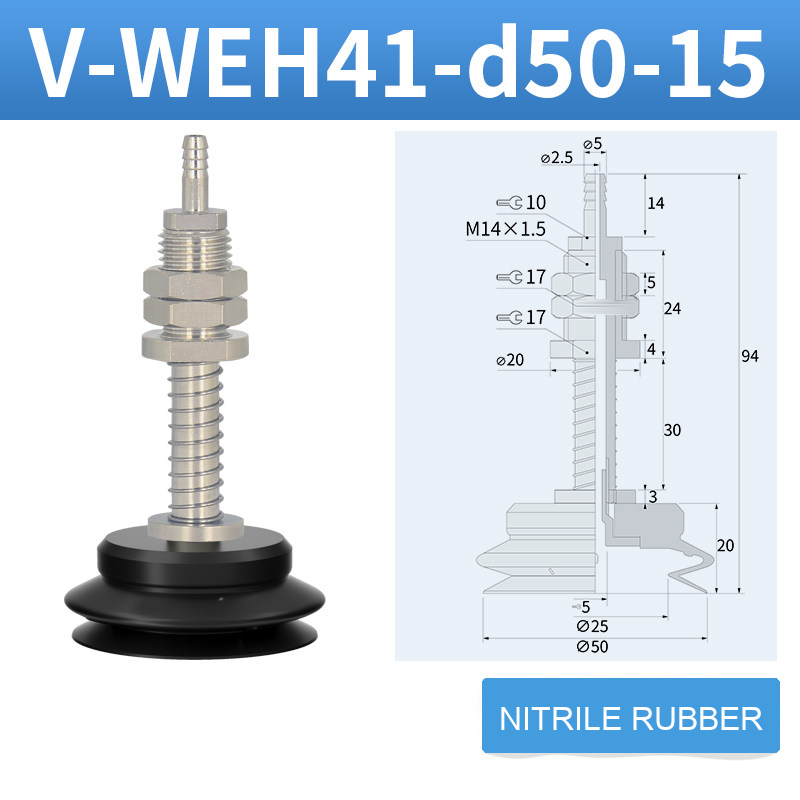
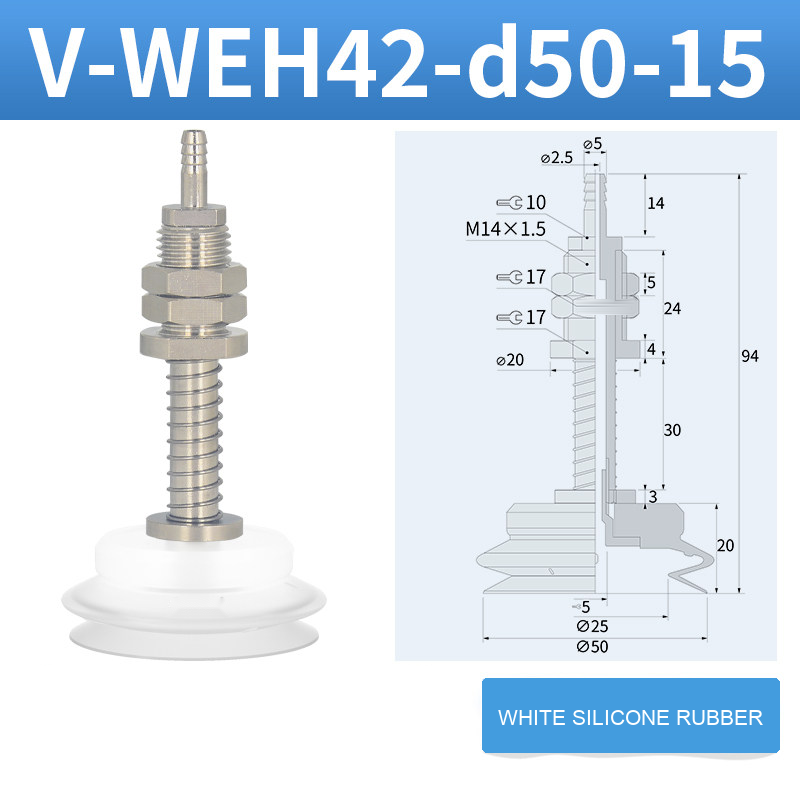
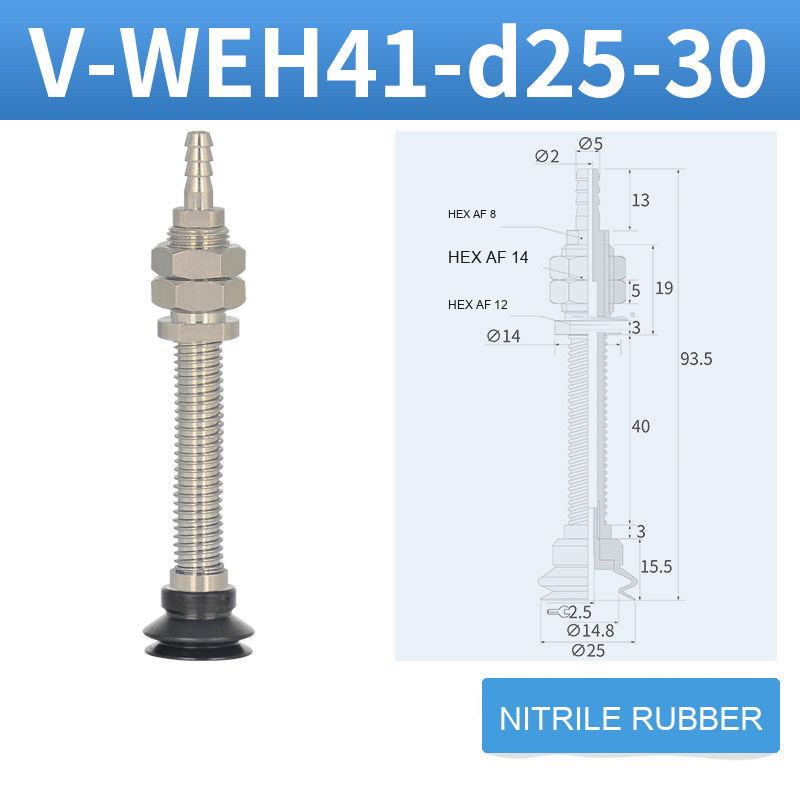
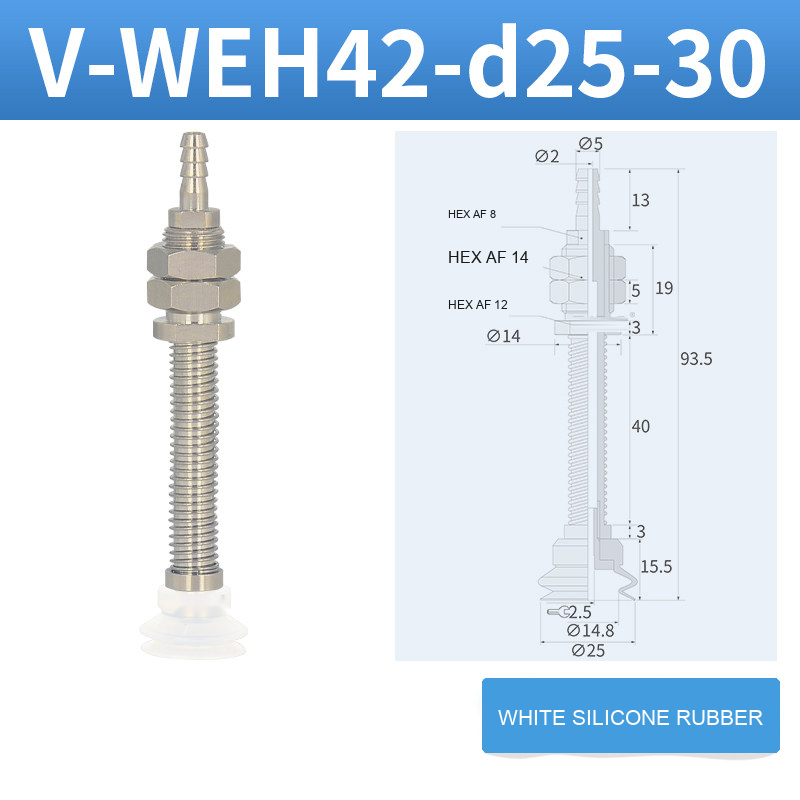
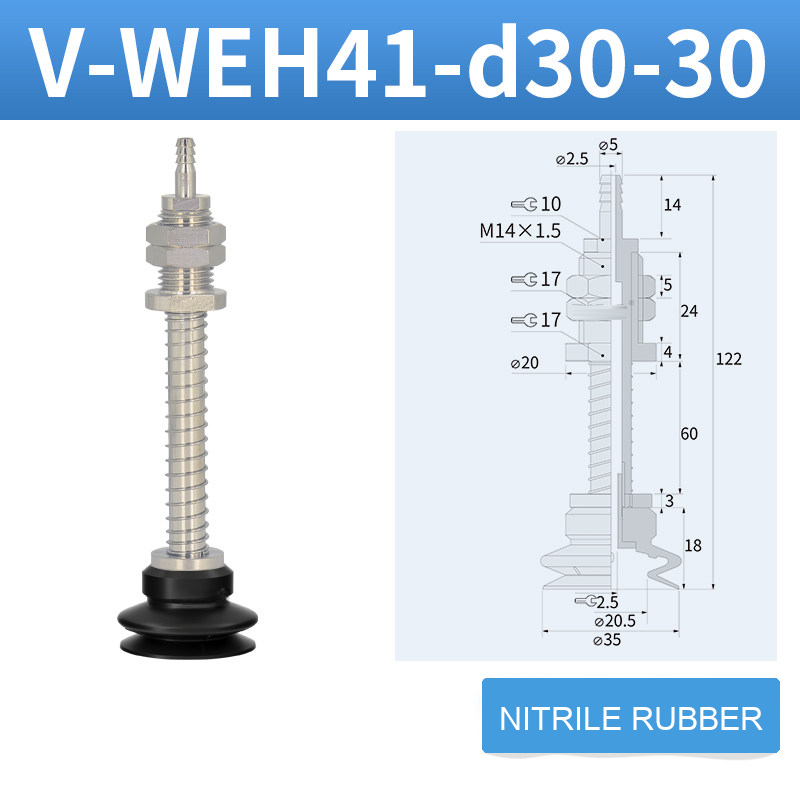
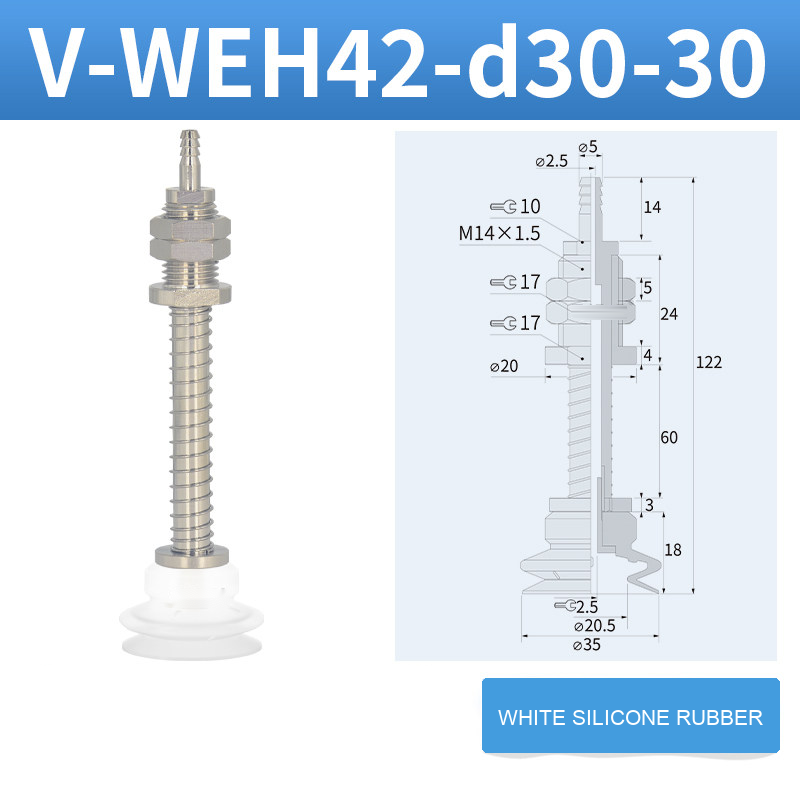
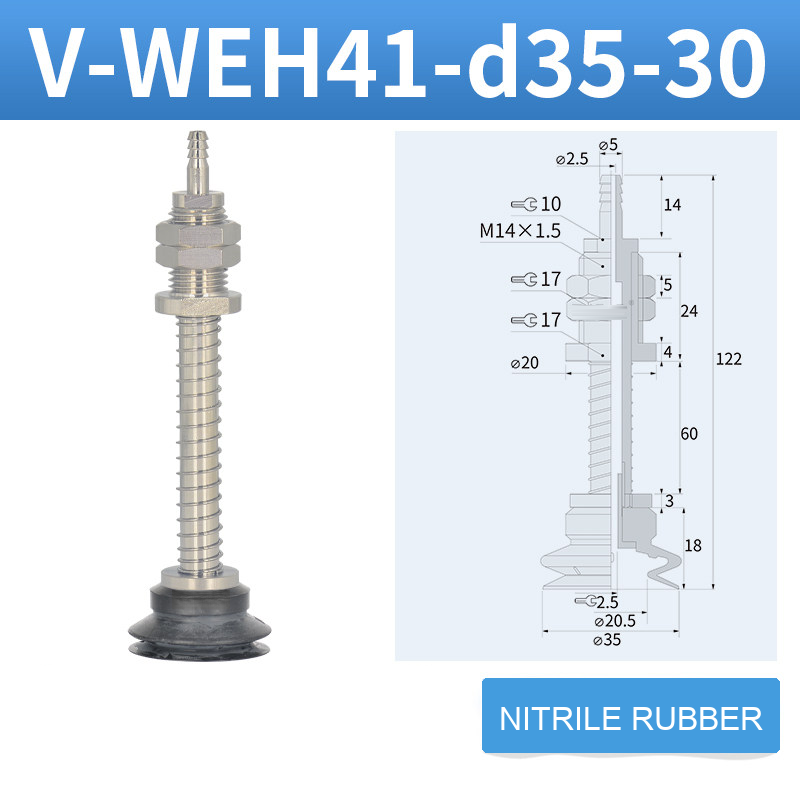
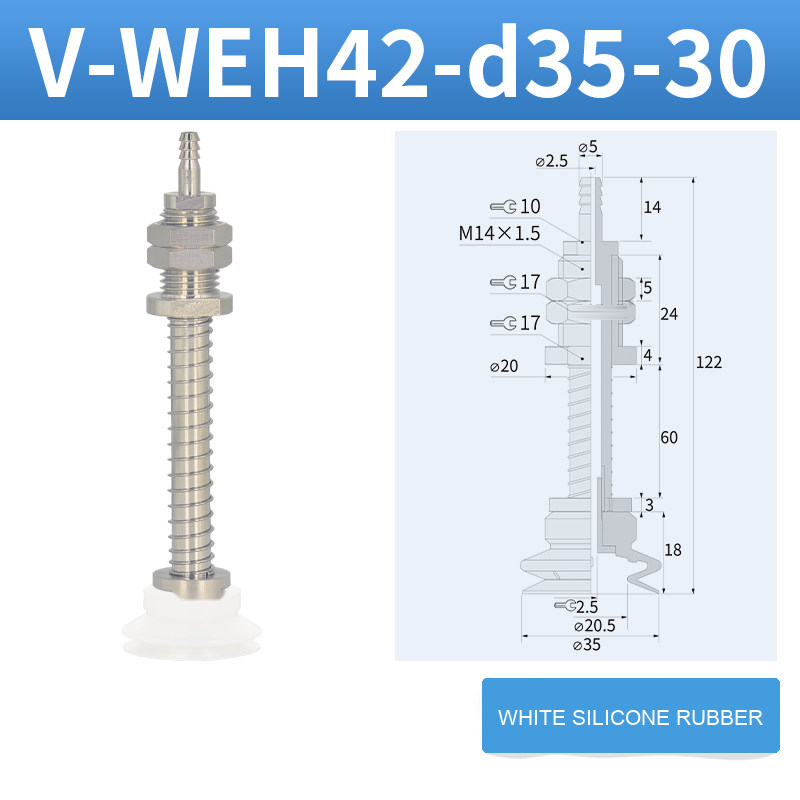
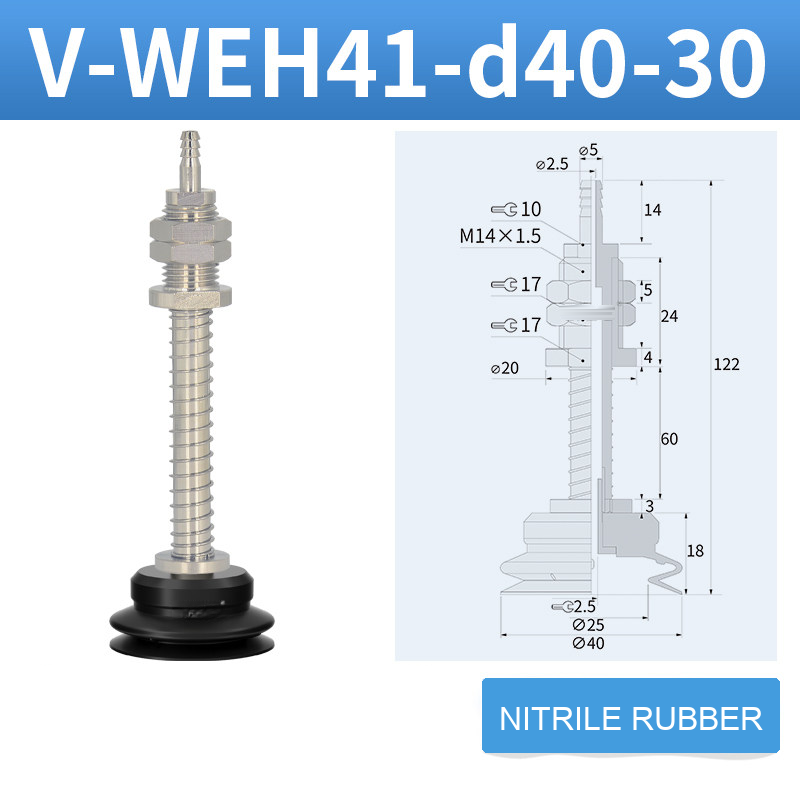
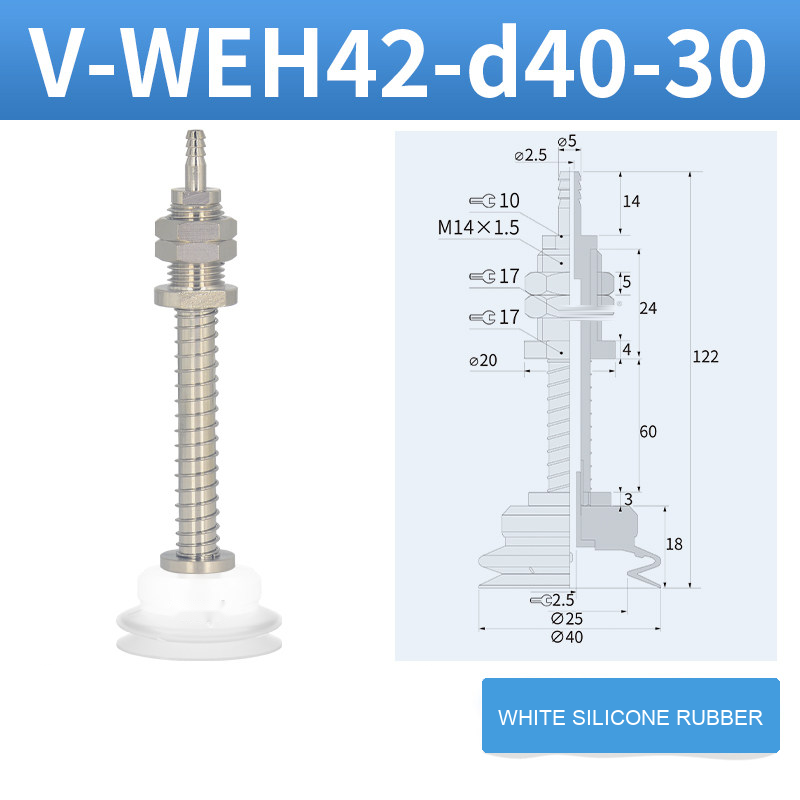
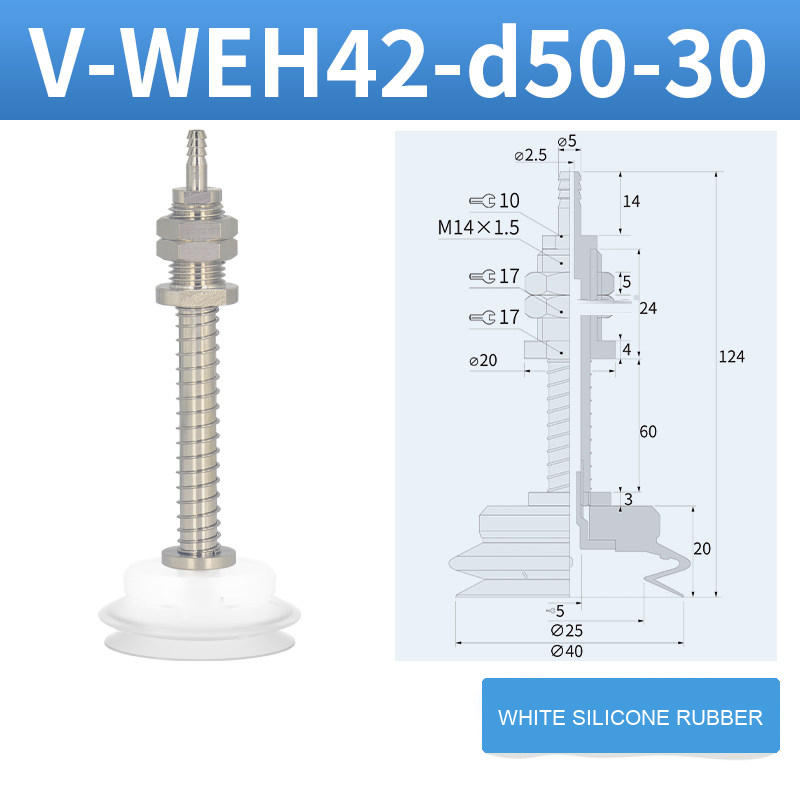
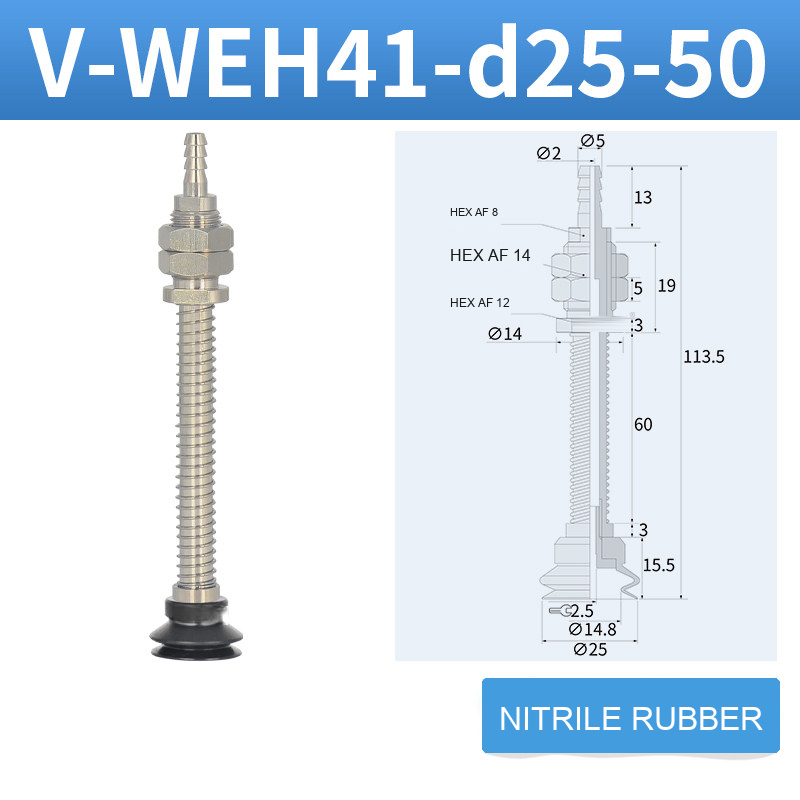
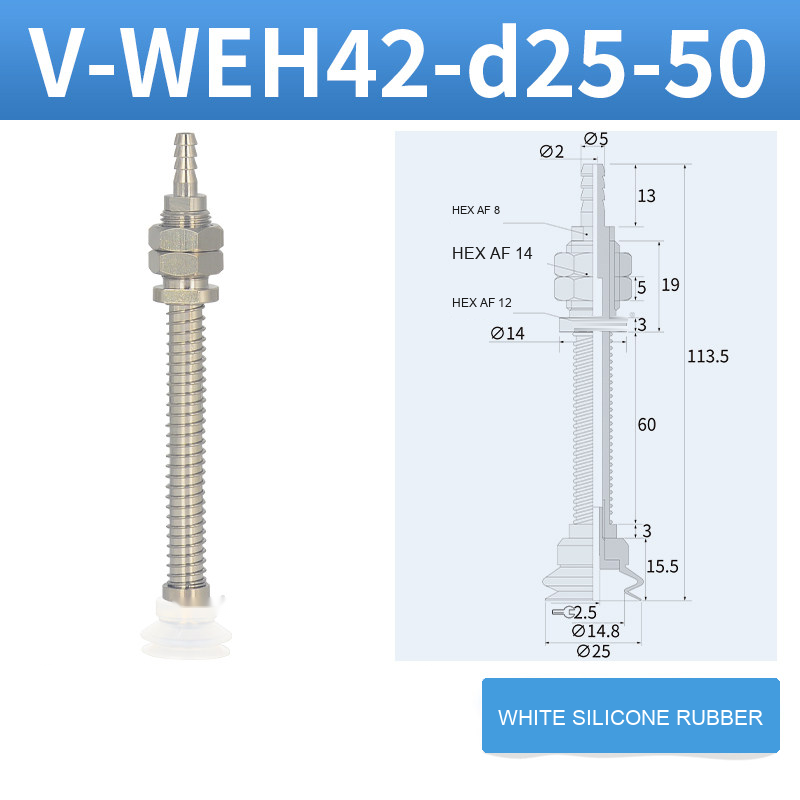
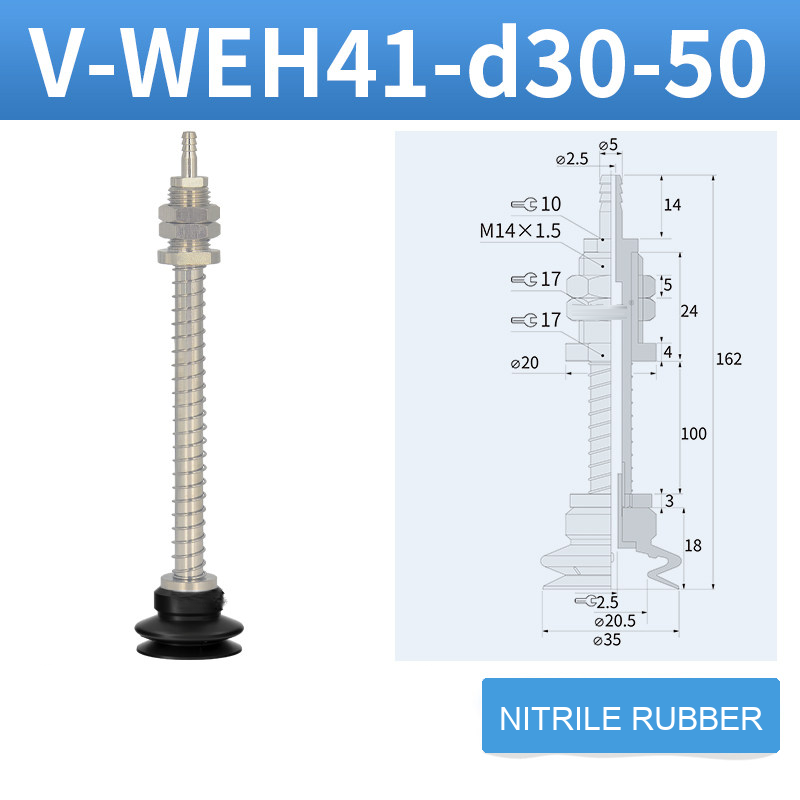
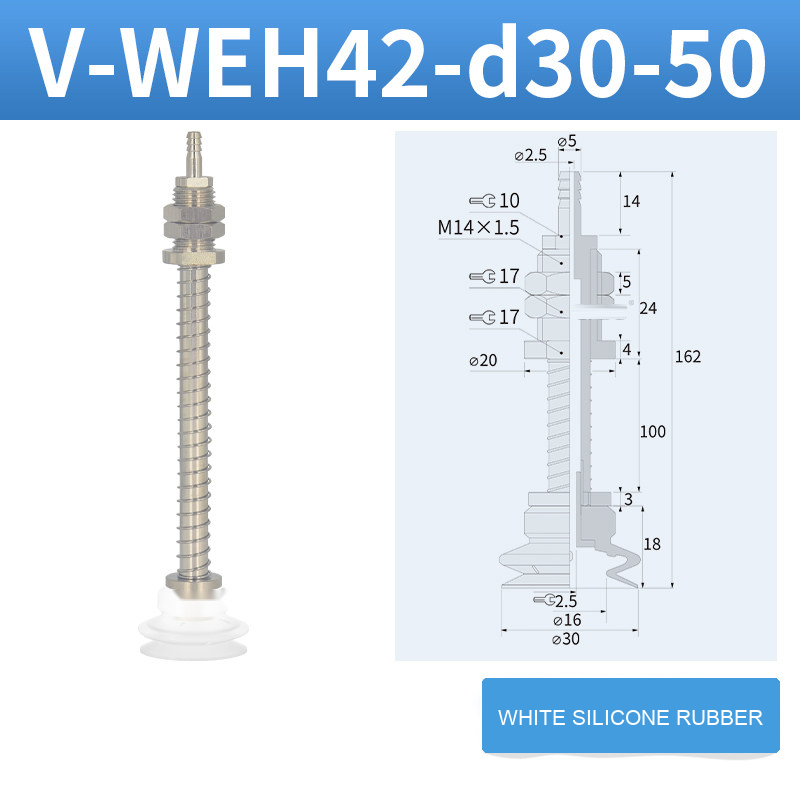
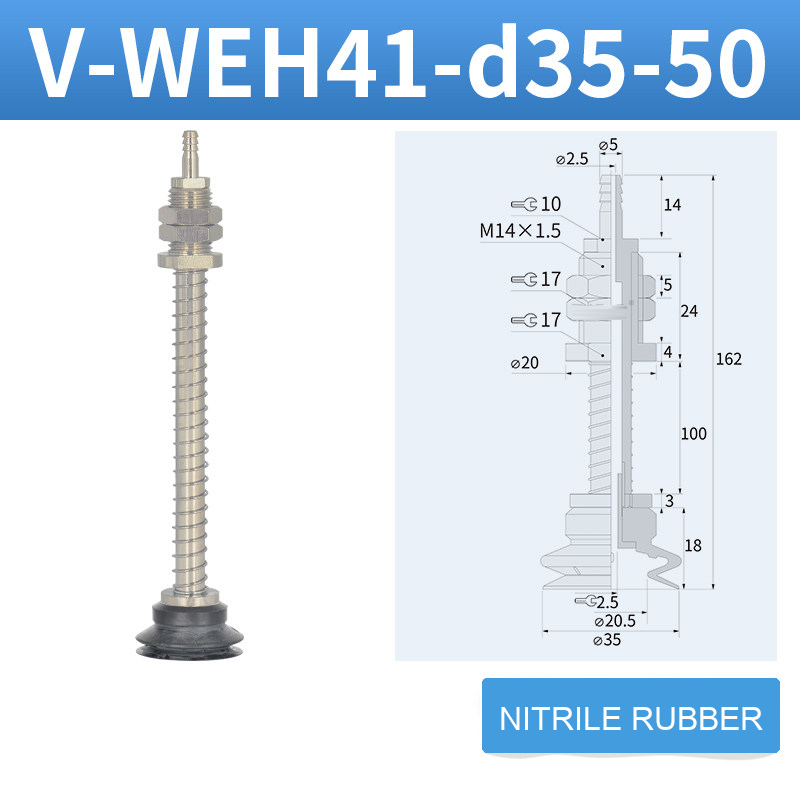
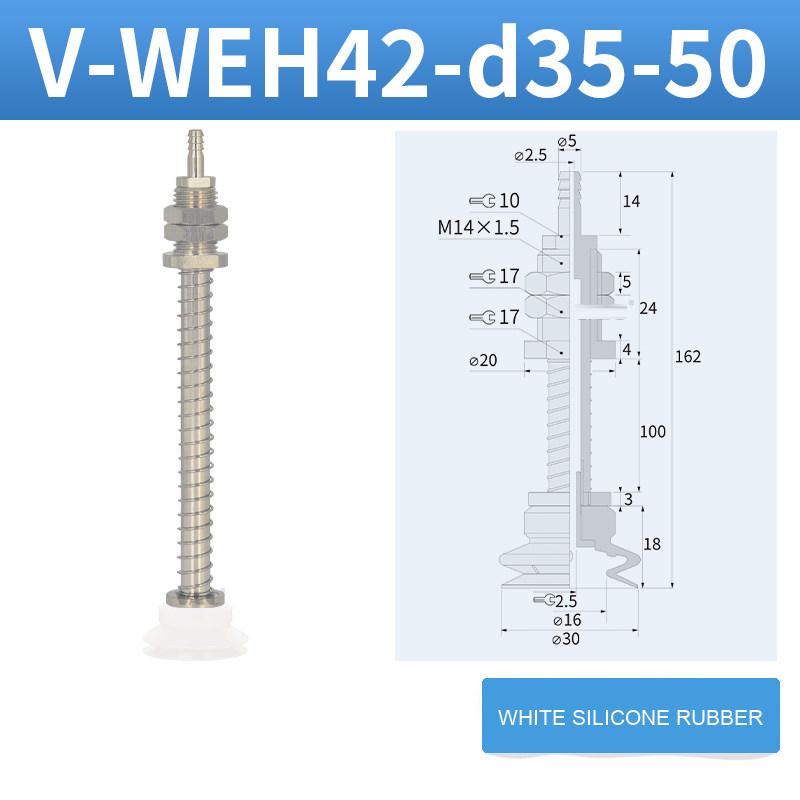
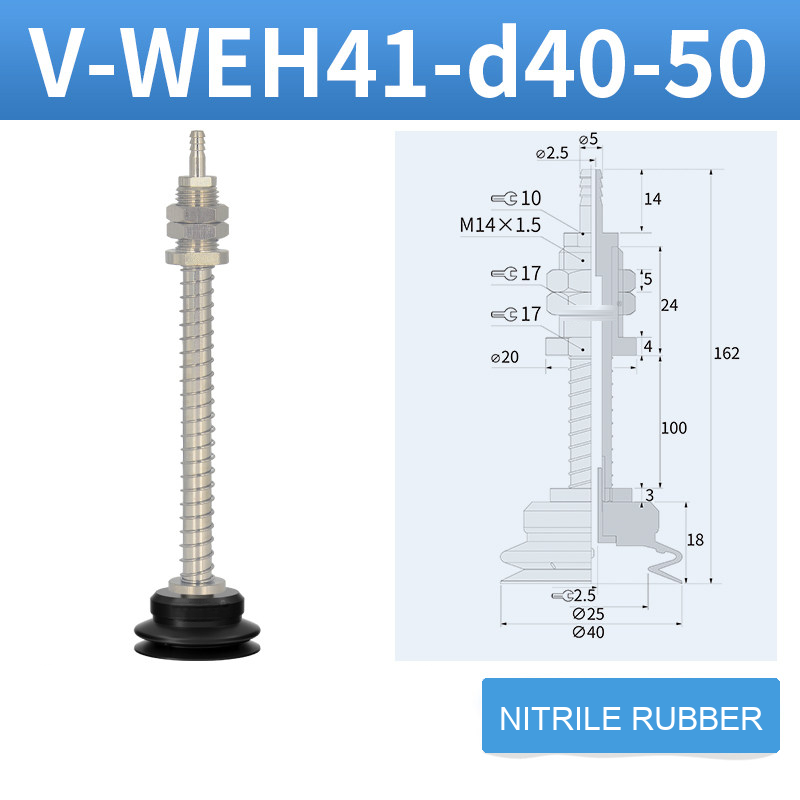
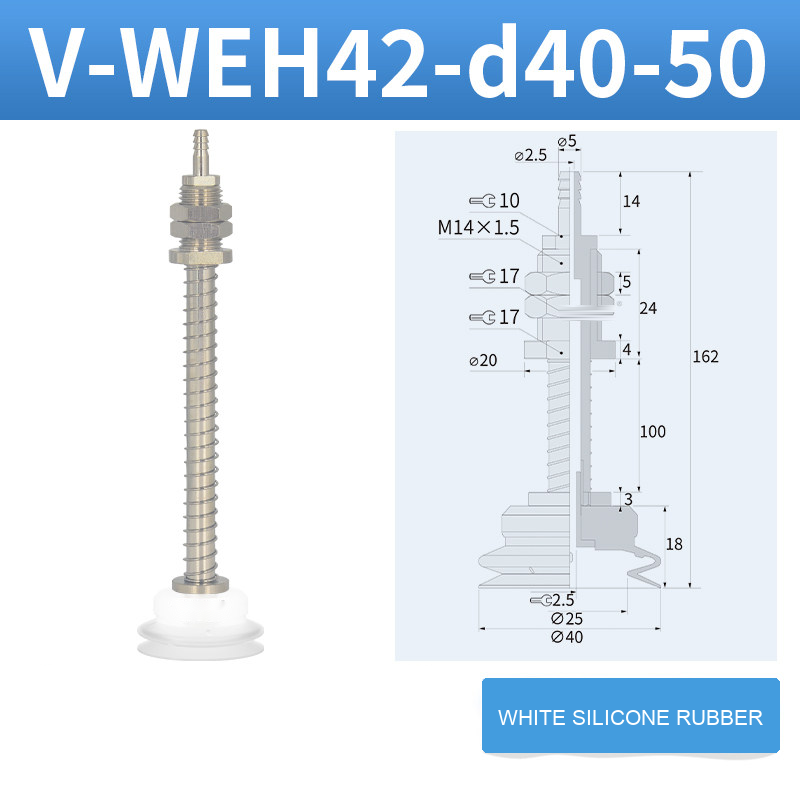
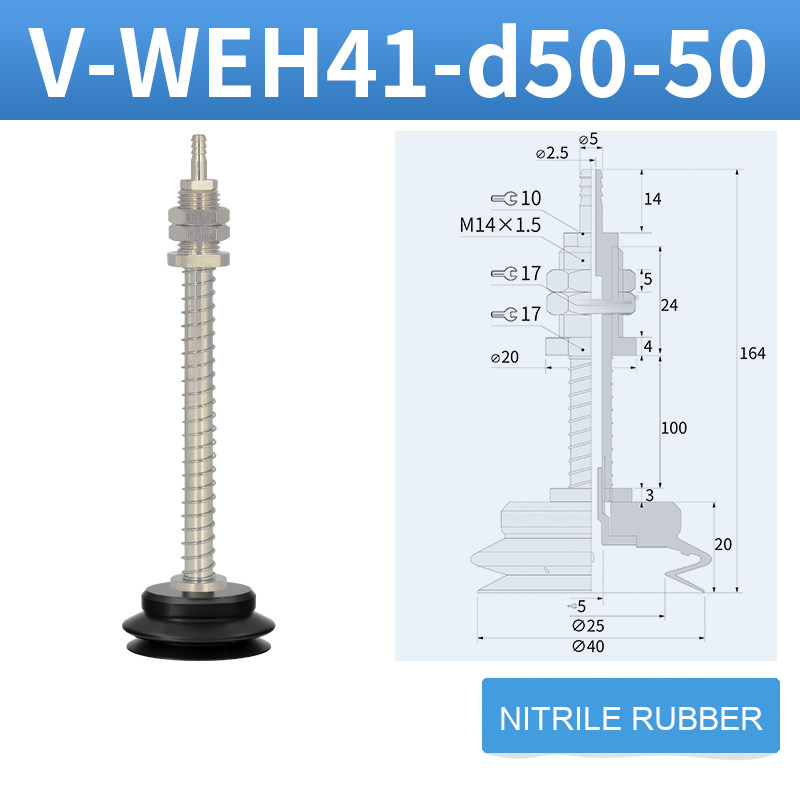
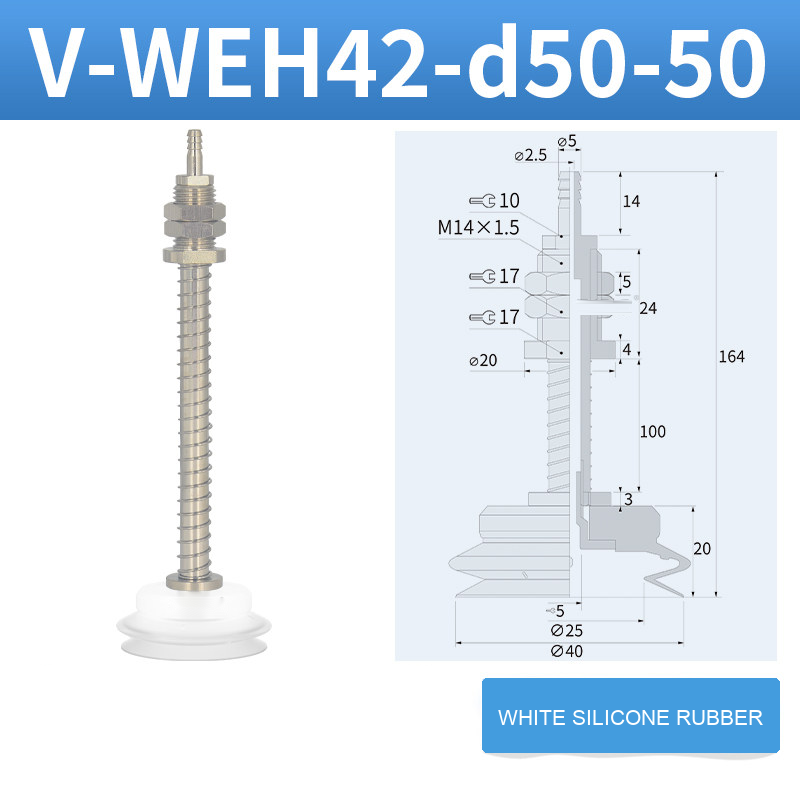
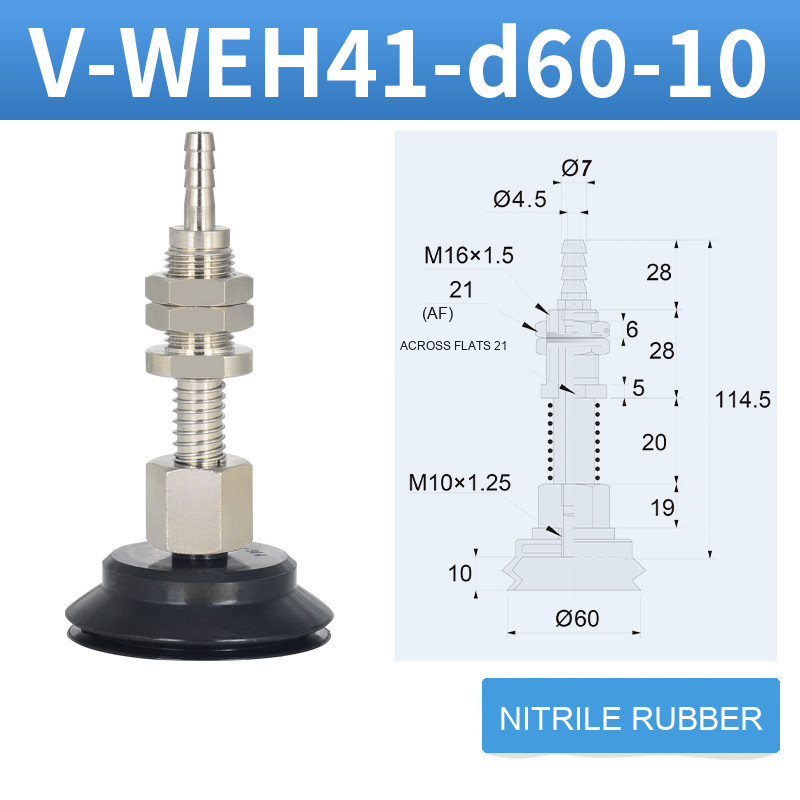
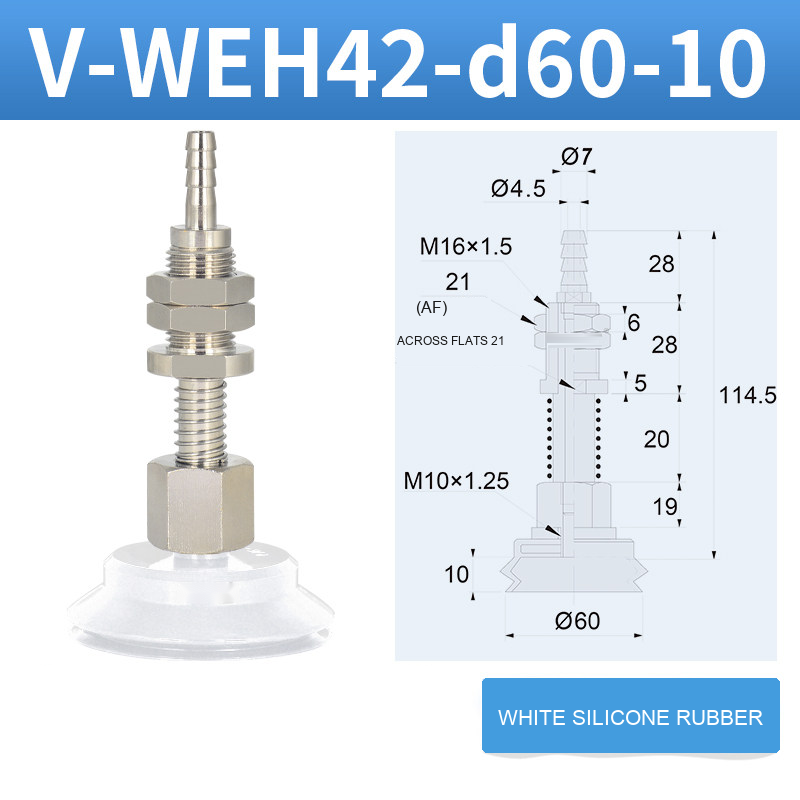
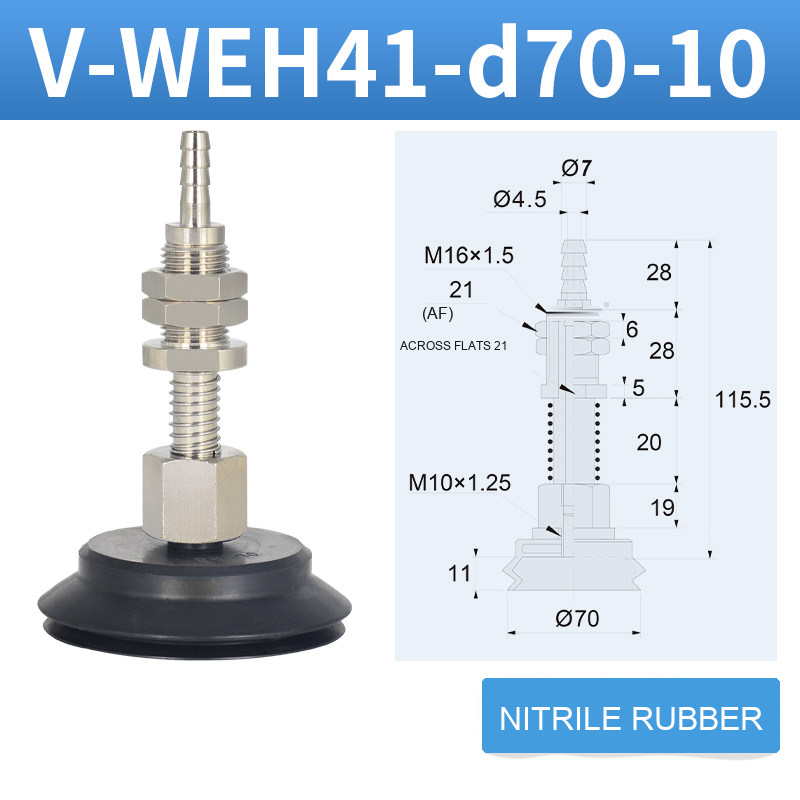
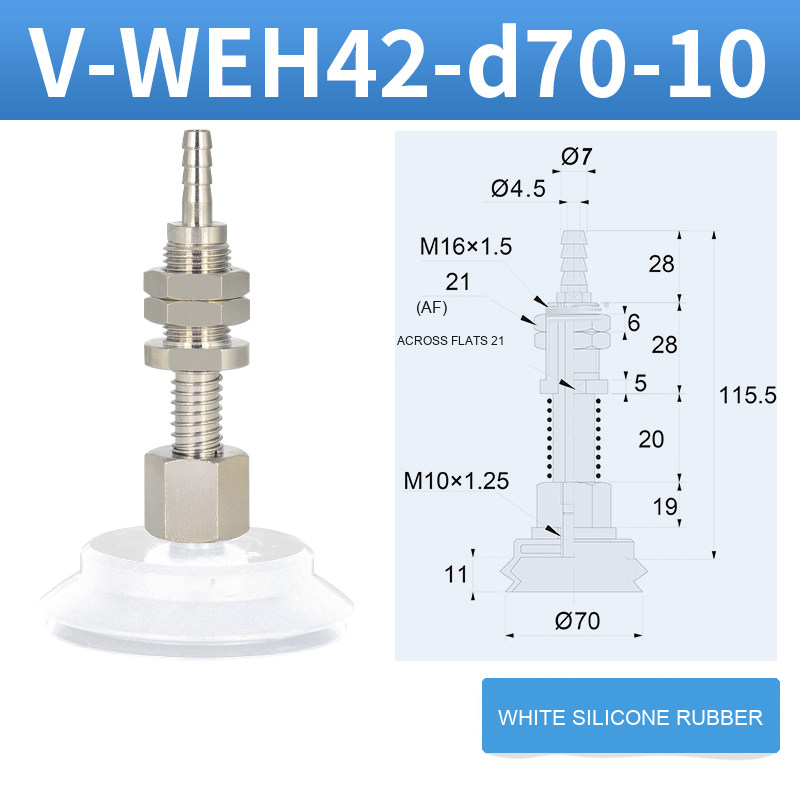
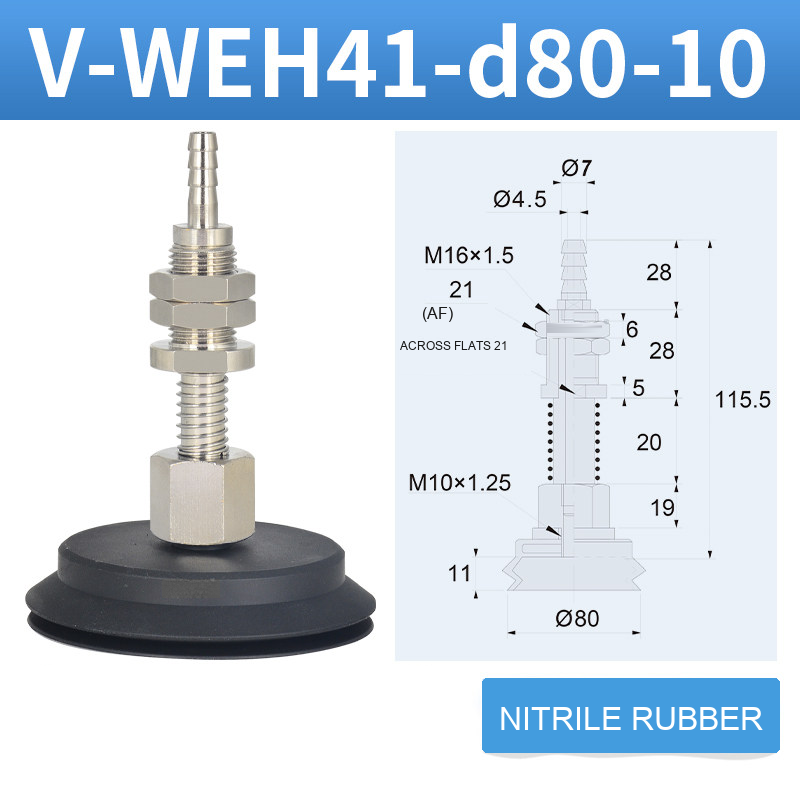
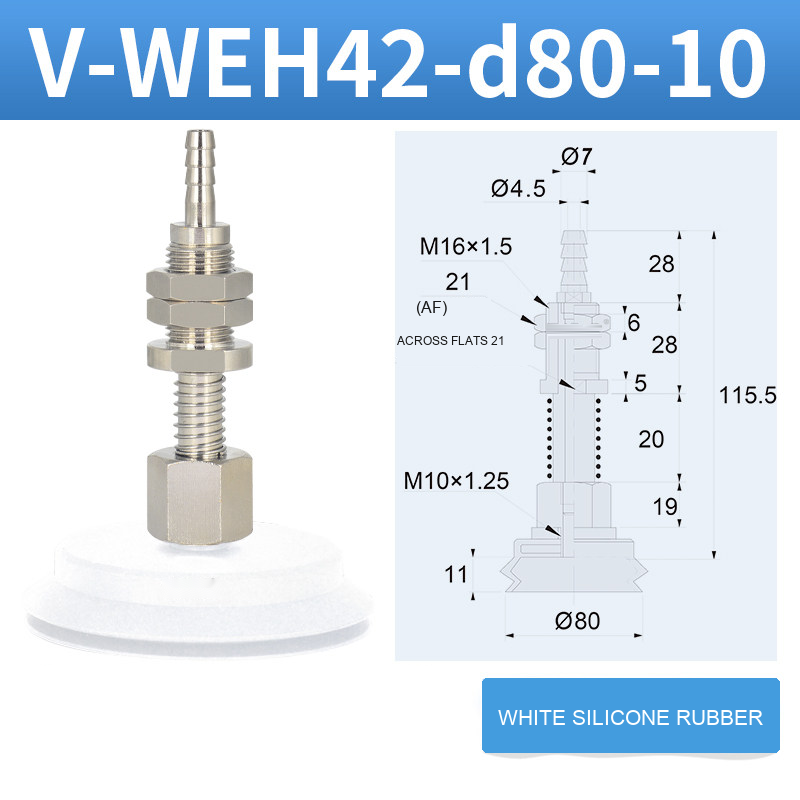
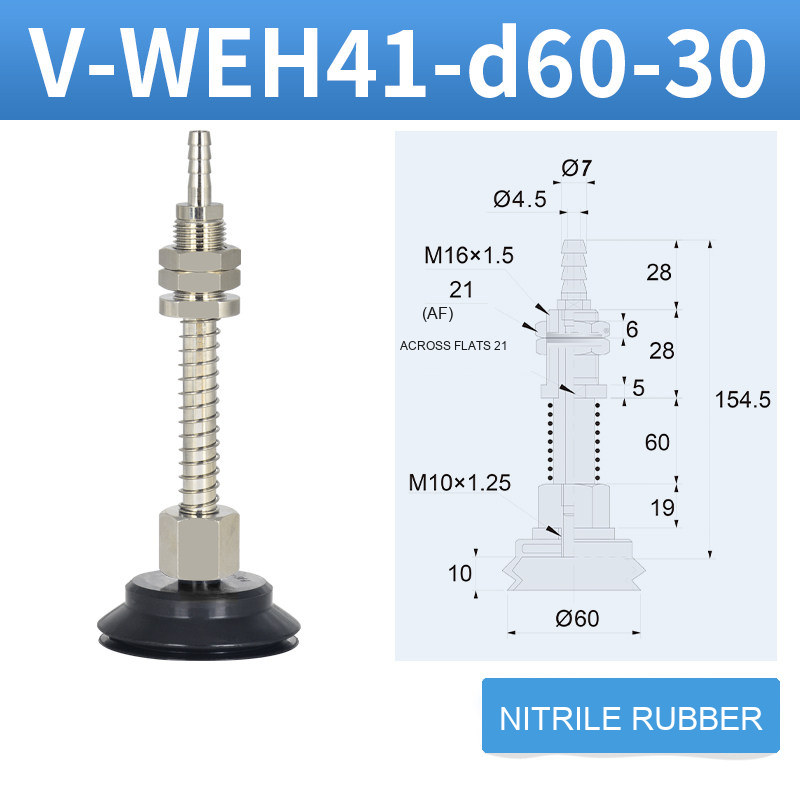
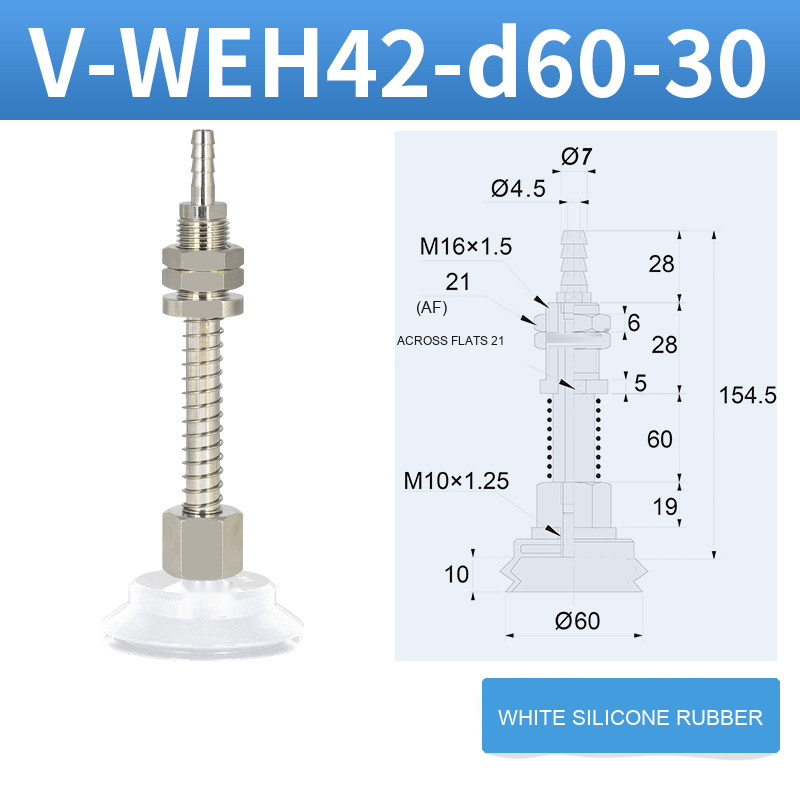
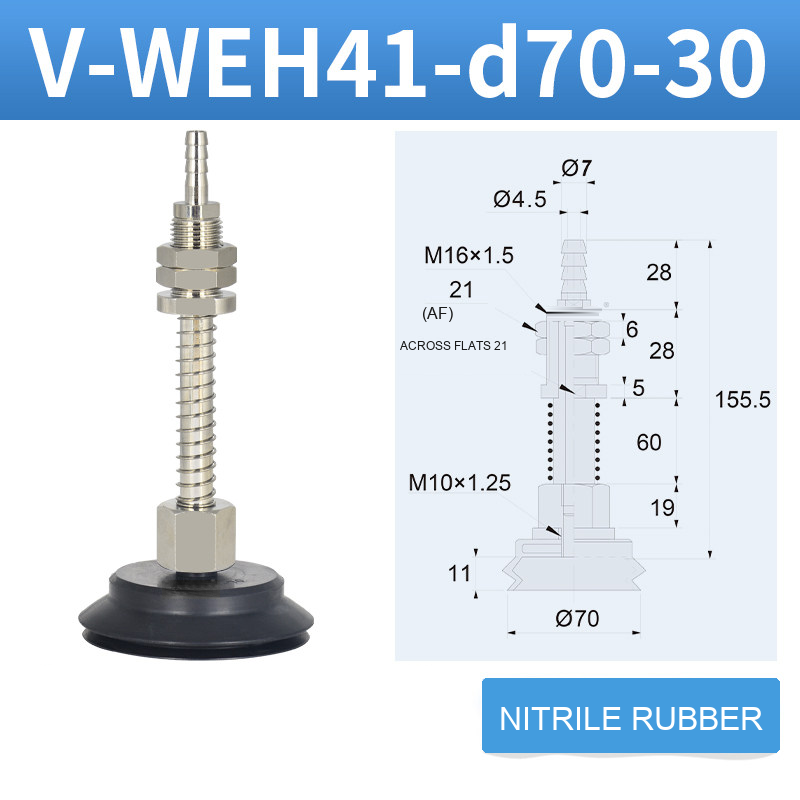
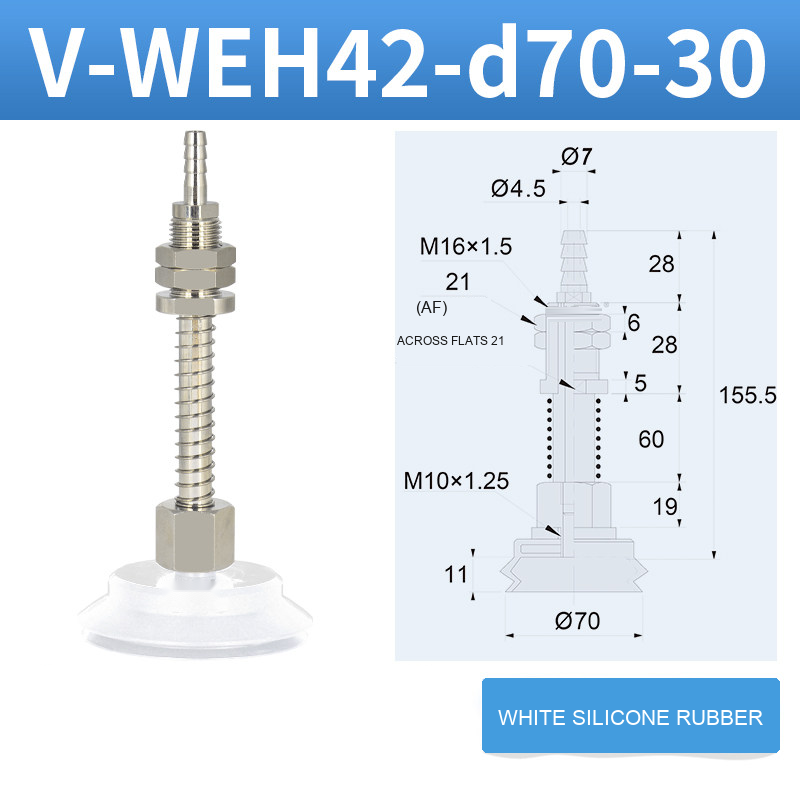
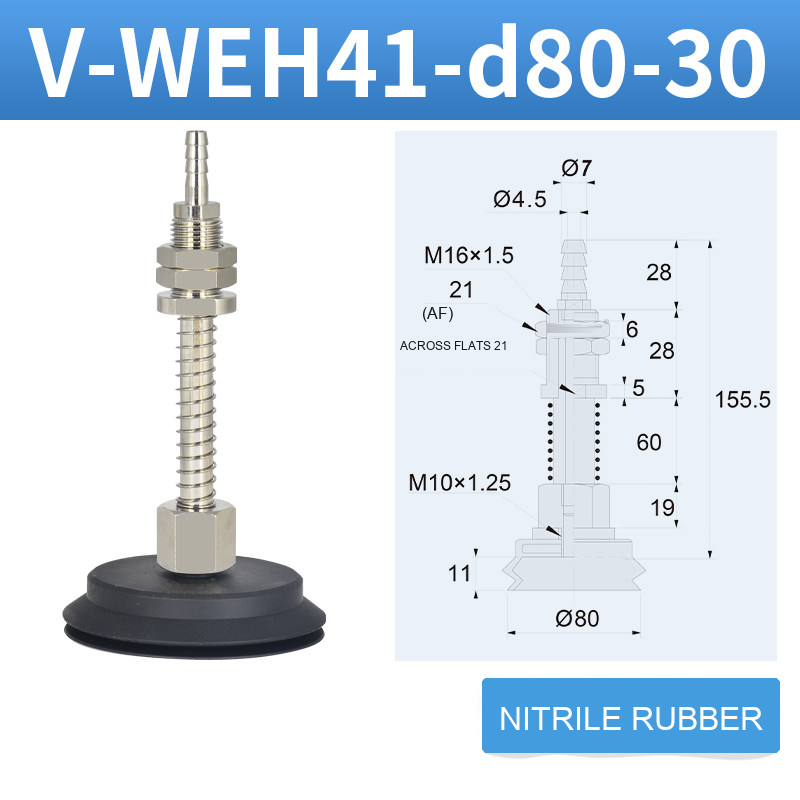
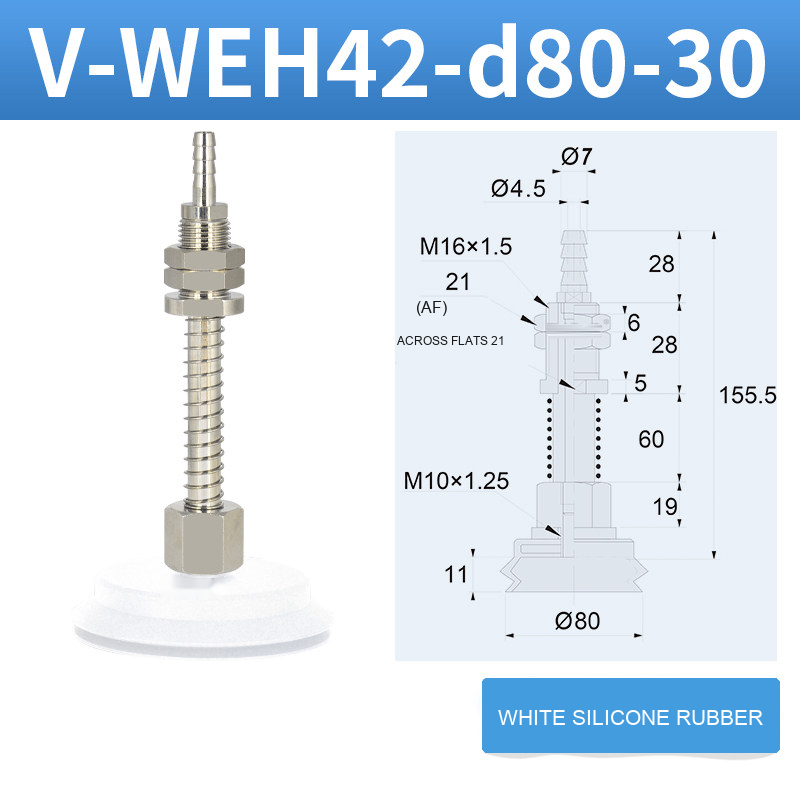
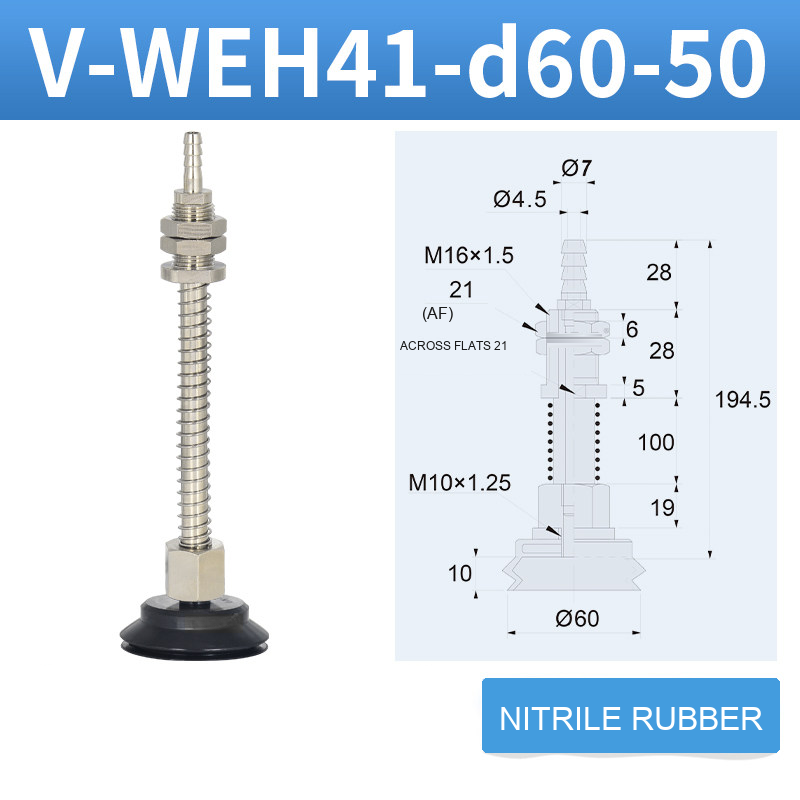
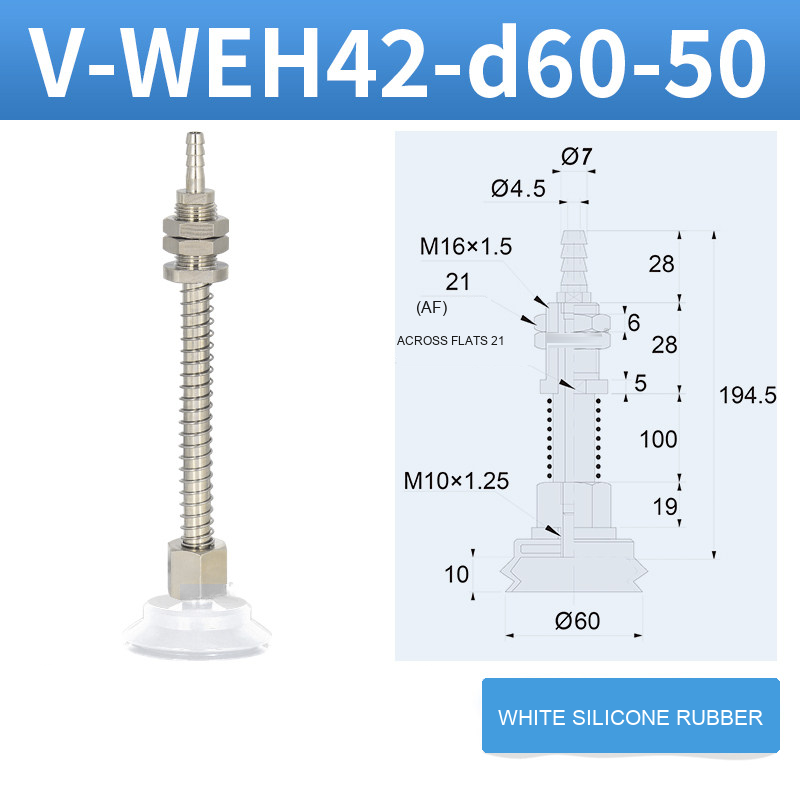
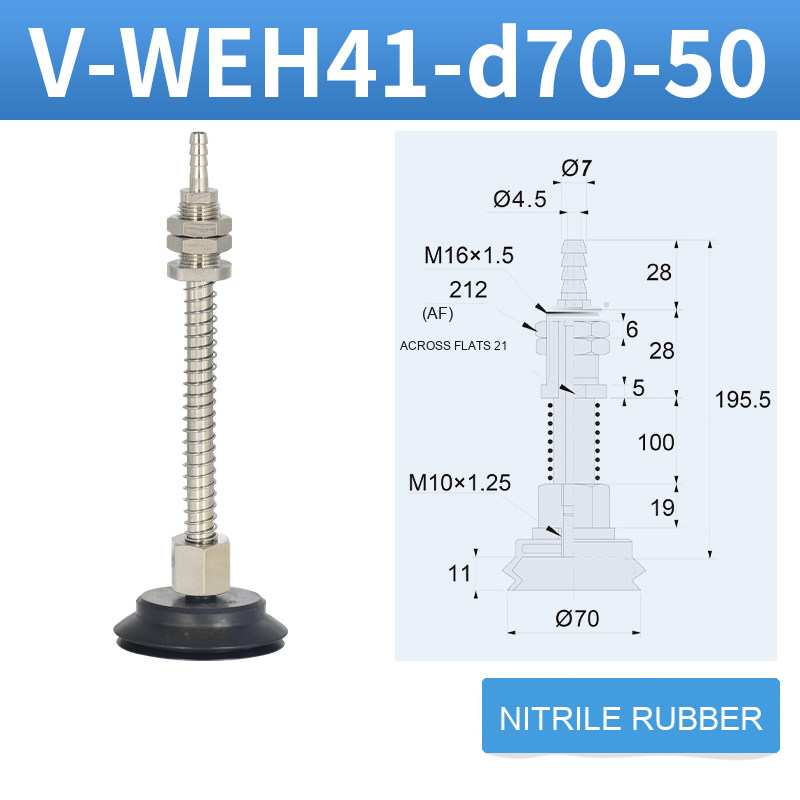
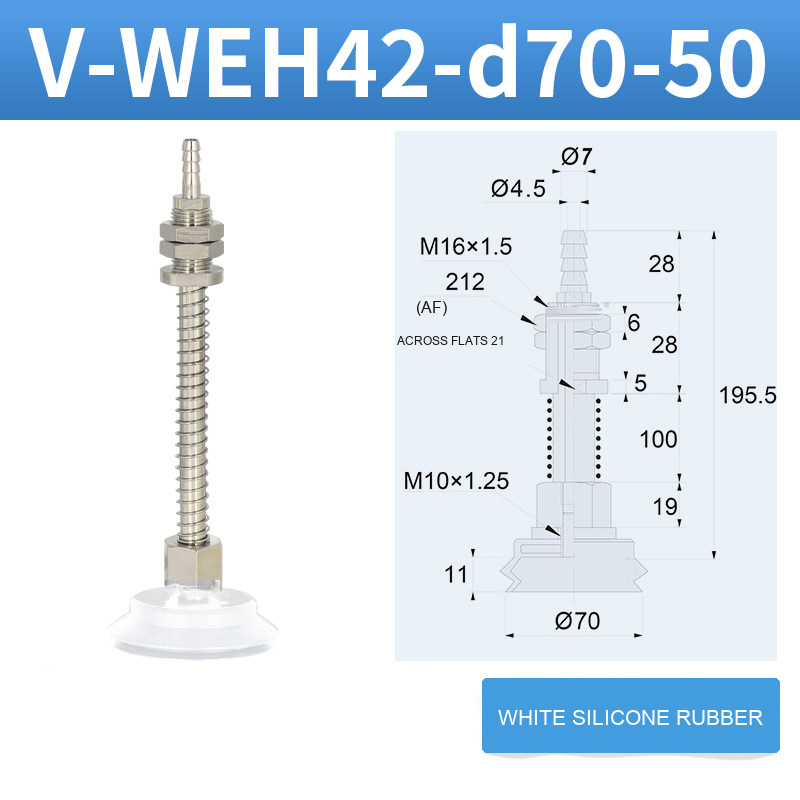
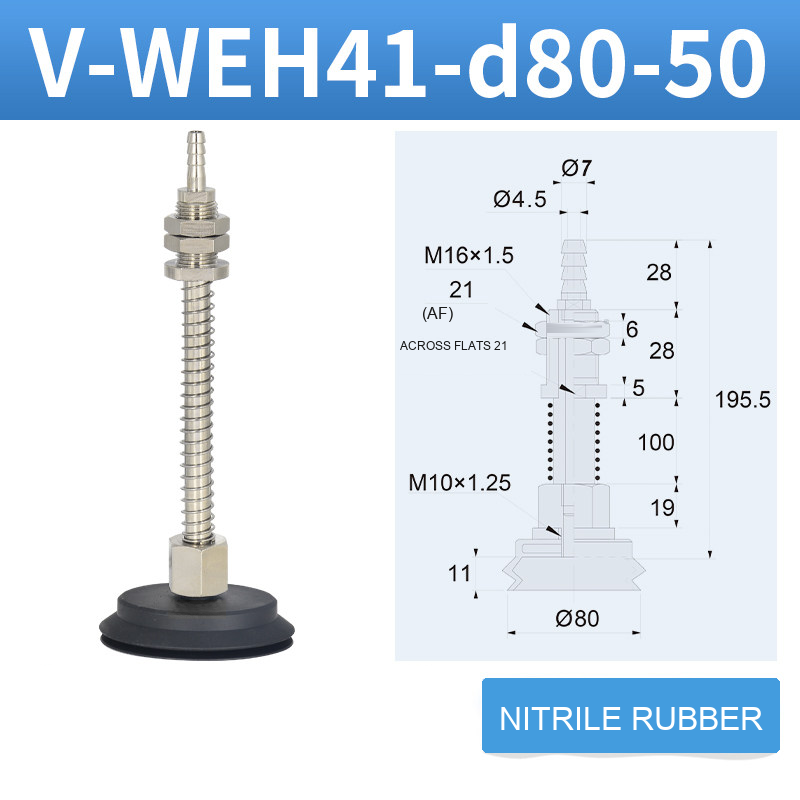
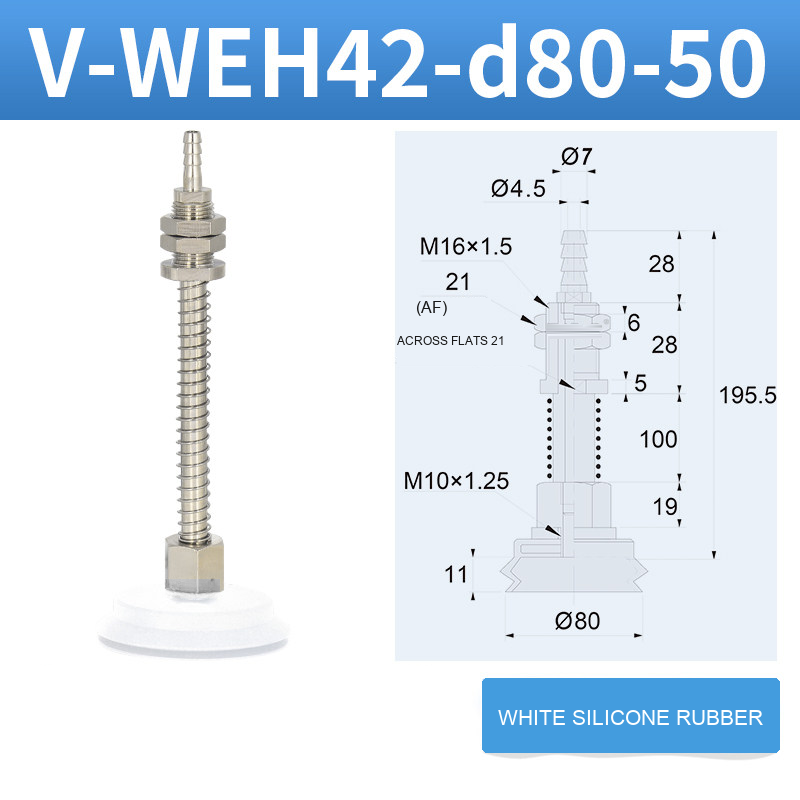
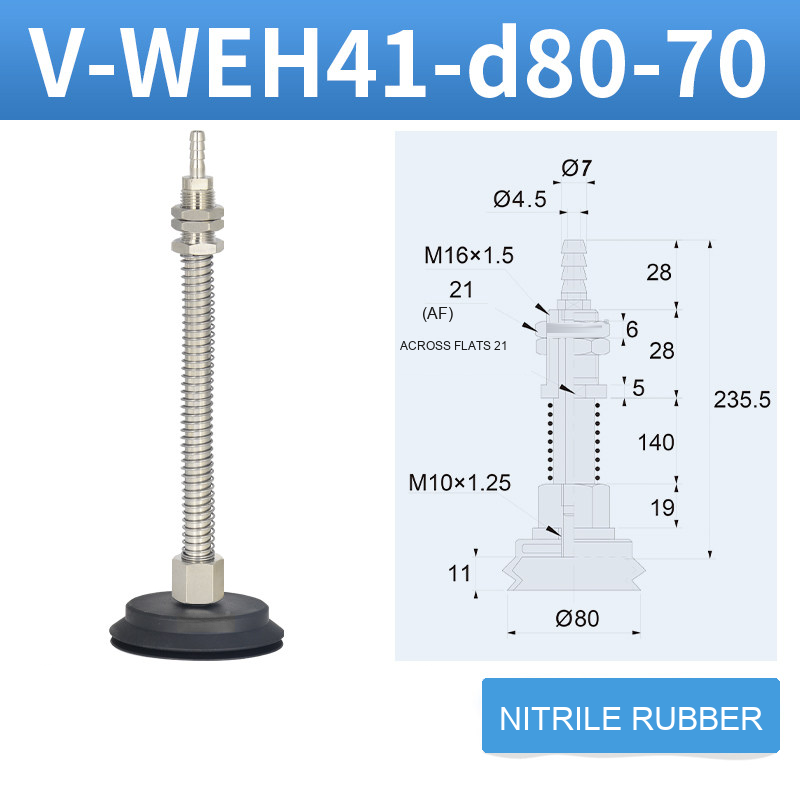
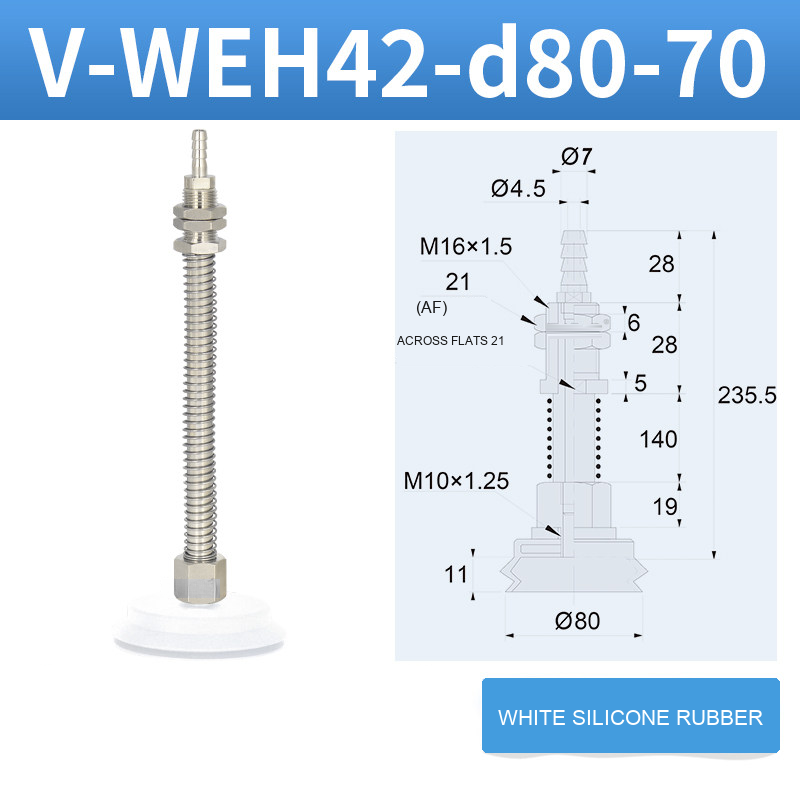
V-WEH41 / V-WEH42 Rear-Port Spring-Loaded Vacuum Cup Assemblies
Quick selection: choose the cup material, then a diameter that fits a clean flat sealing area, then the spring stroke and rear-port thread group. This guide helps you make a first selection from 100 configurations.
Quick Model Finder - Start Here
| Step | What to check | How to select |
|---|---|---|
| 1. Surface | Is the contact area flat, smooth, clean and non-porous? | Glass, polished metal and sealed plastics are typical starting points. Test rough, porous, wet, oily, dusty or strongly curved surfaces. |
| 2. Cup material | Which elastomer suits the workpiece and process? | V-WEH41 = black nitrile rubber. V-WEH42 = white silicone rubber. Confirm compatibility with temperature, cleaning fluids and process media. |
| 3. Cup diameter | How much uninterrupted flat sealing area is available? | Choose the largest cup that fits without crossing an edge, hole, rib or curved area. |
| 4. Spring stroke | How much part-height variation must the tool absorb? | Choose enough stroke to retain travel margin throughout the cycle. Stroke provides compliance; it does not increase holding force. |
| 5. Rear-port thread | Which mating thread and package clearance are required? | Match the M9, M11, M14 or M16 group below and confirm the selected model drawing before ordering. |
Reference Handling Mass per Cup
For quick first sizing only: clean, flat, fully sealed and stationary workpiece; actual vacuum at the cup = -60 kPa; 4:1 planning factor. These values are not certified safe working loads or measured product ratings. Use a larger safety factor and validate the final tool for acceleration, vibration, side load, leakage, porous surfaces or long dwell time.
| Cup diameter | Reference handling mass per cup* |
|---|---|
| 6 mm | 40 g |
| 8 mm | 80 g |
| 10 mm | 120 g |
| 15 mm | 270 g |
| 20 mm | 480 g |
| 25 mm | 750 g |
| 30 mm | 1,080 g (1.08 kg) |
| 35 mm | 1,470 g (1.47 kg) |
| 40 mm | 1,920 g (1.92 kg) |
| 50 mm | 3,000 g (3.00 kg) |
| 60 mm | 4,330 g (4.33 kg) |
| 70 mm | 5,890 g (5.89 kg) |
| 80 mm | 7,690 g (7.69 kg) |
*The reference is calculated from nominal cup diameter at a perfect seal and -60 kPa, divided by four. It is not a certified safe working load, a measured holding-force value or a substitute for your own application test.
Available Sizes, Strokes and Rear-Port Groups
| Rear-port thread group | Available cup diameters | Listed spring strokes |
|---|---|---|
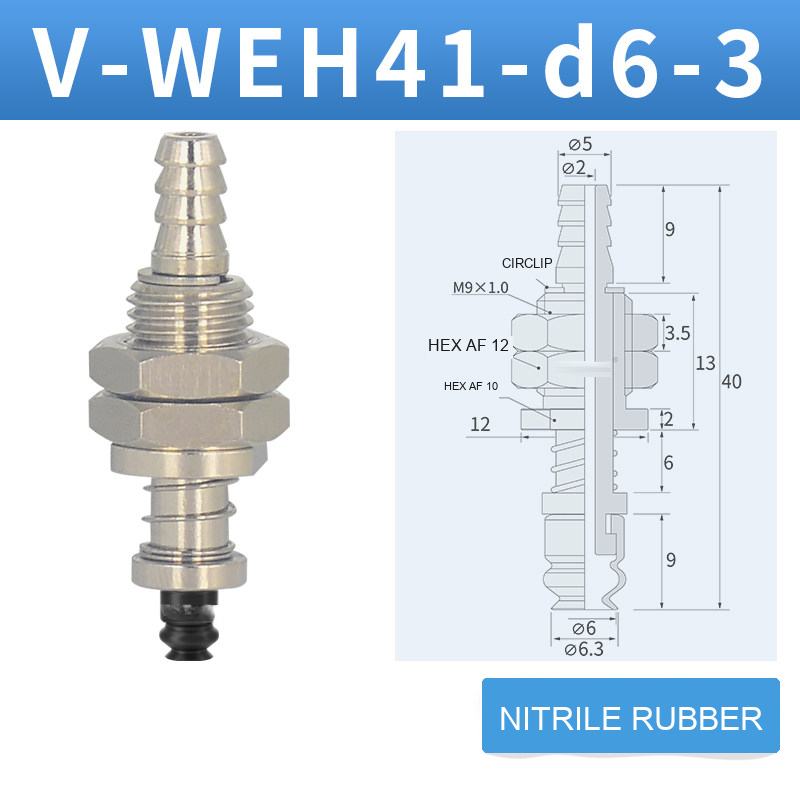
| M9 | 6, 8 mm | 3, 10, 15, 25 mm |
| M11 | 10, 15, 20 mm | 4, 10, 20, 30 mm |
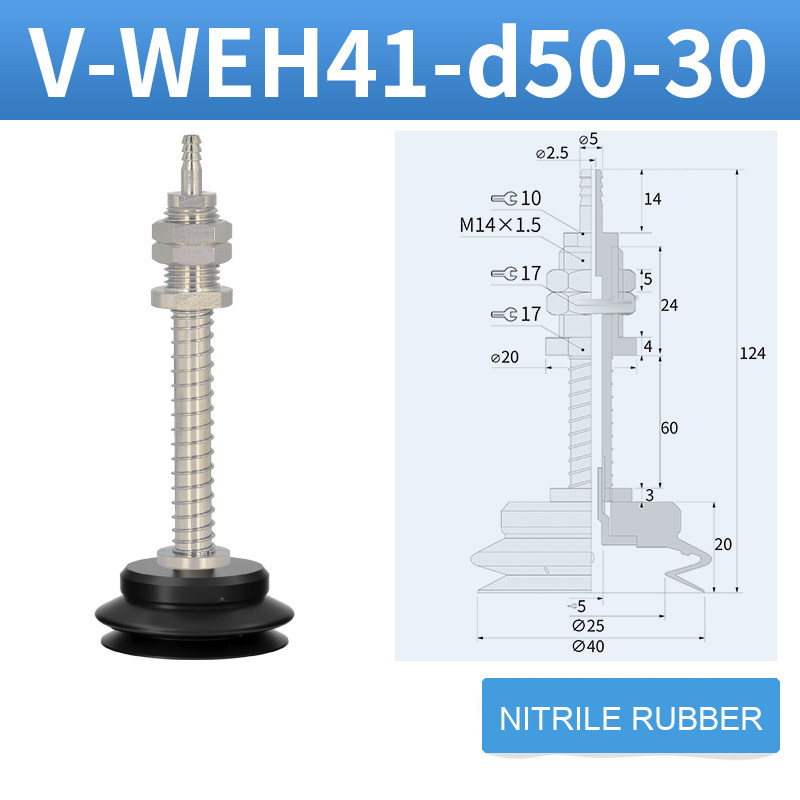
| M14 | 25, 30, 35, 40, 50 mm | 6, 15, 30, 50 mm |
| M16 | 60, 70, 80 mm | 10, 30, 50 mm; 80 mm also has 70 mm stroke |
Model-code example: V-WEH41-d30-15 means black nitrile rubber, 30 mm cup diameter, 15 mm listed spring stroke and M14 rear-port group. V-WEH42-d80-70 means white silicone rubber, 80 mm cup diameter, 70 mm listed spring stroke and M16 rear-port group.
Fast FAQ
| Question | Short answer |
|---|---|
| Can I use a rough, porous, wet or oily surface? | Not without a representative test. Surface leakage and contamination can reduce holding force substantially. |
| Does a longer spring stroke hold more weight? | No. Stroke compensates for height variation. Holding performance is governed mainly by seal quality, cup area and actual vacuum. |
| Can I use one cup only? | Only after your final tool has passed a full application test. Use multiple cups and a retention method where failure consequences require it. |
| What must I test before production? | Measure vacuum at the cup, pickup time, release time, vacuum decay, payload margin and repeatability with the real part, hose, valve and cycle speed. |
Engineering Check Before Production
- Keep the sealing zone clean, dry and free of loose dust, release agent, oil film and moisture.
- Avoid side load and peeling load. Reduce payload for acceleration, vibration, impact, uneven contact and long dwell time.
- Keep travel margin in the spring and prevent bottoming out.
- For a theoretical check only: Fideal = Delta P x Aeffective, where A = pi x D2 / 4. Use the actual vacuum at the cup, not the pump nameplate value.
- No universal temperature, humidity or chemical limit is claimed here. Confirm elastomer compatibility in the actual process.
Need help? Send us the workpiece material and finish, mass, usable flat sealing area, orientation, cycle acceleration, actual vacuum level, required thread, expected height variation and process temperature/chemicals. We can help narrow the correct V-WEH41 or V-WEH42 configuration.
Always confirm the selected model code and model drawing before ordering. Original product images and model-specific drawings remain unchanged.