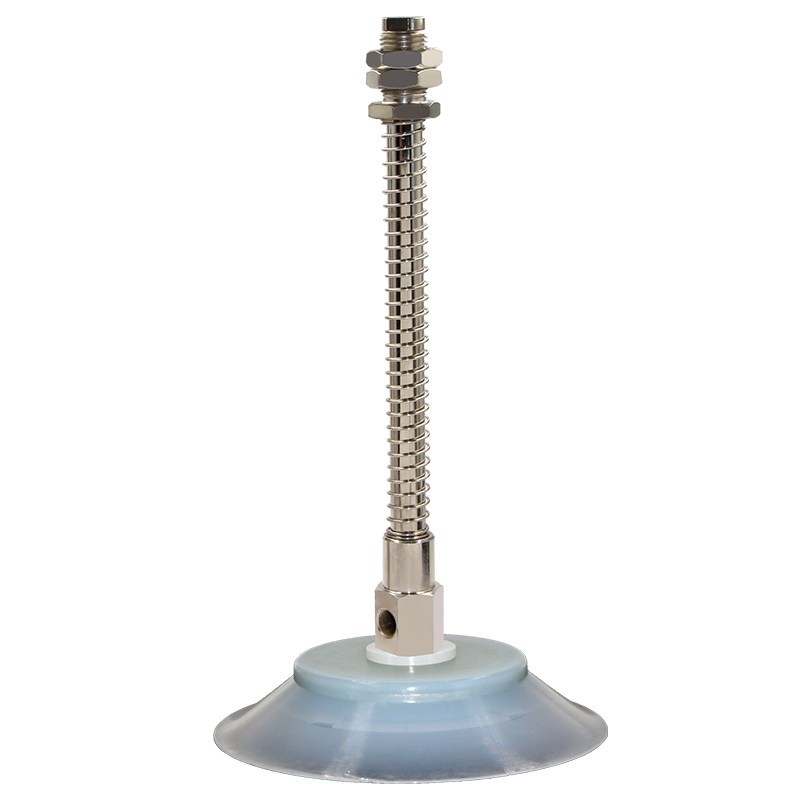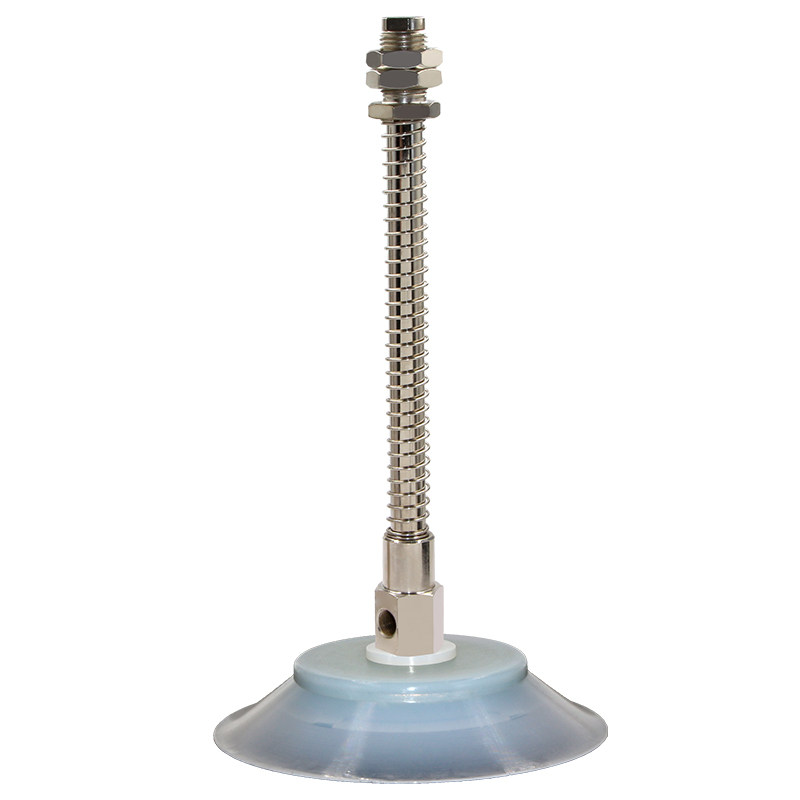




PATS Vacuum Cup Buffer Mounts — 10–70 mm Stroke
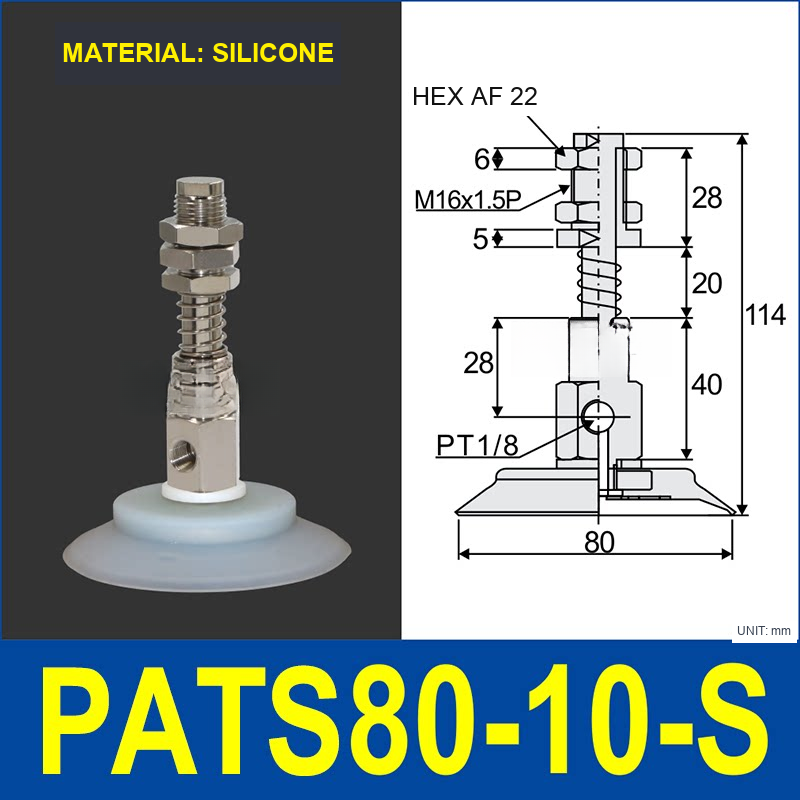
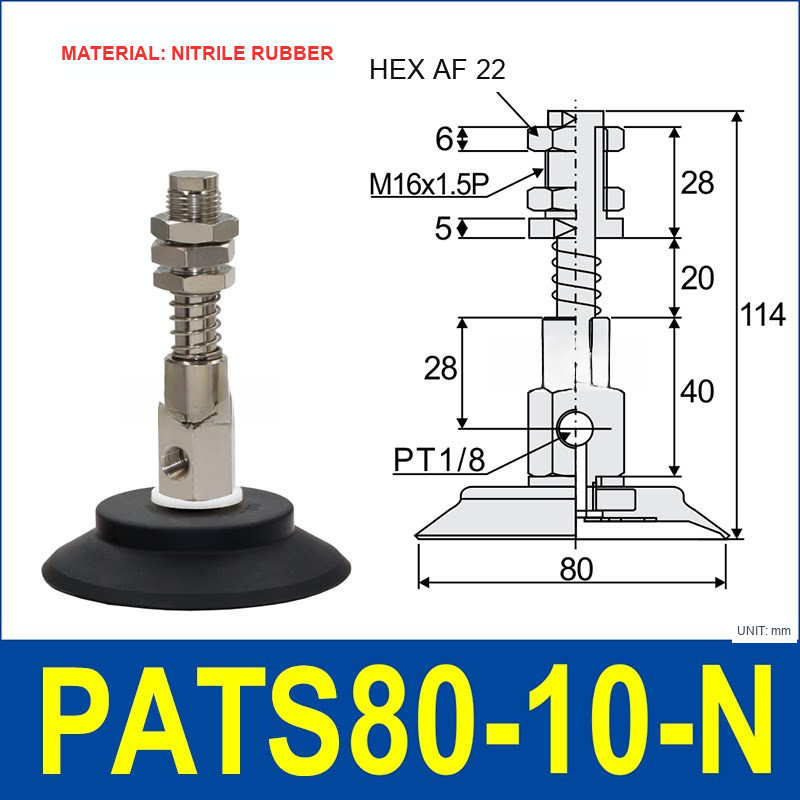
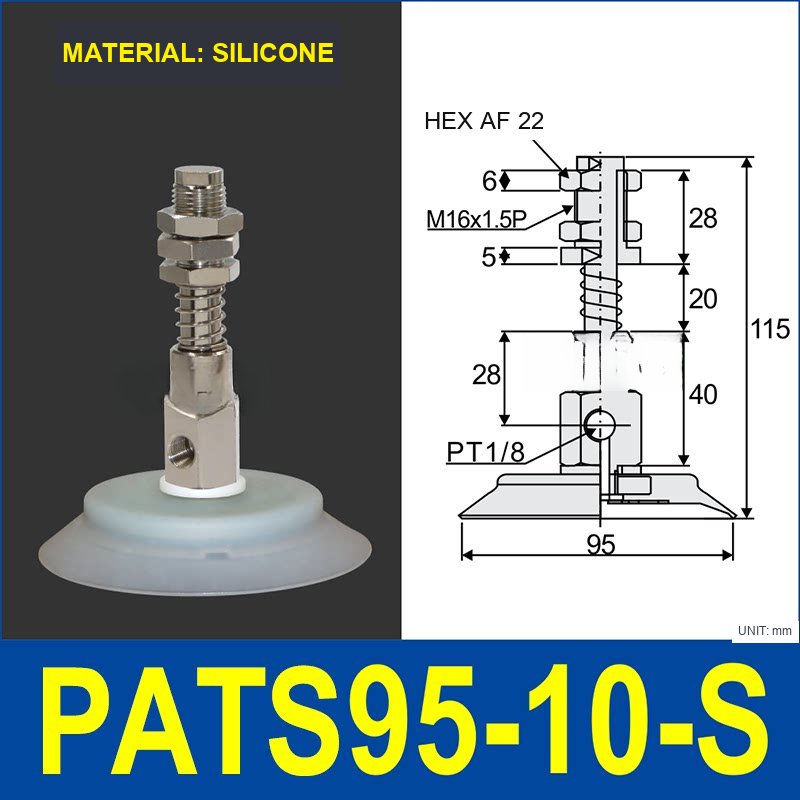
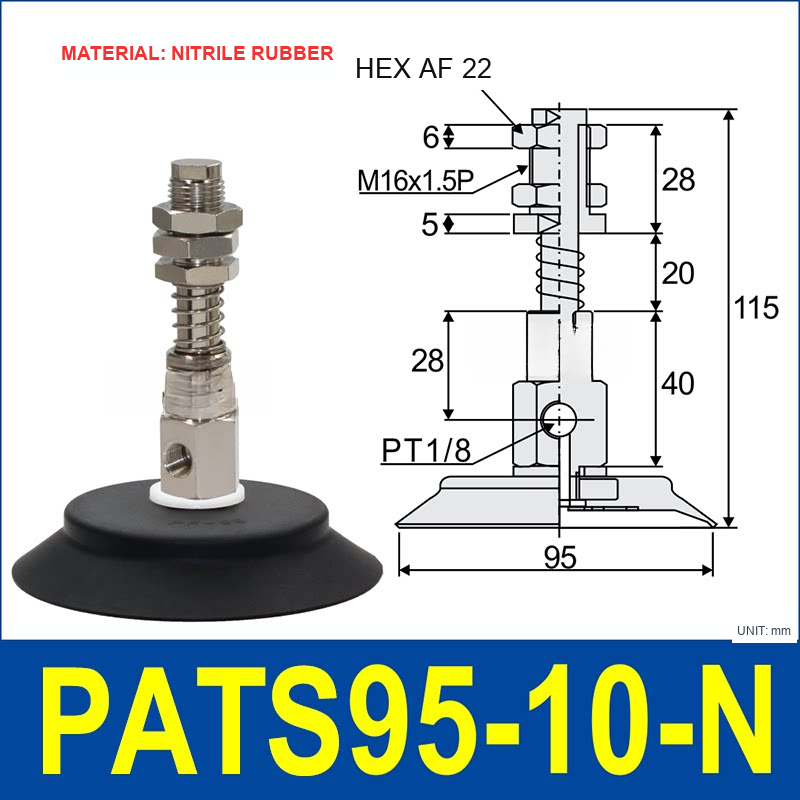
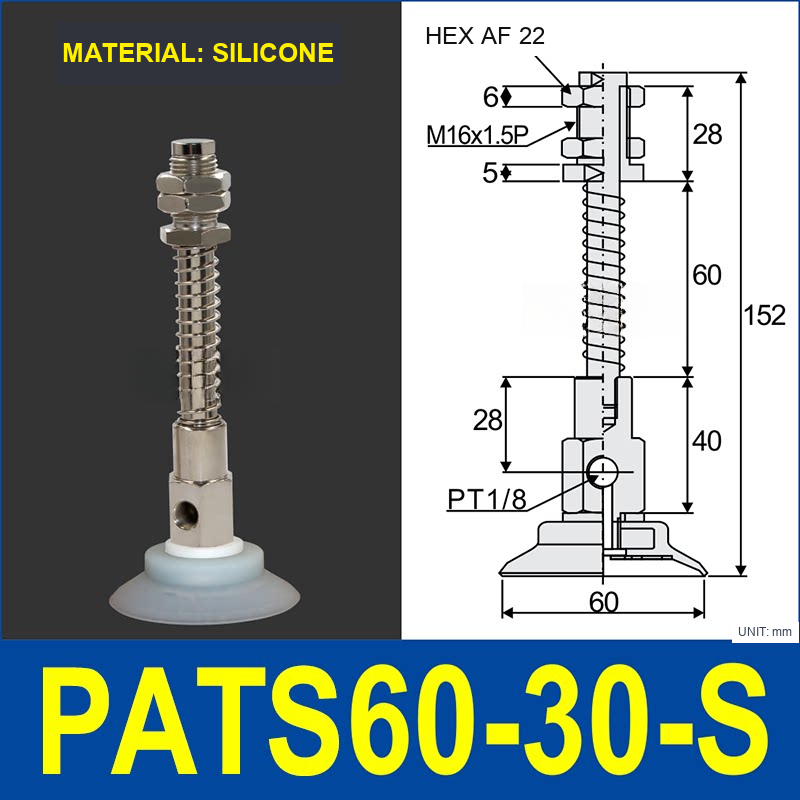
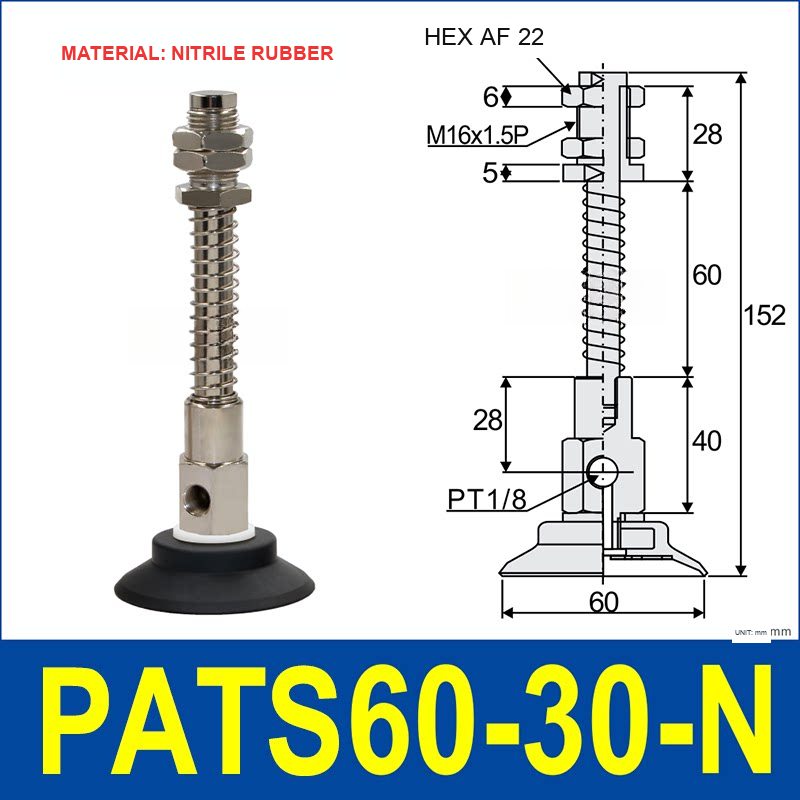
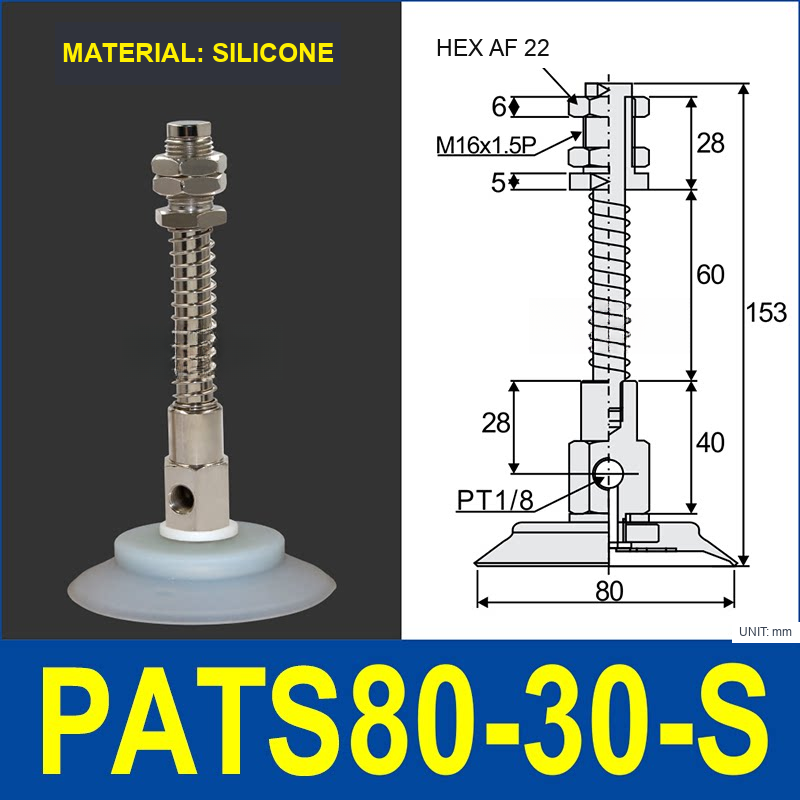
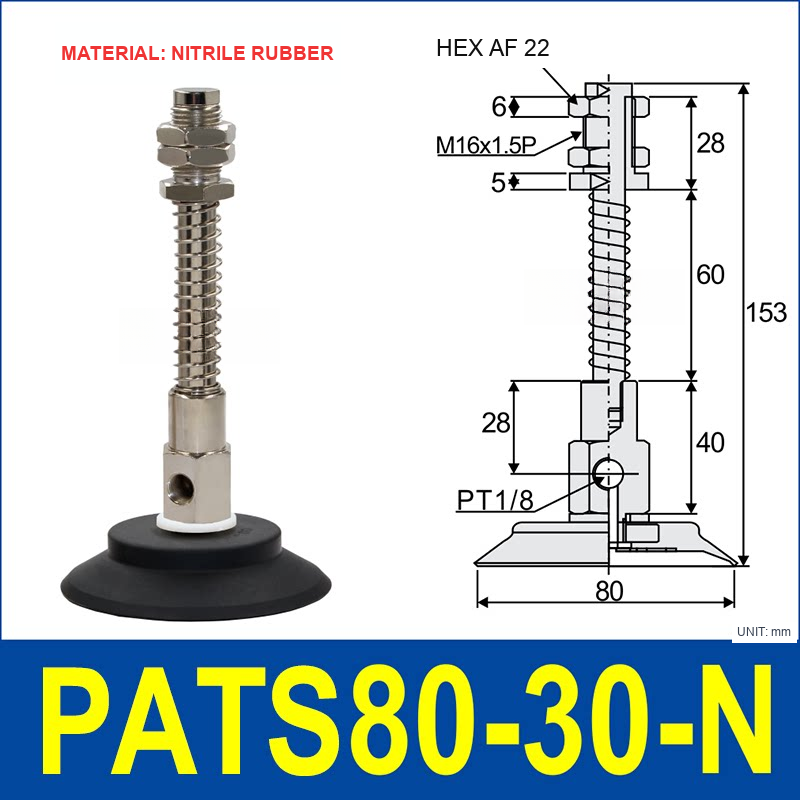
Spring-buffered vacuum cup mounts with an integrated vacuum cup for compatible industrial handling, packaging and robotic end-effectors. Select the complete listed PATS model according to cup diameter, stroke, material and the dimensional drawing.
Quick Model Finder
- Choose cup diameter: select 60, 80, 95 or 105 mm to match the required contact area and the selected drawing.
- Choose buffer stroke: select 10, 30, 50 or 70 mm according to the required compliance and installation clearance.
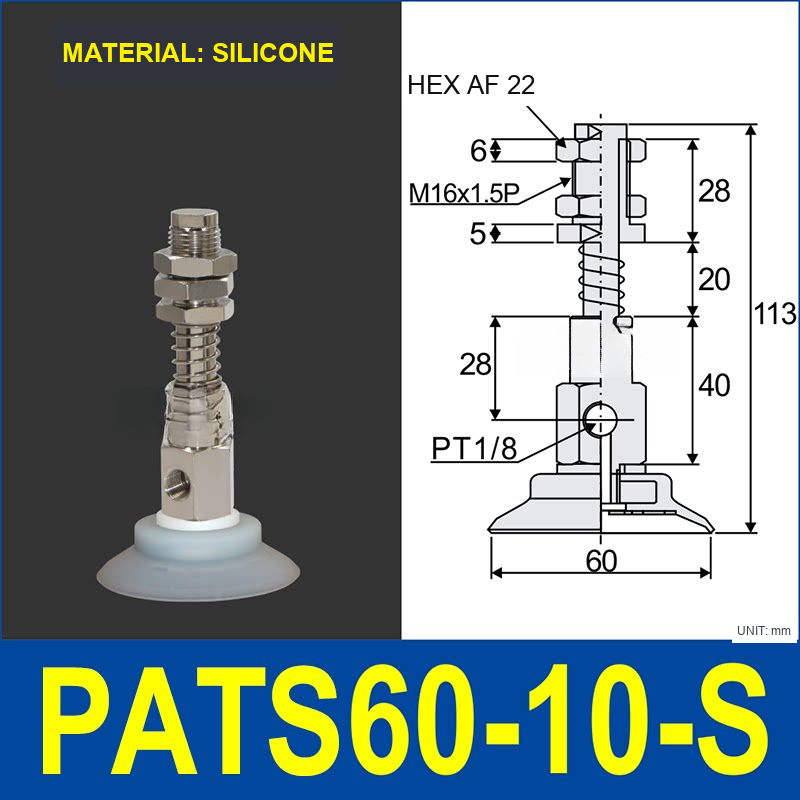
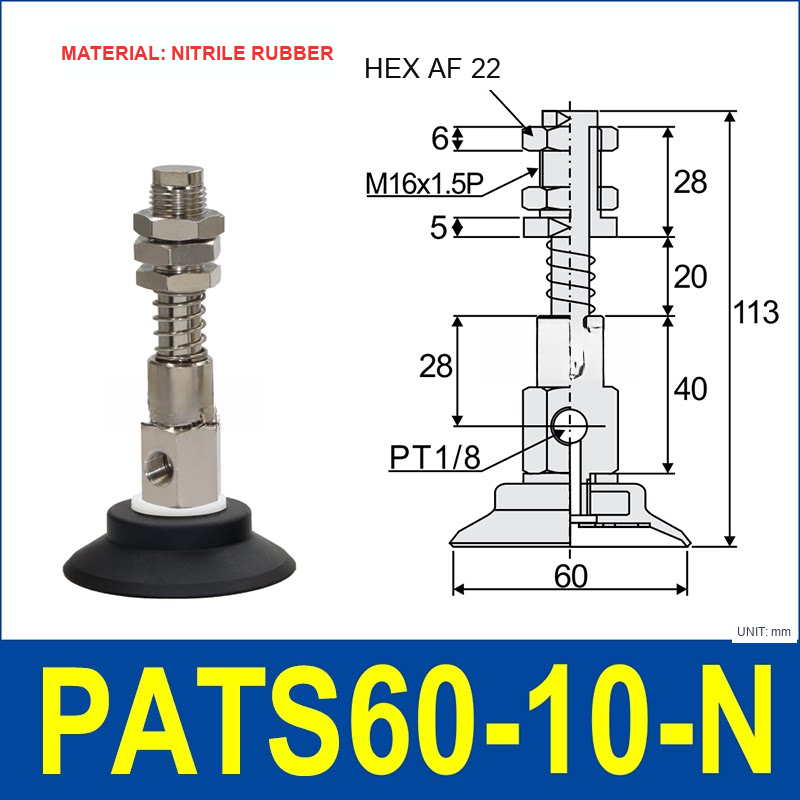
- Choose cup material: select S for Silicone or N for Nitrile Rubber, then confirm suitability for the workpiece and environment.
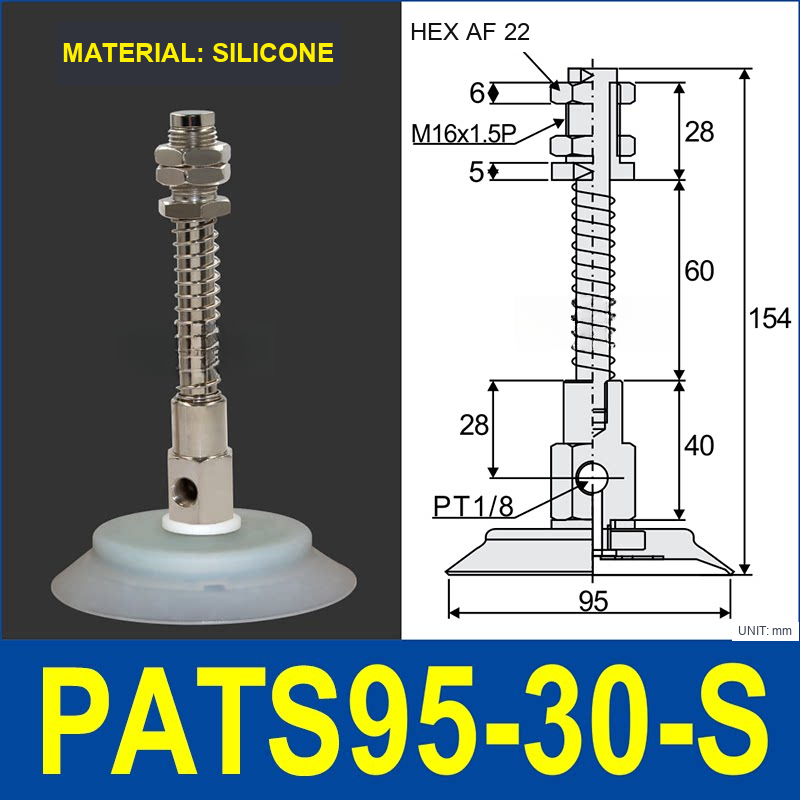
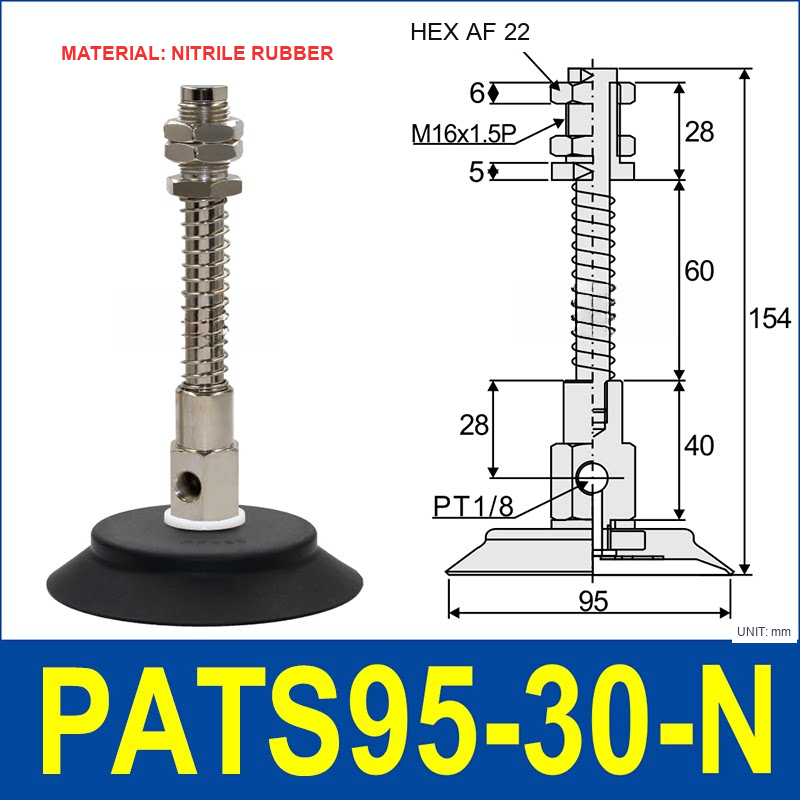
- Confirm the interface: compare the selected drawing, M16×1.5 mounting thread, PT1/8 side port, overall dimensions and installed clearance before ordering.
Model-code guide
PATS-[diameter]-[stroke]-[material]: the first number identifies the listed cup diameter in mm; the second identifies the listed buffer stroke in mm; S is Silicone and N is Nitrile Rubber. Select the exact complete code rather than mixing attributes between variants.
Suitable for
- Industrial vacuum pick-and-place and packaging automation
- Robot end-effectors needing spring compliance
- Handling of suitable smooth workpieces after material and vacuum compatibility checks
- Replacement or configuration work for compatible vacuum systems
Before use
Confirm the complete selected model code, drawing, mounting thread, side-port connection, material compatibility, vacuum level, workpiece surface, payload, acceleration, temperature and operating environment before installation. No food-contact, medical, lifting-safety or regulatory certification is claimed.
FAQ
Should I choose Silicone or Nitrile Rubber? Select the material according to the workpiece and operating environment after compatibility checks. Can I substitute a different stroke or diameter? Verify the complete drawing, installation clearance, vacuum performance and selected model before substitution.