A dust bellows must fit its mounting ends while accommodating the mechanism's actual travel. One overall height measurement cannot establish compressed or extended capability. Record the installed positions and environment before selecting a replacement from pagoda-style or straight bellows catalogues.
1. Identify what the bellows protects
Describe the rod, joint or linkage and the expected dust, chips, splash or abrasion. State temperature, chemical exposure and motion frequency. A dust-cover listing does not prove pressure containment or suitability as a dynamic fluid seal.
Photograph the surrounding mechanism and note any sharp edges or rubbing surfaces near the folds.
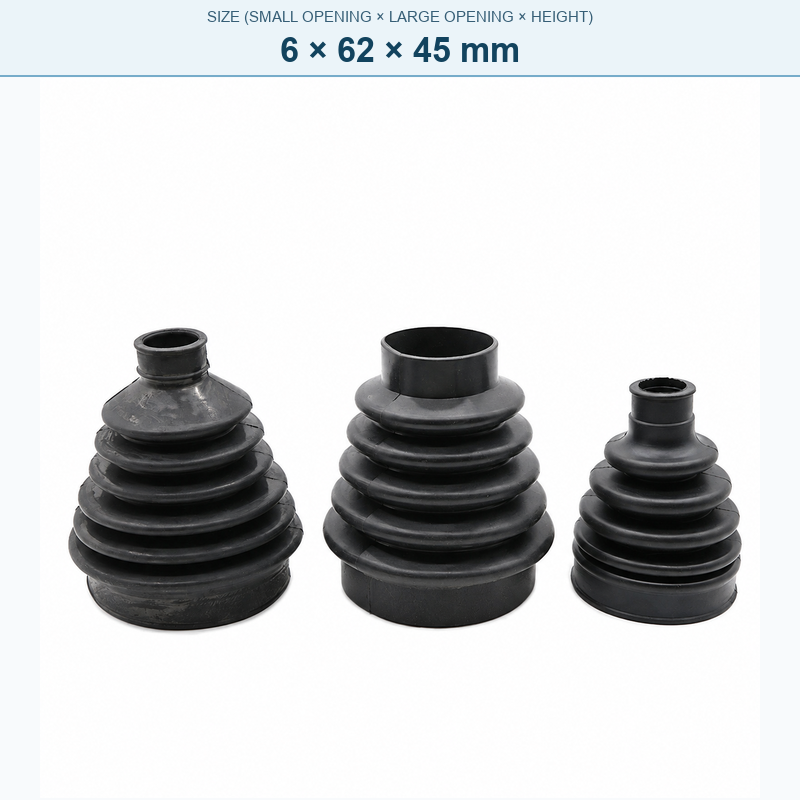
2. Measure both mounting ends
Record each opening diameter, end shape, flange or lip and the approved attachment method. An opening that can be stretched over a component is not automatically a correct long-term mounting fit.
The pagoda-style catalogue identifies small opening, large opening and height. Confirm which dimensions correspond to the intended mounting locations rather than assuming the two ends are interchangeable.
3. Separate free height from working travel
Record the distance between mounting faces at the shortest and longest machine positions. Ask for the selected bellows' permitted compressed and extended dimensions if they are not supplied.
A free-height label is not a stated stroke. Do not estimate allowable travel by counting folds or stretching an old bellows by hand.
4. Check the entire motion envelope
Review folds, side clearance and any rotation or angular motion through the full cycle. Avoid pinching folds between moving parts or pulling the bellows tight at maximum travel.
Compare straight and pagoda-style geometry against the actual mechanism. A different outline can change interference even when both openings fit.
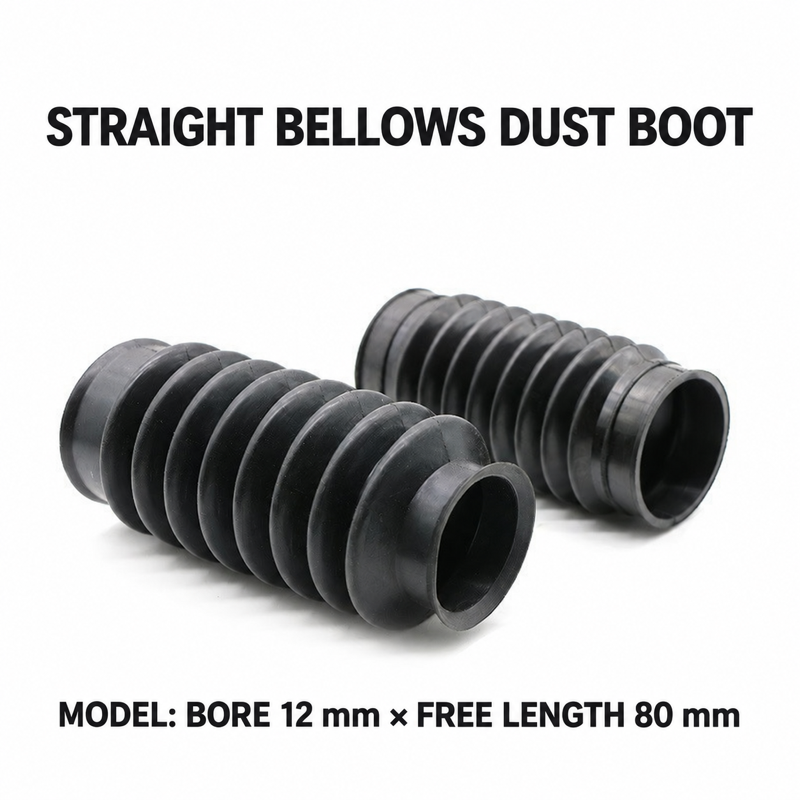
5. Inspect and install under the equipment procedure
Isolate the mechanism before fitting or removing the cover. Check mounting surfaces, retainers and the protected component for debris or damage. Use the specified attachment method rather than an improvised clamp that cuts the material.
Perform the approved movement check and inspect fold behavior before automatic operation. Replace damaged covers according to the site's maintenance criteria.
6. Send a complete replacement request
Include opening diameters, end profiles, free height if known, shortest and longest installed distances, motion sketch and environmental conditions. Identify whether measurements came from a worn part or the machine itself.
If material or travel limits are unresolved, obtain confirmation before ordering. Keep the selected drawing and installation photographs so later service does not rely only on the old cover's appearance.
7. Related products and next steps
Pagoda-style bellows · Straight rubber bellows.
Send the complete model code, drawings or photographs, required quantity and application conditions to boltte@boltte.com. Confirm missing specifications in writing before ordering. Catalogue images illustrate the linked product family; they are not proof of compatibility, tested capacity or certification for your installation.