A push-in fitting must match the tubing and the threaded or panel interface independently. Similar dimensions do not guarantee a sealed pneumatic connection. This guide uses bulkhead fittings to explain how to separate tube OD, mounting thread and fluid-port thread during selection.
1. Measure the tube outside diameter
Use the tube manufacturer's designation and a suitable measurement on an undamaged straight section. Confirm metric versus inch sizing and the approved material. A nominally close tube can damage a seal or fail to retain correctly.
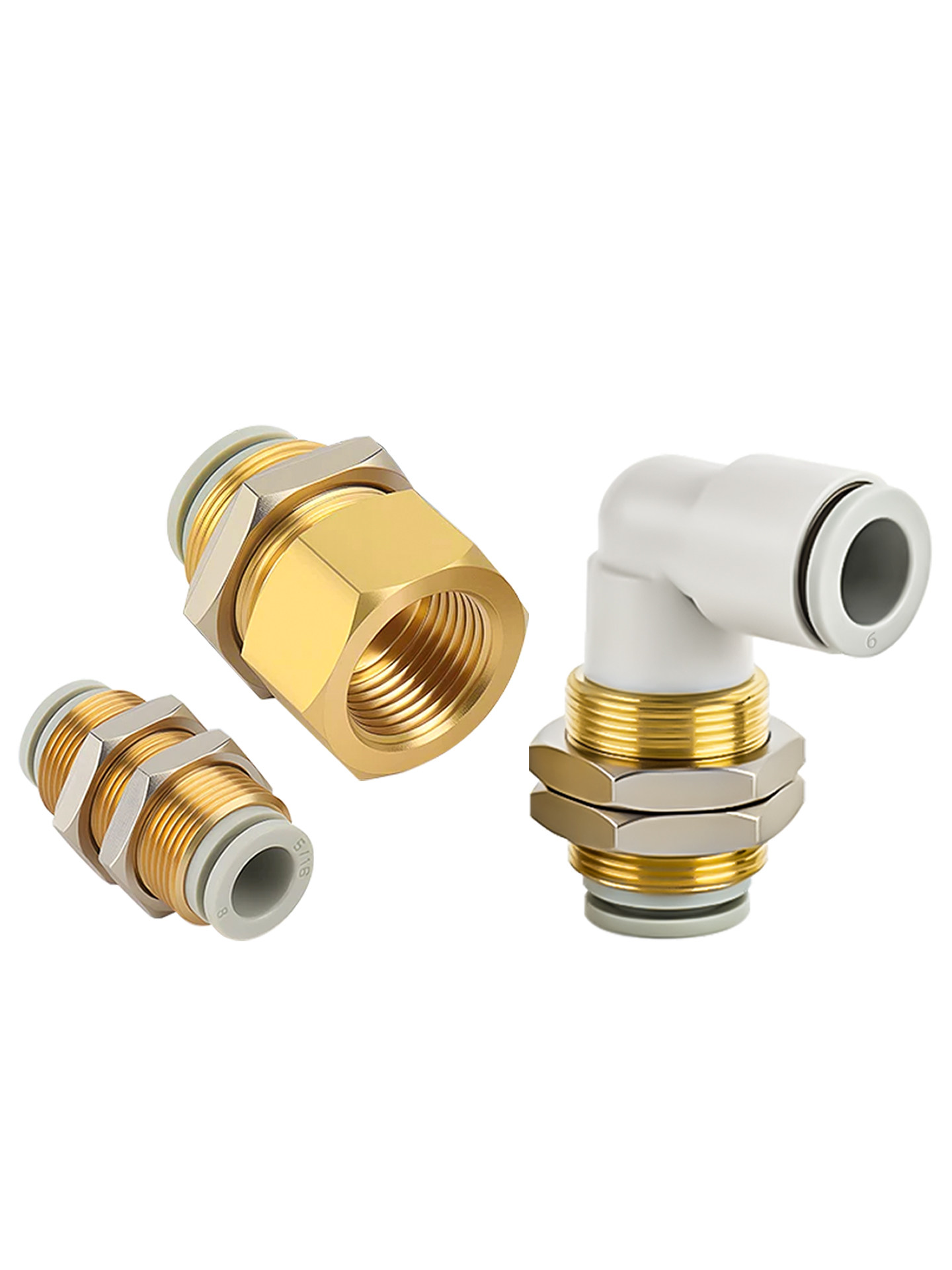
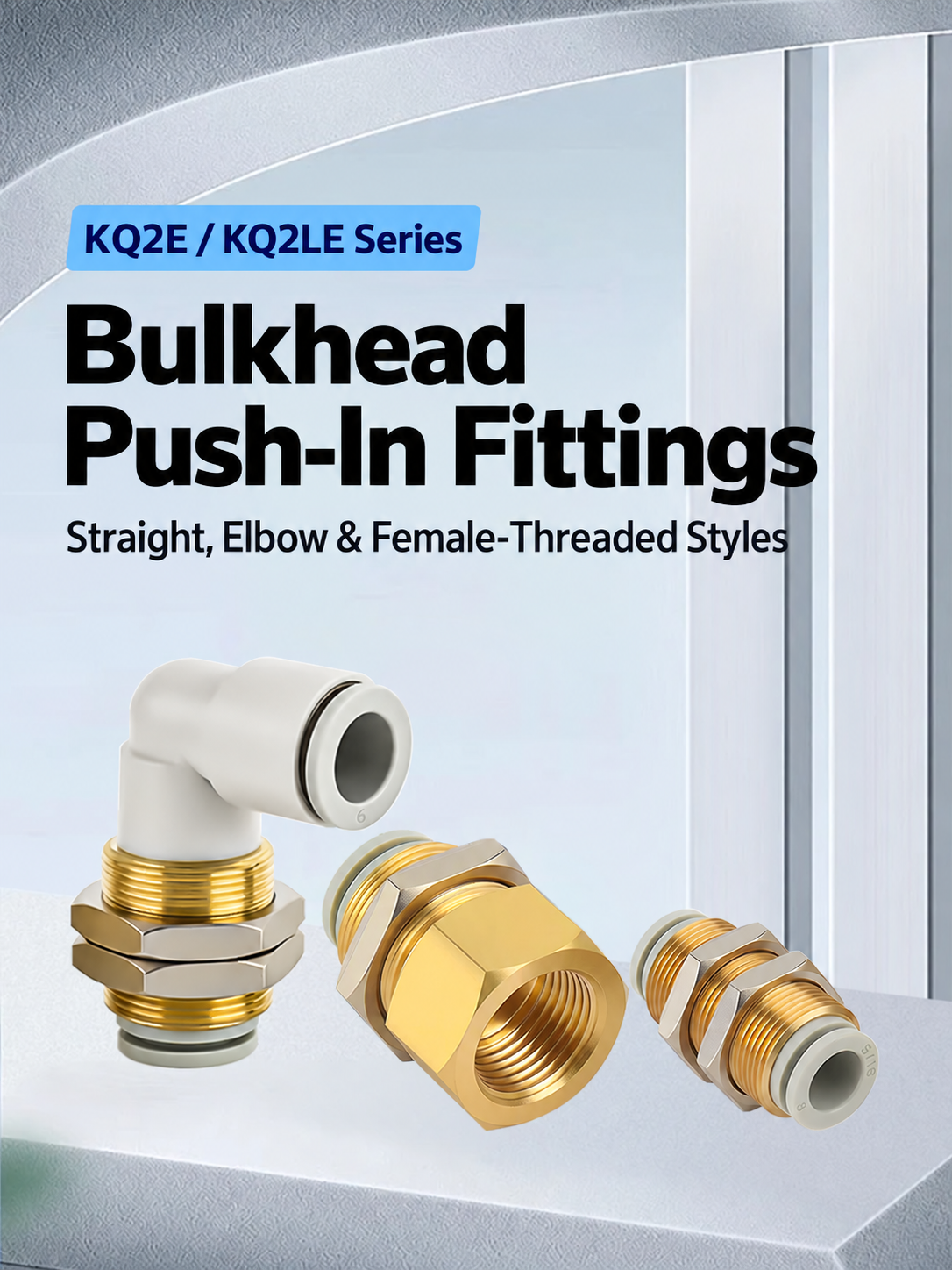
The linked KQ2E/KQ2LE catalogue lists PU/PA tubing and model-specific ODs. Do not assume that all materials with the same outside diameter have the same retention or sealing behavior.
2. Separate two different thread functions
A bulkhead mounting thread secures the component through a panel. A pneumatic port thread connects the fluid path. These threads may differ in size and standard within one fitting.
The linked selection table treats them separately. Record both and check panel thickness, nut clearance and wrench access. Choosing from the tube OD alone leaves the panel and pneumatic interfaces unresolved.
3. Identify thread standard rather than appearance
Metric, G/BSPP, tapered BSP-style and NPT threads must not be assumed interchangeable. Use the full designation, pitch and mating drawing. The linked catalogue explicitly warns that PT is not NPT.
Confirm the sealing method for the selected port. Do not add tape or sealant to a push-in tube connection, or infer a threaded sealing method from a different fitting family.
4. Prepare a clean, square tube end
Use the tubing and fitting instructions for cutting and insertion. Inspect for ovality, scratches, contamination and inadequate insertion. Avoid pulling a motion loop tight against the release collar.
Routing should allow the fitting to remain unstressed through the motion envelope. If tube removal is needed, isolate pressure first and use the specified release method; do not pull a pressurized line free.
5. Verify after assembly
Check for leakage with the site's approved method and within the selected component limits. Inspect mechanical support and confirm that the tube cannot rub on a sharp panel edge. A successful static leak check does not replace a full motion inspection.
Do not over-tighten a mounting nut to compensate for a wrong panel opening. Correct the mounting geometry and use the fitting manufacturer's installation requirements.
6. Specify a reproducible replacement
Record full code, straight or elbow style, each tube OD, any reducing connection, pneumatic thread, panel thread and allowed envelope. Include the installation photograph and selected catalogue drawing.
If a table leaves a dimension unspecified, ask for confirmation rather than borrowing it from the adjacent model. Keep inch and metric connection inventories clearly labeled to prevent a nearly matching replacement.
7. Related products and next steps
KQ2E/KQ2LE bulkhead fittings · AS flow controllers.
Send the complete model code, drawings or photographs, required quantity and application conditions to boltte@boltte.com. Confirm missing specifications in writing before ordering. Catalogue images illustrate the linked product family; they are not proof of compatibility, tested capacity or certification for your installation.