A pneumatic exhaust silencer reduces emitted noise, but its connection and flow capacity also belong in the circuit review. A clogged or undersized exhaust path can change machine behavior. Select and maintain the exact silencer model rather than treating every threaded insert as equivalent.
1. Map the exhaust path
Identify whether the silencer serves one valve, a manifold or a shared exhaust. Record which actuators exhaust simultaneously and whether the line includes tubing, elbows or other restrictions.
The connection diameter alone does not establish available exhaust flow. Obtain the selected model's performance information under stated pressure conditions when comparing alternatives.
2. Match the connection exactly
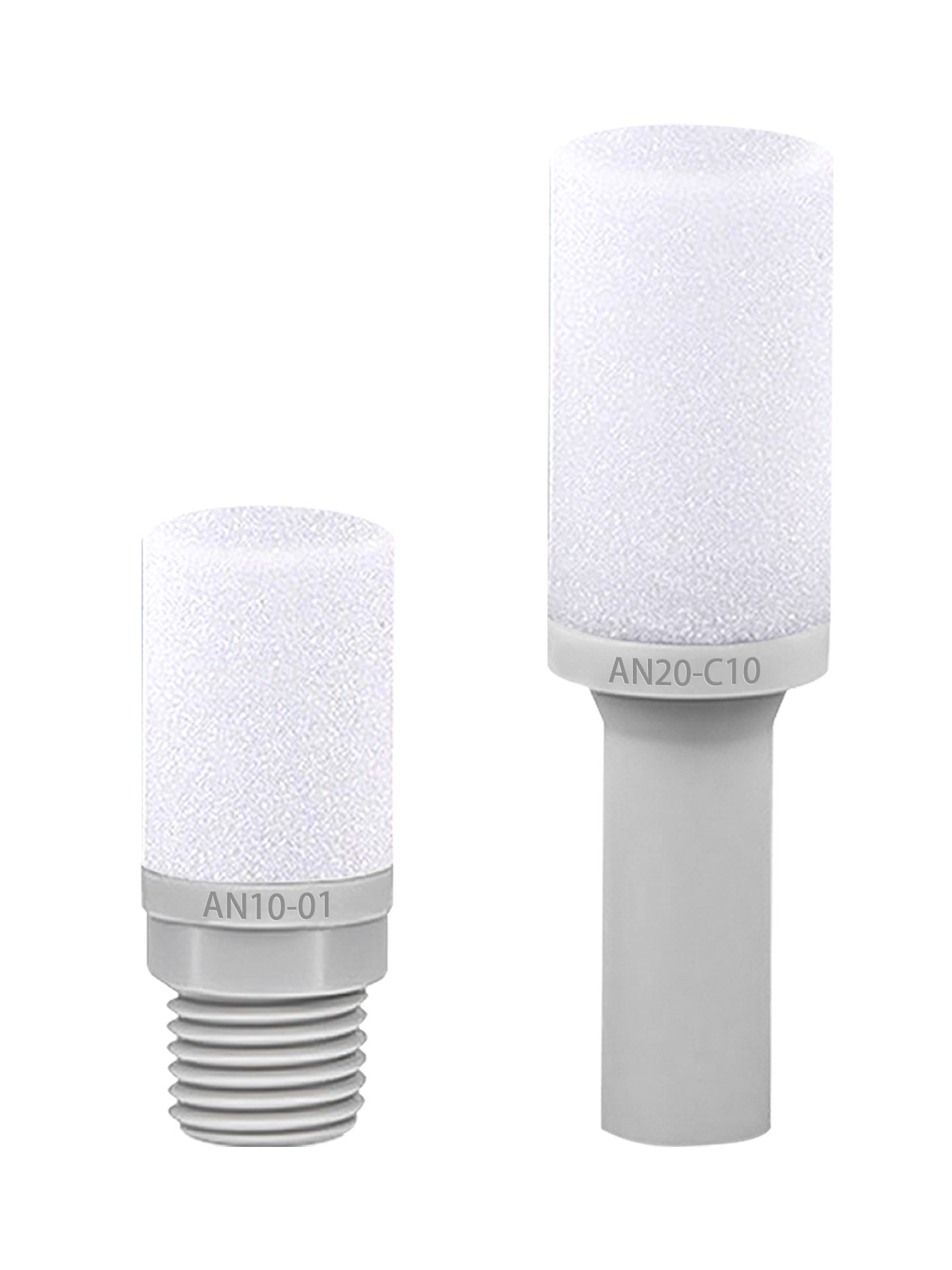
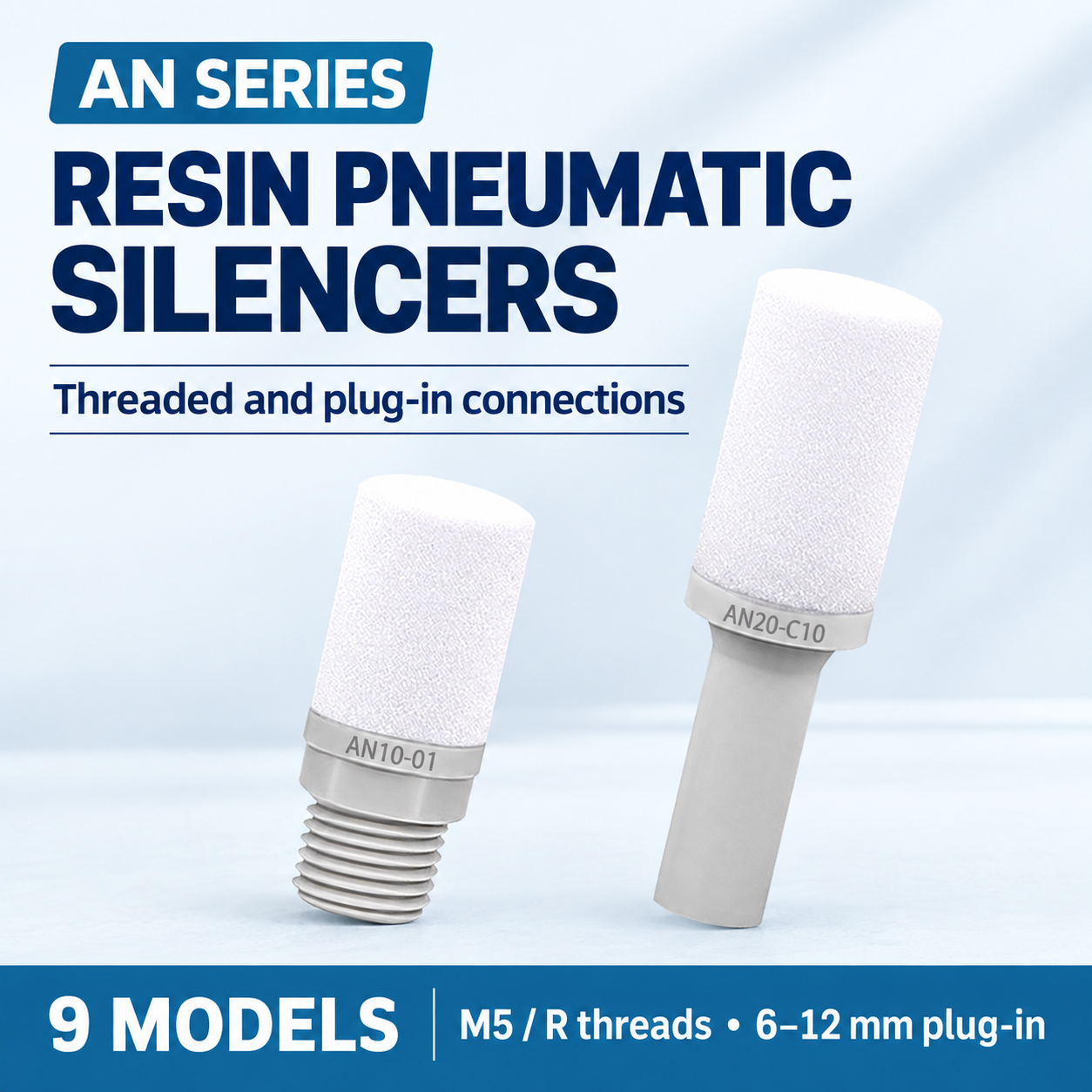
The linked AN range separates threaded and plug-in models. Its threaded selections use R threads except the listed M5 variant; the page does not include NPT variants. Match the mating port standard rather than forcing a similar thread.
Check clearance for installation and future removal. Protect the element from physical impacts and avoid mounting arrangements that expose it to unexpected liquid accumulation.
3. Interpret noise claims cautiously
The AN page provides supplier catalogue noise-reduction data. Actual results depend on pressure, flow, circuit layout and measurement conditions. A catalogue number is not a noise survey of your workplace or a guarantee of regulatory compliance.
Use the site's noise-assessment procedure if exposure is a concern. Consider the complete machine, not only one exhaust outlet.
4. Look for restriction-related symptoms
Observe cycle time, exhaust behavior and whether changes coincide with contamination or silencer service. Restricted exhaust can be one contributor to altered motion, but valve faults, tubing damage and mechanical binding must also be investigated.
Do not remove a silencer during normal production as a permanent workaround. Any comparative test needs controlled conditions, approved noise precautions and a safely supported mechanism.
5. Service the correct component
Isolate energy and verify pressure has been safely removed before removal. Follow the selected silencer's replacement or cleaning instructions; the material's appearance does not prove that solvent washing or compressed-air cleaning is permitted.
Inspect threads, mounting surfaces and the surrounding exhaust path. Reinstall the correct model and recheck the approved cycle before automatic operation.
6. Set an evidence-based maintenance routine
Record model, circuit location, contamination observed and cycle measurements before and after service. Where loading varies, keep the production condition with the measurement so trends remain comparable.
For a quotation, state port standard, space limits, expected exhaust demand and contamination. If backpressure limits or flow data are unavailable, request them rather than assigning another manufacturer's values to a similarly sized component.
7. Related products and next steps
AN exhaust silencers · Pneumatic flow controllers.
Send the complete model code, drawings or photographs, required quantity and application conditions to boltte@boltte.com. Confirm missing specifications in writing before ordering. Catalogue images illustrate the linked product family; they are not proof of compatibility, tested capacity or certification for your installation.