A gripper that fits the robot flange can still be unsuitable for the workpiece. Selection must include the fingers, contact geometry, motion and available space. Treat catalogue dimensions and gripping-force data as different requirements, and confirm the complete assembled tool before production.
1. Describe how the part is held
Record workpiece mass, shape, surface condition and the permitted contact areas. Identify internal or external gripping and whether the part is supported elsewhere. Include acceleration, orientation changes and the consequences of a lost grip.
Do not select from workpiece mass alone. The load path through the fingers and contact surfaces must be reviewed for the actual handling motion.
2. Include finger length and offset
Longer or offset fingers change the conditions at the gripper mechanism. Request force data, allowable finger length and relevant moment limits for the exact model and jaw geometry.
Manufacturer examples such as SCHUNK publish these conditions separately. Their values do not rate the BOLTTE grippers shown here, but illustrate why an isolated force number is insufficient.
3. Check opening and access together
Verify the opening range at the intended contact location, insertion clearance and the path into the fixture. A gripper can open far enough in free space but collide during approach or release.
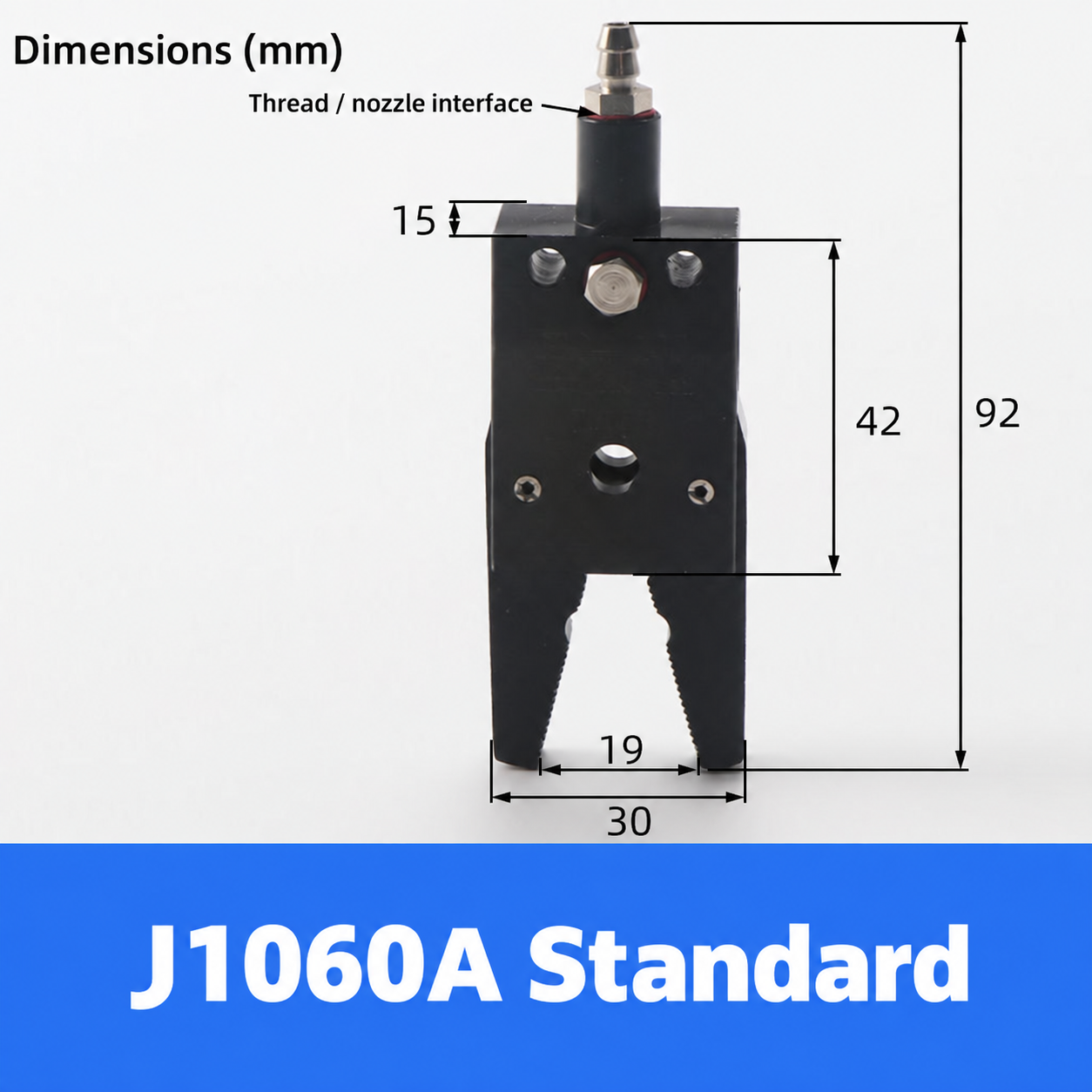
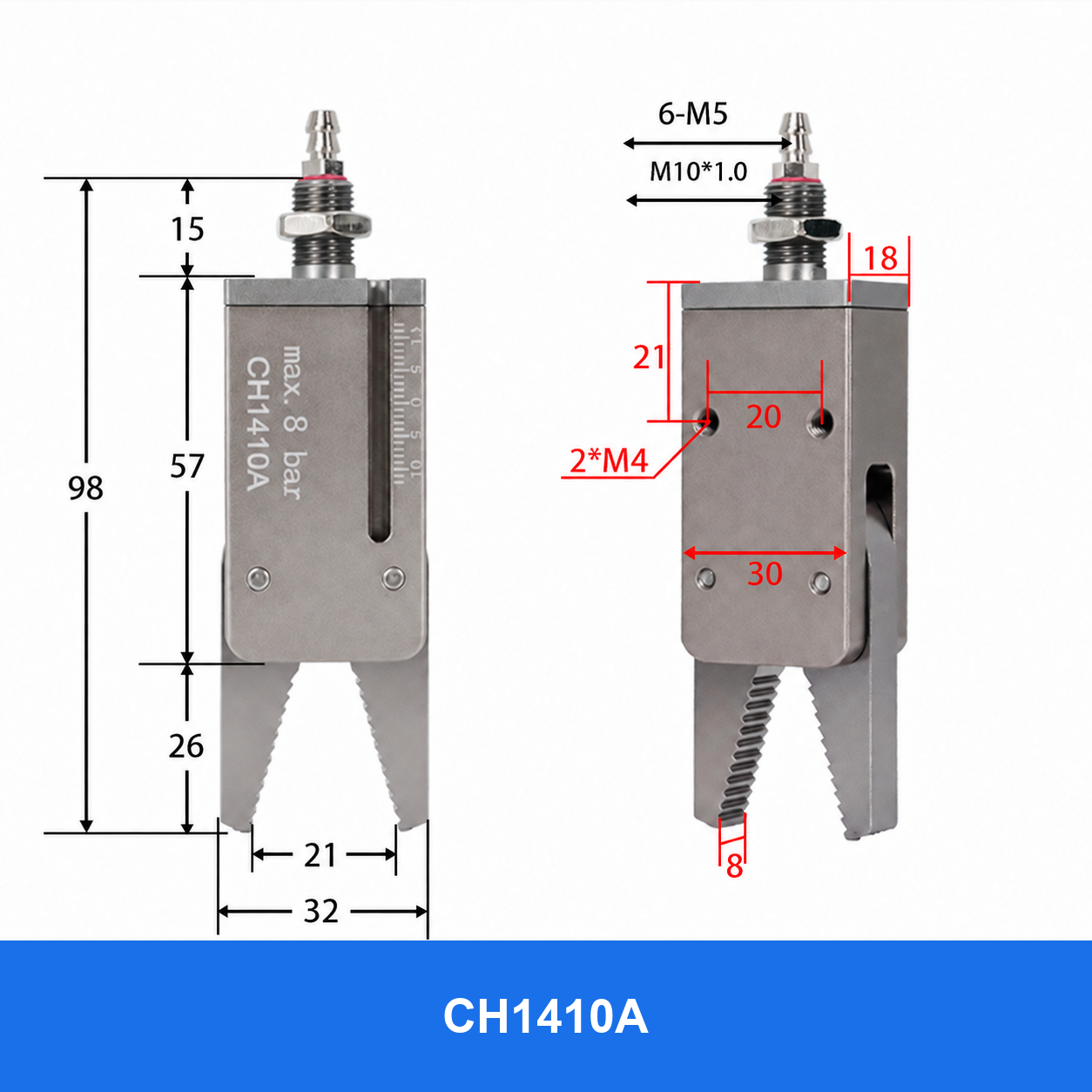
Check the selected drawing, mounting threads and pneumatic connection. Include hose movement and access to fasteners within the tool's overall envelope.
4. Confirm complete gripper versus spare jaws
The linked J1060/E/F/H catalogue mixes complete compact grippers and replacement-jaw selections. Read the exact option rather than assuming every entry supplies a pneumatic mechanism.
Identify finger material and any pads or custom contact shape separately. A photograph of a padded jaw does not establish universal suitability for fragile, hot or slippery parts.
5. Commission under controlled conditions
Support the workpiece and retain the machine's approved guarding. Check the permitted pressure, control sequence, sensing and release behavior against the equipment procedure before automatic movement.
Observe repeatability with representative parts, including normal dimensional variation. A successful pickup of one hand-positioned sample is not sufficient acceptance evidence for a production tool.
6. Write a useful selection request
Send a part drawing, mass, intended gripping points, required stroke, finger sketch and motion conditions. State air-supply and sensing requirements, robot mounting details and any space restriction.
Ask for missing model-specific force and load data rather than extrapolating from body size. Keep the accepted tool drawing and commissioning criteria with the replacement-part list.
7. Related products and next steps
Compact grippers and jaw options · CH1410 gripper selections.
Send the complete model code, drawings or photographs, required quantity and application conditions to boltte@boltte.com. Confirm missing specifications in writing before ordering. Catalogue images illustrate the linked product family; they are not proof of compatibility, tested capacity or certification for your installation.
8. Further technical reading
These manufacturer references explain general engineering principles. Their product ratings, test results and installation values do not apply automatically to BOLTTE selections.