Plastic is a material category, not a complete machining specification. Nylon, PTFE and other engineering polymers require grade-specific review of geometry and service conditions. State the functional interfaces and acceptance conditions before asking for a custom machined component or a plastic gear.
1. Specify polymer and grade
Identify the polymer, grade, fillers or modification, color and any required traceability. If selecting from a sample, state which material information is confirmed and which remains unknown.
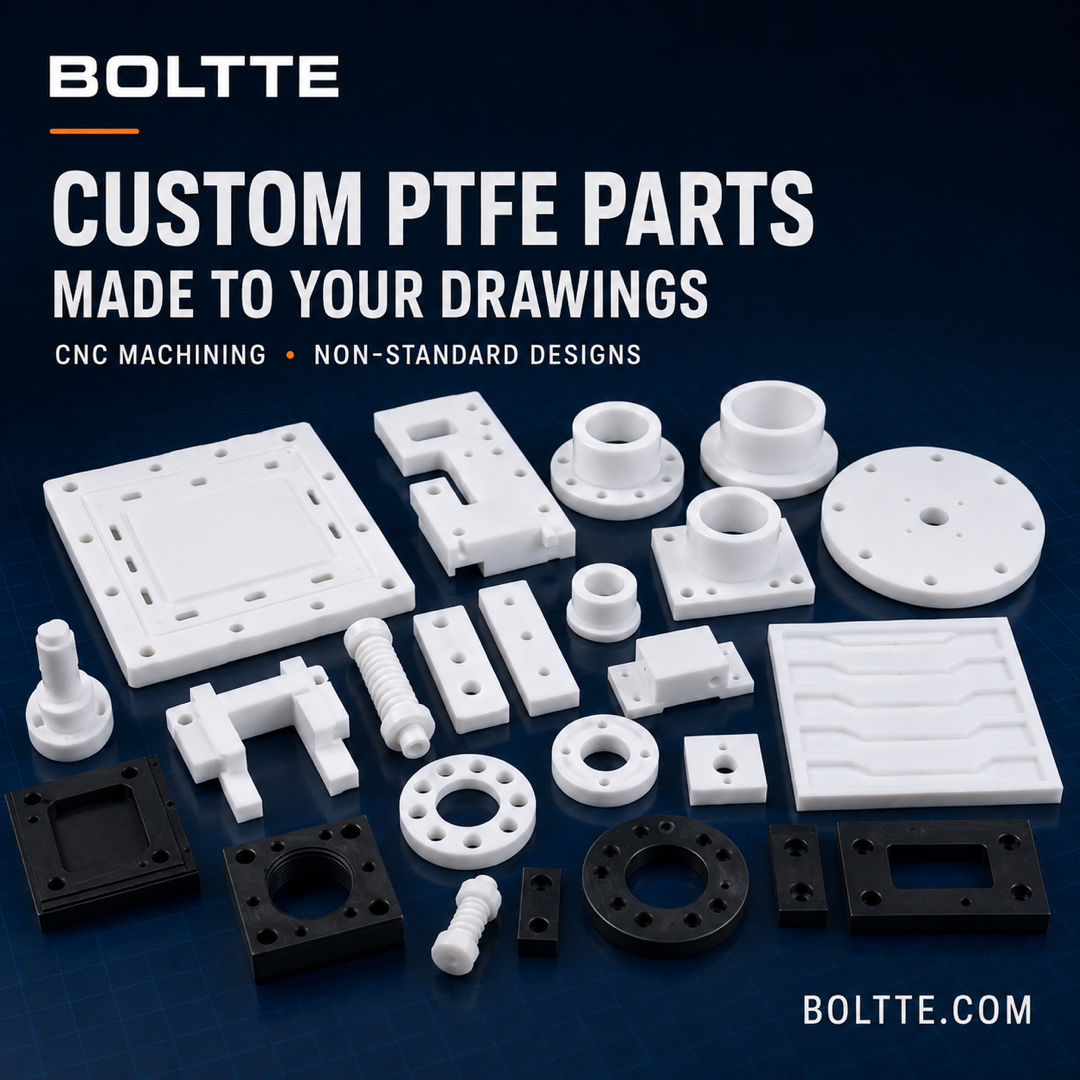
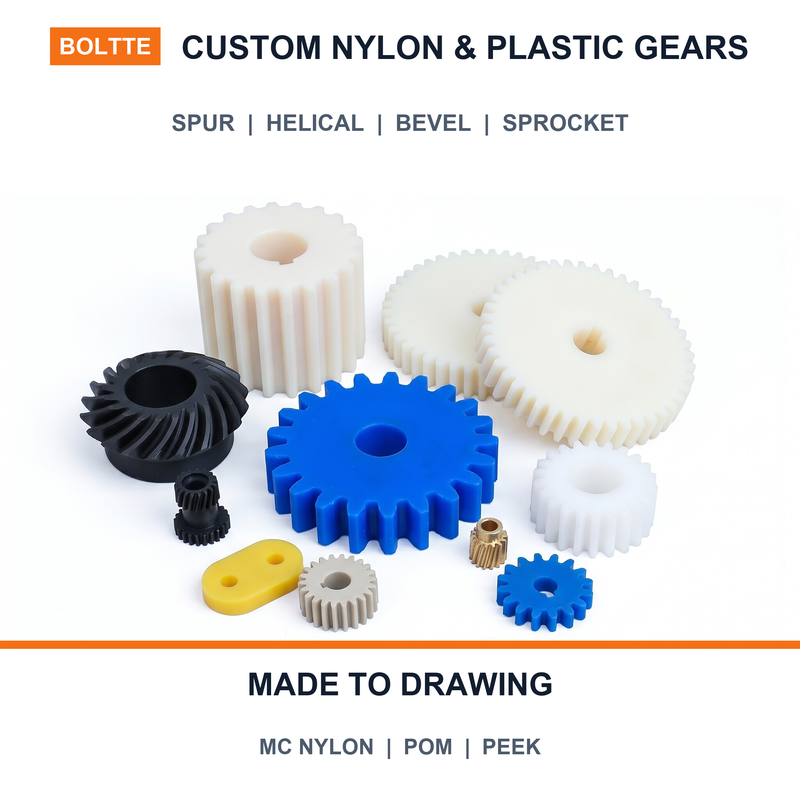
The custom PTFE service allows grade review, while the plastic-gear listing names several material options. These catalogues do not establish that every grade is available or suitable for every drawing.
2. Describe the operating environment
Include temperature, chemicals, humidity, mechanical load and contact with other components. Identify whether electrical insulation, sliding contact or another function is important.
A broad material advantage does not establish the complete component's acceptance. Provide the conditions under which dimensions and performance must be met rather than a material name alone.
3. Review nylon conditioning
Nylon material selection can involve moisture-related dimensional behavior. The Protolabs Network nylon reference discusses this consideration, but its data does not specify every nylon grade offered by BOLTTE.
Ask how material condition, storage and measurement conditions should be handled for the selected grade. A close mating fit should have an agreed inspection basis, not an unexplained room-temperature measurement.
4. Treat PTFE parts as engineered components
Provide the drawing, mating geometry and intended sealing, guiding or insulation duty. Specify filled or modified PTFE explicitly if required and request confirmation of the material and machining scope.
Do not assign a universal tolerance or load capacity from the polymer name. Thin features, threaded areas and fits need review against the actual design and service.
5. Define dimensions and inspection
Mark critical features and state units, tolerances and inspection conditions. Explain whether a part is measured before assembly or must satisfy a specified installed interface.
If a gear is involved, tooth geometry and mating data are additional requirements. A plastic block or sample outline cannot substitute for the missing functional specification.
6. Confirm the quotation baseline
Agree drawing revision, grade, quantity, finish, inspection and delivery requirements before manufacturing. Request written acceptance of unresolved requirements rather than assuming that all plastics can replace each other.
Keep material substitutions traceable. A proposed grade change should be reviewed for the application and dimensions, even if the supplier can machine the same external shape.
7. Related products and next steps
Custom PTFE parts · Metal and plastic CNC service.
Send the complete model code, drawings or photographs, required quantity and application conditions to boltte@boltte.com. Confirm missing specifications in writing before ordering. Catalogue images illustrate the linked product family; they are not proof of compatibility, tested capacity or certification for your installation.
8. Further technical reading
- Protolabs Network: nylon machining and material considerations
- Protolabs Network: technical drawings for CNC machining
These manufacturer references explain general engineering principles. Their product ratings, test results and installation values do not apply automatically to BOLTTE selections.