A polyurethane-headed buffer bolt can provide protective contact at a machine stop, but thread size does not define allowable impact energy. Select the mounting geometry and operating duty together. Do not substitute a contact buffer for a rated shock absorber or an approved safety stop without engineering review.
1. Describe the contact event
Record the moving assembly, approach speed, stroke, contact direction and expected repetition. Distinguish a gentle locating contact from an impact at the end of travel.
Provide the machine's required energy or load criteria where available. A product photograph or a large polyurethane head does not establish acceptable duty or service life.
2. Match thread and envelope
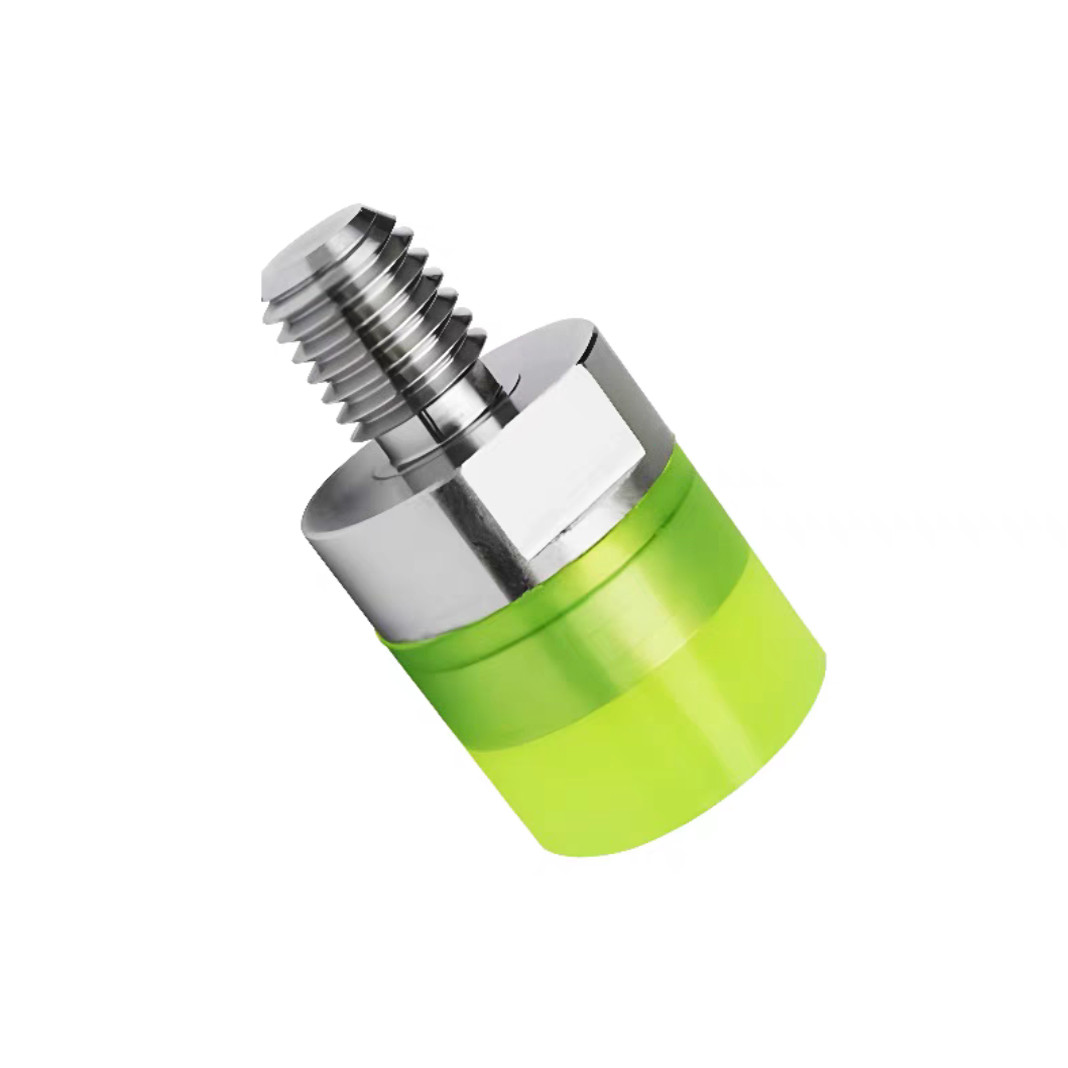
Check thread diameter, pitch, engagement length, head dimensions and available adjustment. The linked buffer-bolt catalogue uses selected model drawings; use the complete drawing rather than an M-size alone.
Confirm tool access at the intended wrench feature. Allow clearance for the contact head and neighboring components through the full machine motion.
3. Confirm the contact material
Ask for the required polyurethane grade or hardness and suitability for temperature, oils, chemicals and the actual counterface. Material properties and bonding details should be confirmed for the selected model if they are critical.
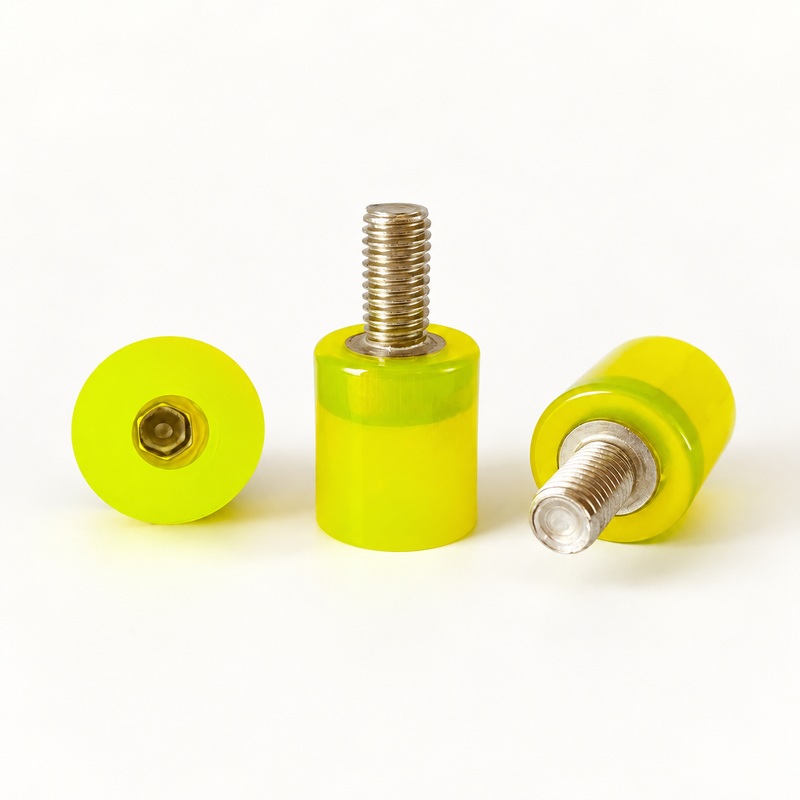
The linked center-hex screw family lists its own specifications. Those values must not be assigned automatically to every buffer bolt or another head style.
4. Review alignment and adjustment
Align the intended contact surfaces and check that the machine procedure permits the proposed adjustment. Avoid side loading or partial contact unless the component and application have been reviewed for it.
Obtain the specified locking and tightening requirements. Do not treat exposed thread length as the only adjustment criterion; engagement and installation space must remain correct.
5. Inspect during commissioning and service
Use the approved guarded commissioning procedure and monitor the contact condition. Look for tearing, permanent deformation, loosening, abnormal wear or separation at the material interface.
Stop and investigate unexpected damage. Replacing the buffer repeatedly without checking motion speed or alignment can conceal an excessive-duty condition.
6. Prepare a duty-based quotation
Send the selected mounting dimensions, machine sketch, contact event, expected cycle rate and environmental exposure. Specify whether the part is a standard replacement or a non-standard design request.
Request missing duty data in writing rather than calculating a capacity from polyurethane volume. Keep the accepted specification and inspection criteria with the machine's maintenance record.
7. Related products and next steps
Buffer bolts · Center-hex buffer screws.
Send the complete model code, drawings or photographs, required quantity and application conditions to boltte@boltte.com. Confirm missing specifications in writing before ordering. Catalogue images illustrate the linked product family; they are not proof of compatibility, tested capacity or certification for your installation.